
Updated November 2026
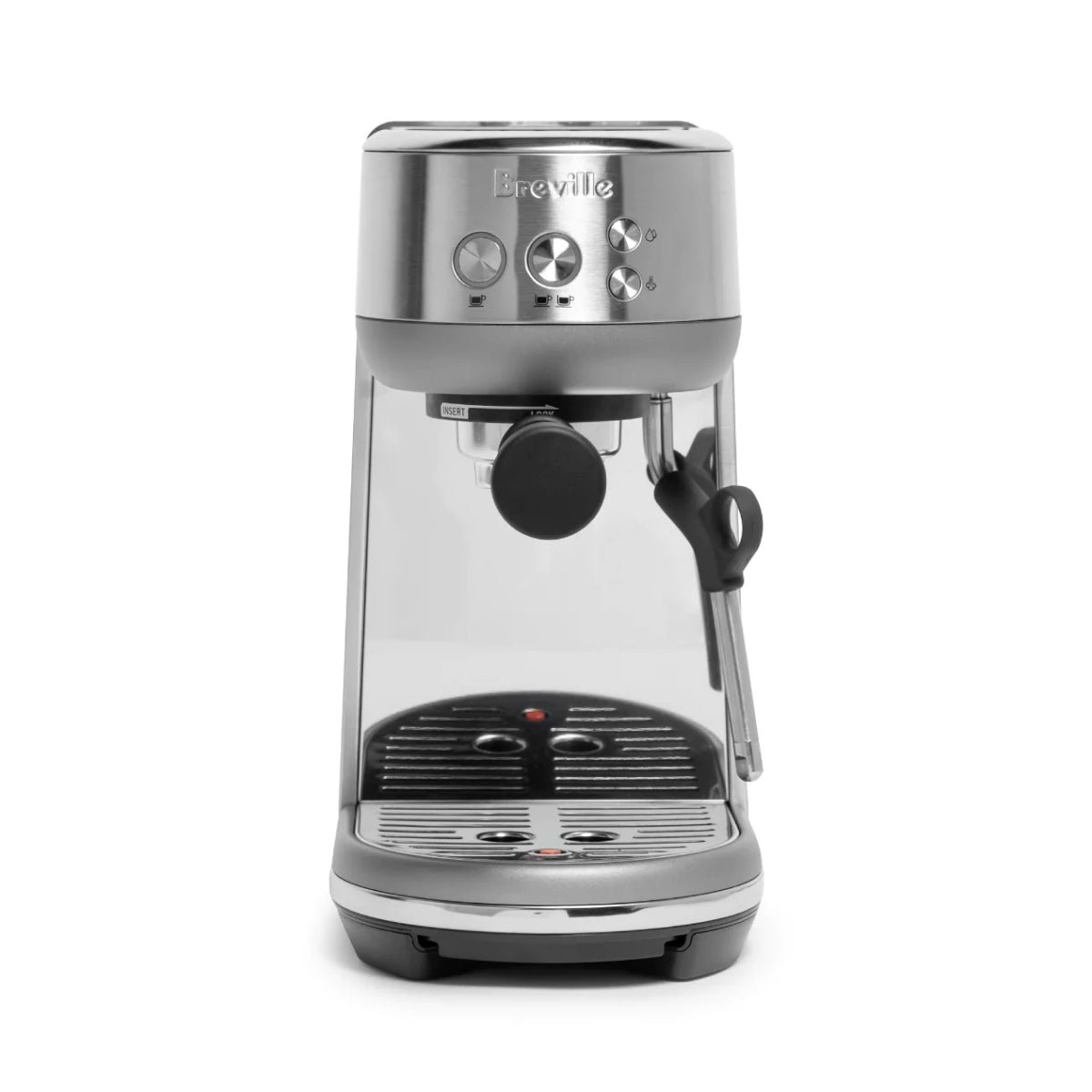
If you want the best espresso machine for a home counter and your ceiling is $500, buy the Breville Bambino: a 54mm portafilter, proper temperature control and a $250–300 street price. If you want the commercial 58mm format instead, with a machine you can repair and modify for a decade, the Gaggia Classic Pro (current version: the E24) is the pick the Bambino cannot answer. If milk drinks matter more than the ritual, the Philips 3200 with LatteGo grinds, brews and froths at one touch, and its street price sits on the $500 line. On the tightest budget, the Casabrews CM5418 and the De’Longhi Stilosa pull genuine shots for the price of a few cafe weeks.
We did not test these machines on a bench. We compared manufacturer specs, owner reports and community threads, and checked every model against the CPSC recall database. Prices are bands checked in November 2026. Two honest flags up front. First, some picks live on the line: their list prices break $500, said plainly at each one, because street and sale prices are how people actually buy them under it. Second, the bar number on the box is marketing: espresso extracts at about 9 bar at the puck, and a 20-bar pump is a maximum rating, not a stronger shot.
This update adds the two machines readers kept asking why we had left out. The Gaggia brings the 58mm portafilter and a brass boiler to a price band where everything else is 51mm or 54mm. The Breville Bambino Plus takes the Bambino formula and removes its two biggest frictions: it froths milk by itself, and a three-way solenoid ends the soupy pucks. One machine we still leave out on purpose, the Flair 58 lever, is named and priced honestly in a box below, because at its real street price it does not belong in an under-$500 list.
Quick picks
| Machine | Best for | Price band | Why it made the list |
|---|---|---|---|
| Breville Bambino | Most people | $250–300 | The r/espresso starter machine: 54mm portafilter, PID, 3-second heat-up |
| Breville Barista Express | A built-in grinder | $500–700 (sale: $500) | Grinder, gauge and portafilter in one box; buy it on sale |
| Philips 3200 with LatteGo | One-touch milk drinks | $400–650 | Fully automatic; the easiest cleanup in this list |
| De’Longhi Stilosa | The least money | $100–150 | A real boiler pump machine at the lowest band here |
| Casabrews CM5418 | Small counters, milk drinks | $120–170 | Amazon’s #3 semi-automatic seller; gauge and strong steam |
| Nespresso Vertuo Pop+ | Zero learning curve | $100–200 | Not portafilter espresso; the right buy for pod people |
| Gaggia Classic Pro E24 | Tinkerers, 58mm accessories | $450–550 (sale: $449–499) | The only commercial 58mm portafilter and brass boiler near this money; made in Italy |
| Breville Bambino Plus | Hands-free milk drinks | $400–500 | The Bambino formula plus automatic milk texturing and a three-way solenoid |
1. Breville Bambino: best overall

Ask r/espresso what a first real machine should be and the Bambino is the answer that comes back year after year. The reason is the formula Breville kept and the corners it cut in the right places: a proper 54mm stainless portafilter, digital temperature control (PID), low-pressure pre-infusion, and a ThermoJet heater ready in about 3 seconds. What it leaves out is the grinder, the display and the bulk. At 6.3 inches wide it is the narrowest serious machine here.
The pump is rated 15 bar, and Breville’s own copy gives the game away in a good way: extraction runs at 9 bar after the low-pressure pre-infusion, exactly how espresso is supposed to work. Pressurized (dual wall) and standard (single wall) baskets are both in the box, so it forgives pre-ground coffee on day one and rewards a real grinder later. The steam wand is manual: a short learning curve, then real microfoam. A capable burr grinder is a separate purchase, and Bambino plus grinder still lands under the cap.
Key facts
- Price band: $250–300 (list $299.95)
- Portafilter: 54mm stainless, 18–19 g dose; single and dual wall baskets included
- Pump claim vs reality: 15-bar pump; extraction at about 9 bar after low-pressure pre-infusion
- Grinder: none built in; plan on a separate burr grinder
- Milk: manual steam wand
- Footprint: about 6.3 x 13.7 x 12 in; water tank 47 oz, removable
- Warranty: 1 year limited
Pros
- The most complete espresso formula under $300: PID, pre-infusion, real portafilter
- Ready in seconds, and the smallest footprint of any portafilter machine here
Cons
- No grinder included, so the true starter cost is the machine plus a grinder
- 1-year warranty is short for the band
2. Breville Barista Express: best with a built-in grinder, honestly priced

The Barista Express is the machine that built the home espresso boom: a conical burr grinder dosing straight into a 54mm portafilter, the same 15-bar pump and PID formula as the Bambino, low-pressure pre-infusion, an analog pressure gauge that teaches you what a good shot looks like, and a 67 oz tank. It is the one-box answer for buyers who do not want to shop for a grinder separately.
Now the honest part, because this is an under-$500 list: the list price is $699.95, above the cap. Its street price drops to $499.95 at every major sale, including the November 2026 events we checked, and renewed units trade in the $400–500 band. So the pick is conditional, printed that way: at its regular sale price or renewed, it is the best grinder-included machine at $500. At full list it breaks the budget this article promises, and the Bambino plus a separate grinder is the smarter spend.
Key facts
- Price band: $500–700 new (list $699.95; sale price regularly $499.95; renewed $400–500)
- Portafilter: 54mm stainless; single and dual wall baskets, Razor dose tool included
- Pump claim vs reality: 15-bar pump; extraction about 9 bar after low-pressure pre-infusion
- Grinder: built-in conical burr, 0.5 lb hopper, adjustable grind size and dose
- Milk: manual steam wand
- Footprint: 15.9 x 13.1 x 12.4 in (W x D x H); 67 oz tank
- Warranty: 1 year limited
Pros
- Everything in one box, and the pressure gauge makes learning visible
- The street and sale pattern is so regular that patient buyers rarely pay list
Cons
- List price breaks the $500 cap; this pick only works on sale or renewed
- The built-in grinder is good, not great; serious owners eventually outgrow it
3. Philips 3200 with LatteGo: best for beginners who want one touch

The Philips 3200 is the opposite philosophy: a fully automatic machine with an internal brew group instead of a portafilter. Beans go in the hopper, the ceramic flat burr grinder (12 settings) doses them, and it brews espresso, coffee, americano, cappuccino or latte macchiato at a touch. The LatteGo carafe is the milk system to beat at this level: two parts, no tubes, nothing to clog, and it rinses clean or goes in the dishwasher and then the fridge. There is no technique to learn, which is the point for the households this suits.
The price needs the same honesty as the Barista Express. List is $799.99. The street price sat at $500 when we checked in November 2026, sale prices dip to $400–450 at major events, and it has touched the high $300s before Christmas in past cycles. Espresso quality is good rather than great; the internal brew group doses less coffee than a 54mm portafilter, and no setting fully closes that gap. The trade buys the easiest ownership here: an AquaClean filter stretches descaling to about 5,000 cups, the brew group lifts out for a rinse, and the warranty runs 2 years, double most of this list.
Key facts
- Price band: $400–650 street (list $799.99; at the $500 line when checked, lower at major sales)
- Portafilter: none; sealed internal brew group
- Pump claim vs reality: 15-bar pump; the brew group regulates extraction, no gauge to read
- Grinder: built-in ceramic flat burr, 12 settings, 9.5 oz hopper
- Milk: LatteGo carafe, two parts, no tubes, dishwasher safe
- Footprint: about 9.7 x 17 x 14.6 in; 1.8L (about 61 oz) front-access tank
- Warranty: 2 years
Pros
- One touch from beans to latte, with the least cleaning of any machine here
- 2-year warranty and a descale interval measured in thousands of cups
Cons
- Espresso tops out at good; the shot ceiling is set by the brew group, not your skill
- List price is far above the cap; buy the street price, not the sticker
4. De’Longhi Stilosa: best budget portafilter machine

The Stilosa is a real espresso machine with everything optional stripped away: a stainless steel boiler, a 15-bar pump, a locking 51mm portafilter with pressurized baskets, a manual frothing wand, and a dial. List is $149.99, and it sells at $99.99 often enough that its working band is $100–150, the lowest here by a wide margin. It also takes ESE pods for the mornings nobody wants to tamp.
Set expectations at the band. The body is plastic, the included tamper is a flimsy plastic scoop combo owners replace within a week, and the pressurized baskets do the extraction work for you, which caps the ceiling: decent, honest espresso and milk drinks, not cafe-chasing shots. The wand is a panarello-style Cappuccino System rather than a true steam tip, so the foam runs foamy rather than silky. What you get is the genuine article: a pump machine with a boiler, from a brand with parts and service behind it, at the cheapest seat in the real-espresso class.
Key facts
- Price band: $100–150 (list $149.99; frequently $99.99)
- Portafilter: 51mm, pressurized baskets; ESE pod compatible
- Pump claim vs reality: 15-bar pump; pressurized baskets regulate the shot, forgiving of grind
- Grinder: none built in; pressurized baskets tolerate pre-ground coffee
- Milk: manual Cappuccino System frother (panarello style)
- Footprint: about 8.1 x 13.5 x 11.2 in; 1L (about 34 oz) removable tank
- Warranty: 3 years
Pros
- A real boiler-and-portafilter machine at a steam-toy price, with no steam-toy hazards
- Simple enough that there is almost nothing on it to break or configure wrong
Cons
- Pressurized baskets cap shot quality; the included tamper needs replacing
- Plastic build and a basic frother remind you of the band with every use
5. Casabrews CM5418: the unique seller that earns its slot

Casabrews is the name the big roundups skip and Amazon buyers keep finding: the CM5418 sits at #3 in Amazon’s semi-automatic best sellers, with about 8,100 ratings at 4.3 stars when we checked. It is not a nameless white-label box. The brand runs its own store, answers owner questions publicly, sells direct with a 30-day home trial, and covers the machine with a 1-year parts and labor warranty. The machine itself is a slim stainless unit, under 6 inches wide, with a 20-bar pump on the box, a real pressure gauge on the front, a manual steam wand, and a $139.99 list price.
The honest read of the specs: the 20-bar figure is pump maximum, and the CM5418 ships with pressurized baskets only, so extraction is regulated by the basket rather than your grind, same class as the Stilosa. Within that class it is the better-equipped machine: the gauge helps beginners see choking and channeling, the steam wand is stronger than the De’Longhi’s frother, and low-pressure pre-infusion is on the spec sheet. The caveats are a young brand’s caveats: isolated early-failure owner reports (with support responding), a cooldown beat between steaming and brewing, and long-term durability that is simply less proven than a Breville’s. At a $120–170 band, that trade is fair, and it is printed plainly.
Key facts
- Price band: $120–170 (list $139.99; colors run higher)
- Portafilter: 51mm aluminum, pressurized baskets only
- Pump claim vs reality: 20-bar pump claim; pressurized baskets set the real extraction pressure
- Grinder: none built in
- Milk: manual steam wand; built-in pressure gauge on the front panel
- Footprint: about 5.5 x 12.3 x 12 in; 34 oz removable tank
- Warranty: 1 year, parts and labor
Pros
- The slimmest machine here, with a gauge and steam wand the budget class usually skips
- Sales rank and rating count say this is a proven seller, not a gamble listing
Cons
- Young brand; durability over years is unproven next to Breville or De’Longhi
- Pressurized baskets only, so there is a ceiling a better grinder cannot lift
6. Nespresso Vertuo Pop+: the pod pick, labeled honestly

The Vertuo Pop+ is not a real espresso machine, and this section exists because for a large group of buyers that does not matter. There is no portafilter, no grinder and no pressure extraction: a barcode on each Vertuo pod tells the machine its recipe, and the pod spins at up to 7,000 rpm while water is injected, a system Nespresso calls Centrifusion. The crema is centrifuge foam, not pressure crema. In exchange you get the easiest coffee in this article: one button, five cup sizes from a 1.35 oz espresso to a 12 oz alto, a 30-second heat-up, and the same cup every time.
The costs are structural. Vertuo pods are Nespresso’s own format, not interchangeable with Original pods, and third-party options are thin, so the per-cup cost sits above ground coffee forever. Milk is not built in; lattes need the Aeroccino frother, separate unless you buy a bundle. Some owners report leaks around the brew head, handled under the 1-year US warranty.
Key facts
- Price band: $100–200 (machine alone from about $100; bundles with the Aeroccino frother run higher)
- Portafilter: none; sealed Vertuo pod system, barcode-read recipes
- Pressure claim vs reality: listings cite 19 bar; extraction is centrifugal (Centrifusion), not pump pressure through a puck
- Grinder: none; coffee is sealed in the pod
- Milk: none built in; Aeroccino frother separate or bundled
- Footprint: about 8.6 x 14 x 10.4 in; about 37 oz tank
- Warranty: 1 year (US)
Pros
- One button, five cup sizes, no skill and no mess; consistent every time
- The cheapest way in this list to a drink that reads as espresso at the table
Cons
- It is not portafilter espresso, and the pods lock you into Nespresso’s prices and range
- Leak reports around the head are the known owner complaint; keep the warranty paperwork
7. Gaggia Classic Pro E24: best for tinkerers and the 58mm ecosystem
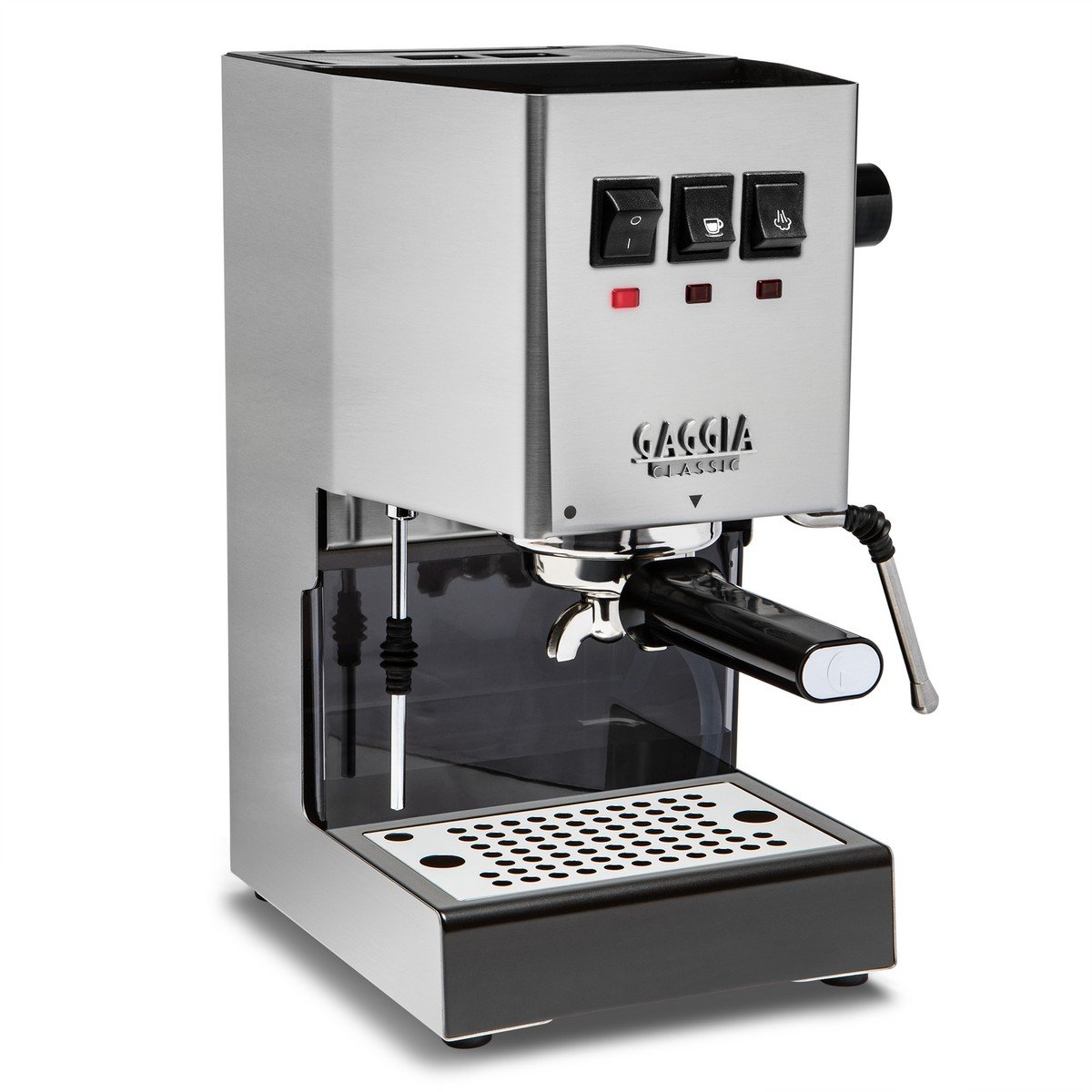
Every other machine in this list uses a 51mm or 54mm portafilter, sizes that belong to one brand each. The Gaggia uses the commercial 58mm standard, which means every precision basket, bottomless portafilter, puck screen and tamper on the market is made in its size first. It is built in Italy around a single boiler, a brass group head and a three-way solenoid valve that leaves a dry puck, and it is held together with screws rather than clips: owners open these machines, replace parts and fit PID kits, and the community documentation for doing so is deeper than for any other home machine. This is the pick for the buyer who wants a platform, not an appliance.
The boiler needs a plain paragraph, because this model’s history is the first thing a careful buyer finds. The 2023 version, sold as the Classic Evo Pro, shipped with a non-stick coated aluminium boiler (a coating called Exelia, applied against corrosion). On some units the coating failed and black flakes came out of the group and steam wand. Gaggia’s position was that the coating itself was sound and the application had failed on affected boilers; whatever the cause, the company and its US distributor offered replacements and refunds, then dropped the coating for plain aluminium, and then dropped aluminium altogether. The current version, the E24, runs an uncoated brass boiler with roughly 30 percent more capacity than the old aluminium one. There is no coating left to flake. If you shop used or old stock, the version matters: a 2023 Evo Pro is the coated one, so check the listing title for ‘E24’ and the boiler material in the specs before you buy.
In daily use the trade is temperature. There is no PID as shipped, so brew temperature cycles on a thermostat and owners either temperature-surf or fit a PID kit later; the tighter thermostat on the E24 narrows that swing but does not remove it. The single boiler also means a wait between pulling a shot and steaming milk. Steam power is adequate rather than strong. What you get back is longevity: a steel body, standard parts, and a realistic decade of service.
Key facts
- Price band: $450–550 (list $549; street and sale prices regularly $449–499 at espresso retailers)
- Portafilter: 58mm stainless steel; commercial and pressurized baskets included
- Pump claim vs reality: 15-bar vibratory pump; North American models ship with the valve set for about 9 bar extraction
- Grinder: none built in; a capable burr grinder is a required second purchase
- Milk: manual commercial-style steam wand
- Footprint: about 9.5 x 8 x 14.2 in (W x D x H); water tank 2.1L (about 72 oz), removable
- Warranty: 2 years parts and labor (US)
Pros
- The only commercial 58mm portafilter near this money, with the full accessory and upgrade ecosystem that follows it
- Brass boiler, steel body and standard parts: the most repairable and most modified machine in this list
Cons
- No PID as shipped, so temperature management is a habit or a modification, not a feature
- The 2023 coated-boiler episode is part of this model’s record; buy the current E24 version and check older stock carefully
8. Breville Bambino Plus: best for hands-free milk drinks

The Bambino Plus is the Bambino from section 1 with its two roughest edges sanded off, at a list price that lands exactly on this article’s cap. The espresso side is the same formula: 54mm portafilter, PID temperature control, low-pressure pre-infusion and the ThermoJet heater ready in about 3 seconds. The differences are the milk system and the plumbing. The steam wand is automatic: set the jug on the temperature sensor, choose from three milk temperatures and three textures, and the machine steams and stops on its own, with a manual mode kept for anyone who wants to learn the skill anyway. A three-way solenoid valve, which the standard Bambino lacks, cuts pressure the moment the shot ends, so pucks come out dry instead of soupy and the drip tray stops filling with runoff.
The honest trade is that you are paying about $200 over the standard Bambino for automation, and automation has a maintenance bill. The machine runs cleaning and descale cycles on its own counter, and owner reports are consistent that the descale demand can arrive unannounced mid-routine and will not let you finish your milk first; budget the ten minutes when it asks, not when you planned. The auto-purge after steaming spits water and milk residue, so the jug goes back under the wand before you lower it, and the drip tray is small enough that the purge fills it faster than owners expect. The automatic texture is genuinely good for cappuccino foam and fine for lattes, but it is a setting, not a skill: it will not pour the glossy microfoam a practised hand gets from the standard Bambino’s wand, and it assumes a latte-sized amount of milk, which wastes milk on small drinks.
Buy it if milk drinks are the daily drink and the person making them does not want a learning curve. Skip it if you drink straight espresso or enjoy steaming: the standard Bambino plus the money saved toward a better grinder is the stronger spend, which is why the Bambino keeps the top slot in this list.
Key facts
- Price band: $400–500 (list $499.95; Breville’s own store has run it at $399.95 in promotions)
- Portafilter: 54mm stainless; single and dual wall baskets included
- Pump claim vs reality: 15-bar pump; extraction at about 9 bar after low-pressure pre-infusion
- Grinder: none built in; plan on a separate burr grinder
- Milk: automatic steam wand (3 temperatures, 3 textures) with manual mode; auto-purges after use
- Footprint: about 7.4 x 11.9 x 14.3 in (W x D x H); water tank 64 oz, removable
- Warranty: 2 years limited
Pros
- Real automatic milk texturing on a true portafilter machine: lattes with no steam technique at all
- The three-way solenoid fixes the standard Bambino’s soupy pucks, and the warranty doubles to 2 years
Cons
- About $200 over the Bambino for automation, and the descale cycle arrives on the machine’s schedule, not yours
- Auto-purge splatter, a small drip tray and a minimum milk volume are the recurring owner complaints
Named and left out on purpose: the Flair 58, the manual lever pick
Readers searching for the best espresso machine keep meeting the Flair 58, so here is its honest position in this list: it is the most interesting machine in this article and it is not under $500. The current model, the Flair 58 Plus 2, sells for $685–699. It has no pump and no boiler. You heat the water in a kettle, dose and tamp a commercial 58mm basket, and pull the shot by hand on a long lever while watching a pressure gauge, which gives you direct control over the pressure curve that no machine in this list can match. The brew head preheats electrically at three settings (about 85, 90 and 95 °C), the shot ceiling is as high as your grinder and puck prep allow, and there is almost nothing on it to break.
The costs are time and milk. Owners put the learning curve at roughly two weeks of humbling shots, a full routine runs several minutes per drink, back-to-back shots for guests are a project, and there is no steam wand at all: milk drinks need a separate frother (our best milk frother guide covers the options that pair with it). It also needs an espresso-capable burr grinder, so the true starting cost is the machine plus a grinder plus a kettle. If that ritual sounds like the hobby itself and your budget stretches past this article’s cap, it is a legitimate endgame machine with a 5-year warranty on the frame and brew head. If you want espresso before work in under five minutes, every numbered pick above is a better buy.
Key facts
- Price: $685–699 (over this article’s $500 cap; that is why it is in this box and not the numbered list)
- Portafilter: 58mm bottomless, walnut handle; 16–20 g dose
- Pump claim vs reality: no pump; pressure is your arm on the lever, read on a live gauge, targeting the same 6–9 bar window
- Grinder: none; an espresso-capable burr grinder is required, not optional
- Milk: none; no steam wand, so a separate frother is a second purchase
- Footprint: about 13.5 x 7.5 x 11 in assembled; 90 ml brew chamber, yield up to about 55 ml per shot; 12 lb
- Warranty: 5 years limited (frame and metal brew head)
Pros
- Full manual pressure profiling with a gauge: control no pump machine here offers, and a shot ceiling set by skill, not hardware
- Almost nothing to descale, pump out or obsolete; the longest warranty in this article
Cons
- $685–699 breaks the budget this article promises, at street price and not just on the sticker
- A multi-minute ritual per shot, a real learning curve, and no way to steam milk
The bar number, translated
Every box in this category shouts a pressure figure, so here is the fact that decodes all of them: espresso is extracted at about 9 bar at the coffee puck. The 15-bar and 20-bar figures are pump maximums, printed because bigger numbers sell machines. The Brevilles regulate down to about 9 bar for the shot, which Breville’s own copy states. The Stilosa and the Casabrews use pressurized baskets, where a valve builds the pressure, which is why they forgive pre-ground coffee and imperfect grinds. The Philips regulates inside its brew group, and the Vertuo uses no puck pressure at all. Temperature stability, basket and grind move what lands in the cup; the pump number does not.
All eight compared
| Machine | Band | Portafilter | Grinder | Milk system | Tank | Warranty |
|---|---|---|---|---|---|---|
| Breville Bambino | $250–300 | 54mm | None | Manual steam wand | 47 oz | 1 year |
| Breville Barista Express | $500–700 | 54mm | Built-in conical burr | Manual steam wand | 67 oz | 1 year |
| Philips 3200 LatteGo | $400–650 | None (brew group) | Built-in ceramic burr | LatteGo carafe | 1.8L (61 oz) | 2 years |
| De’Longhi Stilosa | $100–150 | 51mm | None | Panarello frother | 1L (34 oz) | 3 years |
| Casabrews CM5418 | $120–170 | 51mm | None | Manual steam wand | 34 oz | 1 year |
| Nespresso Vertuo Pop+ | $100–200 | None (pods) | None | Aeroccino, separate | 37 oz | 1 year |
| Gaggia Classic Pro E24 | $450–550 | 58mm | None | Manual commercial steam wand | 2.1L (72 oz) | 2 years |
| Breville Bambino Plus | $400–500 | 54mm | None | Automatic wand (manual mode too) | 64 oz | 2 years |
How we picked
This is the espresso chapter of a bigger kitchen picture. If you are still choosing between brew styles, start with the full best coffee maker machine guide, then come back here once espresso wins.
Shortlists follow the house rule: community staples first, then sellers the big lists miss. The Brevilles, the Gaggia and the Stilosa are the machines r/espresso and the review consensus have recommended for years; the Casabrews earned its place on verified Amazon sales signals rather than brand fame; the Vertuo is here because pod buyers deserve an honest label instead of a sales pitch. Every model and its family were checked against the CPSC recall database and manufacturer safety notices before shortlisting, and owner discussions were scanned for overheating, smoke and pressure-failure patterns. That check matters here: in March 2025 the CPSC recalled about 12,300 Sensio steam espresso machines (Bella Pro Series and Cooks) after brew handles ejected during use and burned owners. None of the eight machines here is a steam-toy design of that type, and none carries a recall. Specs come from manufacturer pages, not listing copy, and prices print as bands because street prices move at every sale event.
Complete the setup
An espresso machine is half the purchase. The other half is the grinder (for the Bambino, the Bambino Plus, the Gaggia, the Stilosa and the Casabrews), fresh beans in smaller bags than you think, and a tamper that is not made of plastic. For the full counter picture, the best coffee maker machine pillar compares every style side by side.
FAQs
Is a 20-bar machine better than a 15-bar machine?
No. Both numbers are pump maximums, and espresso extracts at about 9 bar at the puck. A 20-bar rating (the Casabrews) tells you nothing a 15-bar rating (the Brevilles, the De’Longhi, the Philips) does not.
Can a machine under $500 make real espresso?
Yes. Real espresso means hot water forced through a tamped puck of coffee at about 9 bar, and the Bambino does it with temperature control for a $250–300 street price. What the cap costs you is not the shot but the extras: a built-in grinder worth keeping, capacity for back-to-back drinks, and longer warranties.
Do I need a grinder with the Breville Bambino?
For its best work, yes. The pressurized baskets accept pre-ground coffee, so it runs on day one, but a burr grinder in the $150–250 band unlocks the single wall baskets and the shots the Bambino is known for, and the pair still fits under $500 combined.
Are Nespresso Vertuo pods the same as Original pods?
No, and they are not interchangeable in either direction. Vertuo pods are larger, carry a barcode the machine reads, and only fit Vertuo machines like the Pop+. Original pods fit only Original machines, and owning one system gives you no access to the other’s larger third-party pod market.
What does the Philips LatteGo do that a steam wand does not?
It removes the skill and the cleanup. The LatteGo froths milk inside a two-part, tube-free carafe at a button press, then rinses clean or goes in the dishwasher and stores in the fridge. A manual wand, like the Bambino’s, makes finer microfoam and latte art, but asks for practice and a wipe-and-purge after every use.
3 thoughts on “Best Espresso Machines Under $500 in 2026: Real Espresso Without the Cafe Budget”