
Updated October 2026
If you run and want one answer: buy the set with fit hardware, not the set with the best sound. For most runners that is the JLab Epic Air Sport ANC Gen 2, with real earhooks and an IP66 rating, provided you can find it in stock. If your routes are roads and traffic, skip sealed buds entirely and look at the Shokz OpenRun, which leaves your ears completely open. If money is no object, the Beats Powerbeats Pro 2 pairs the strongest hook fit here with physical buttons you can hit at mile nine. For the wider field, start with our guide to the best wireless earbuds under $100.
We did not test these on a track. Every IP rating, battery figure and fit claim below is manufacturer-stated and labelled as such, and every model was checked against the CPSC recall database. Running makes two demands ordinary listening does not: the bud has to stay in, and it has to survive the sweat. This list is ordered by those two demands first and sound second.
Quick picks
| Earbud | Best for | Price band |
|---|---|---|
| JLab Epic Air Sport ANC Gen 2 | Most runners | $80–100 |
| Beats Powerbeats Pro 2 | Premium hooks and heart rate | $200–250 |
| Shokz OpenRun | Road awareness | $100–130 |
| JBL Endurance Peak 3 | Rain, sweat and dust | $50–100 |
| Beats Fit Pro | Wingtip fit, iPhone owners | $160–200 |
| JLab GO Sport+ | Budget hooks | $30–50 |
1. JLab Epic Air Sport ANC Gen 2: best for most runners

This is the workout pick from our main earbuds guide, promoted to the lead because running is exactly what it was built for. Earhooks do the holding, six tip sets including foam tips do the sealing, and the IP66 rating is the second strongest here: dust-tight, and rated by JLab for powerful water jets, which in runner language means sweat and hard rain are non-events. The battery claims are also the biggest here, 15 or more hours per charge with ANC off and 11 or more with it on.
Two honest problems: Bluetooth 5.0, the oldest radio here, no multipoint, and a case that charges from a built-in USB-A cable or a wireless pad, with no USB-C port. Availability is the other one: Amazon stock has been thin, with stretches of no featured offers, so check the listing before you fall for it. If it is gone, the GO Sport+ at pick six is the same idea with a smaller rating and a much smaller price.
Key facts
- Price band: $80–100 (list $99.99)
- Battery, manufacturer-stated: 15+ hrs ANC off, 11+ hrs ANC on; 70+ hrs total with case
- Fit: earhooks, six tip sets including foam
- ANC: Smart ANC, three noise-control modes; no dB figure published
- Codecs: SBC, AAC; Bluetooth 5.0; no multipoint
- Driver: 8mm; IP66 (buds)
- Case charges wirelessly or by built-in USB-A cable (no USB-C port); warranty 2 years
Pros
- Earhooks plus IP66: the most complete running package under $100
- Battery claims big enough for ultra training
Cons
- Stock comes and goes; you may have to wait or settle for the budget JLab
- Bluetooth 5.0, no multipoint, no USB-C on the case
2. Beats Powerbeats Pro 2: best premium hooks

The Powerbeats Pro 2 is what the hook design looks like with an Apple budget behind it. The earhooks are reinforced with nickel-titanium, five tip sizes run from XS to XL, and the H2 chip brings real ANC and a Transparency mode. The headline extra is heart rate monitoring: optical sensors in both buds feed apps like Nike Run Club and Runna.
For runners, the controls are the quiet win. Each bud has a physical button and a tactile volume rocker, so skipping a track or dropping the volume at a road crossing works with sweaty hands and gloves, where touch panels misread. Battery is up to 10 hours per charge and 45 hours with the case by Apple’s figures (8 and 36 hours with ANC on), and a 5-minute Fast Fuel charge returns 1.5 hours.
The catch is the rating and the price. IPX4 covers sweat and splashes only, the weakest sealing here, and $249.99 list is a lot for a bud you will drop on tarmac. Heart rate from an ear is a convenience figure, not a medical one.
Key facts
- Price band: $200–250 (list $249.99; street price often near $200)
- Battery, manufacturer-stated: up to 10 hrs per charge, 45 hrs total with case (8 / 36 hrs with ANC on)
- Fit: nickel-titanium reinforced earhooks, five tip sizes (XS to XL)
- ANC: yes, with Transparency mode; Adaptive EQ; Apple H2 chip
- Heart rate monitoring (optical sensors, select apps)
- Codecs: AAC, SBC; Class 1 Bluetooth; physical buttons and volume rockers
- IPX4 (buds; case not rated); USB-C and Qi wireless case charging; warranty 1 year
Pros
- The strongest hook fit here, plus buttons and rockers that work mid-run
- Heart rate monitoring and 10-hour buds
Cons
- IPX4 only at the highest price in this list
- Heart rate needs both buds in and a supported app
3. Shokz OpenRun: best for road awareness
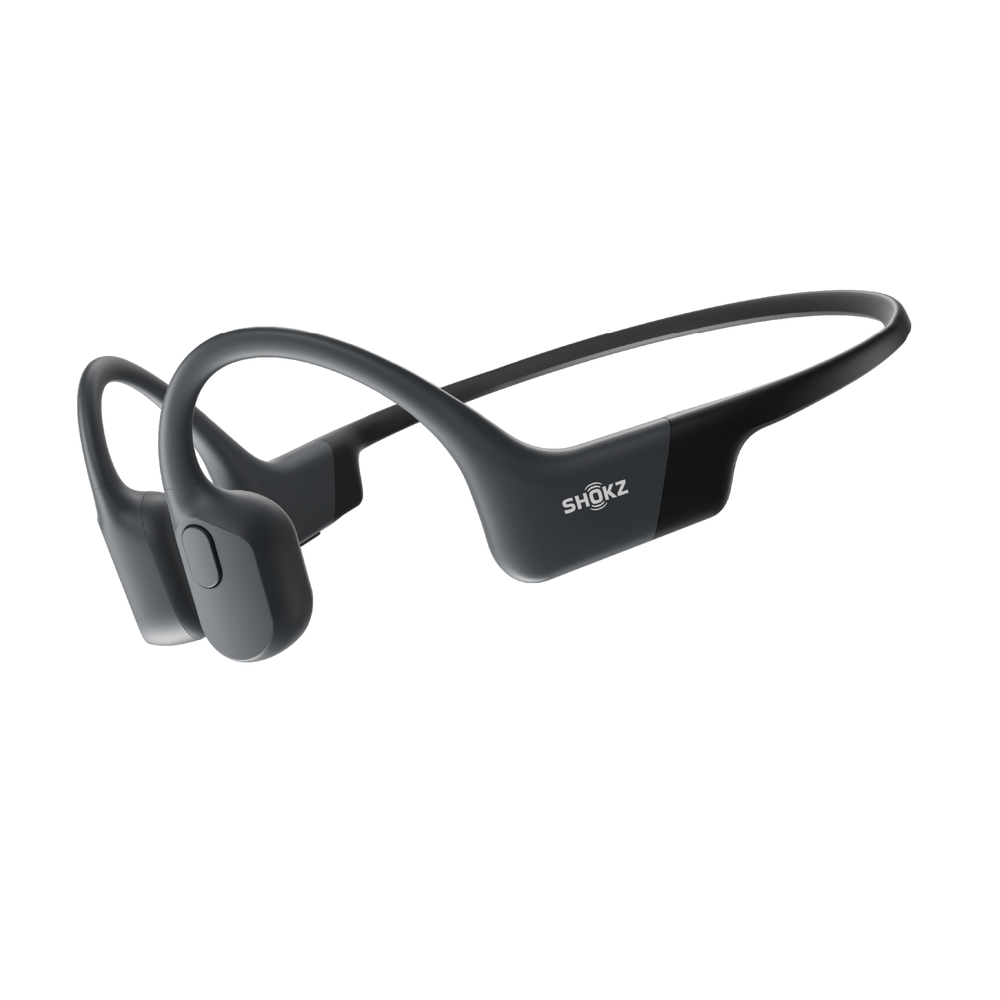
The OpenRun is not an earbud at all, and that is the point. Bone conduction sends sound through your cheekbones from pads in front of your ears, leaving the ear canal completely open. On roads with traffic, bikes and dogs, you hear the world directly rather than through a transparency mode. If awareness is your first requirement, nothing sealed competes with not blocking the ear.
Shokz rates the wraparound titanium band at IP67, so it shrugs off sweat and rain and can survive brief immersion, though it is not a swimming headphone. Battery is 8 hours by Shokz’s figures, enough for a marathon for most runners, with a 10-minute quick charge worth about 1.5 hours. At 26 grams it is the lightest thing here, and the physical buttons work fine with gloves.
The trade is sound. Bone conduction gives up deep bass, leaks a little at high volume, and wind noise competes with it on exposed routes. Calls are serviceable rather than great. Treat it as the awareness pick, not the sound pick, and check race rules first: some organised events restrict headphones, and an open-ear design is not automatically exempt.
Key facts
- Price band: $100–130 (list $129.95)
- Battery, manufacturer-stated: up to 8 hrs per charge; 10-min quick charge adds about 1.5 hrs
- Fit: open-ear bone conduction, wraparound titanium band, 26g; Standard and Mini sizes
- No ANC (ears stay open by design)
- Codecs: SBC; Bluetooth 5.1, multipoint
- IP67; magnetic induction charging (no USB-C); warranty 2 years
Pros
- Full natural awareness of traffic, no transparency mode needed
- IP67 and 26 grams: the set you forget you are wearing
Cons
- Thin bass and some sound leakage, like every bone conduction set
- Proprietary magnetic charging cable to lose
4. JBL Endurance Peak 3: best sealing against the weather
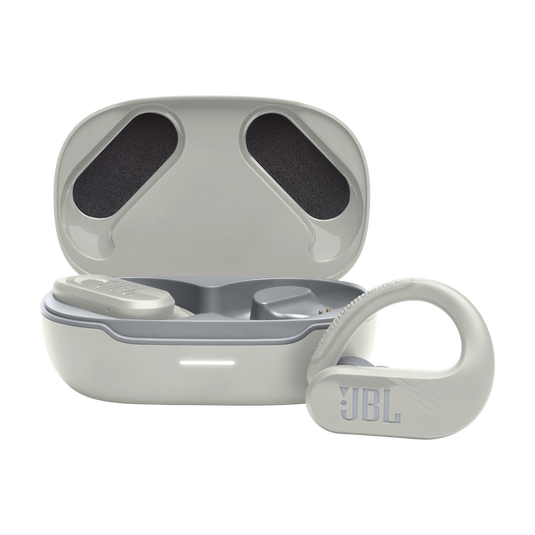
If your runs happen in real weather, the Endurance Peak 3 carries the strongest rating here: IP68, dust-tight and rated by JBL for 30 minutes at up to 1.5 metres. The fit is JBL’s TwistLock design, a bendable ear hook enhancer you twist into place. Battery is 10 hours in the buds and 50 hours total with the case by JBL’s figures.
There is no ANC here. Instead you get Ambient Aware, which pipes in the world around you, and TalkThru, which drops the music so you can talk to a running partner or a marshal. For road running that trade is defensible; for a treadmill in a loud gym, less so. Touch controls are the other compromise: fine dry, less certain with soaked hands, so set your playlist before you leave.
Price is the pleasant surprise: list is $99.95, and the street price has spent long stretches well under it.
Key facts
- Price band: $50–100 (list $99.95; street price often lower)
- Battery, manufacturer-stated: 10 hrs per charge, 50 hrs total with case; Speed Charge
- Fit: TwistLock bendable ear hook enhancer, three tip sizes
- No ANC; Ambient Aware and TalkThru instead
- Driver: 10mm
- IP68 (buds); USB-C case charging; warranty 1 year
Pros
- IP68, the strongest sealing here, at a mid-band price
- Ambient Aware for roads, and a hook that genuinely twists to lock
Cons
- No ANC for gym or treadmill sessions
- Touch controls can misread with wet hands
5. Beats Fit Pro: best wingtip fit for iPhone owners

Not every runner wants a hook over the ear. The Fit Pro holds on with a flexible wingtip that tucks into the ear’s fold, less fiddly at 6 a.m. and less likely to fight with sunglasses or a cap. You get the Apple H1 chip, real ANC with Transparency, Spatial Audio, and a physical button on each bud rather than a touch panel, so volume and track changes land first time with sweaty fingers.
Battery is the honest weakness for distance runners: 6 hours per charge with ANC on by Apple’s figures, 7 off, up to 30 total with the case. The IPX4 rating is splash-level only, and this is a 2021 design with no wireless charging.
Android owners get the Beats app for pairing, controls and a fit test, but automatic switching and Spatial Audio are Apple-side; picks one and four give Android runners more for less.
Key facts
- Price band: $160–200 (list $199.99; street price often lower)
- Battery, manufacturer-stated: 6 hrs per charge with ANC on, 7 hrs off; up to 30 hrs total with case
- Fit: flexible secure-fit wingtips, three tip sizes
- ANC: yes, with Transparency mode; Adaptive EQ; Apple H1 chip
- Codecs: AAC, SBC; Class 1 Bluetooth; physical button on each bud
- IPX4 (buds; case not rated); USB-C only, no wireless charging; warranty 1 year
Pros
- Wingtip fit without hook bulk, plus a real button per bud
- The natural iPhone pick: H1 pairing, Spatial Audio, Find My
Cons
- Six hours per charge is the shortest working day here
- IPX4 only, and a 2021 design at a still-premium price
6. JLab GO Sport+: best budget hooks

The GO Sport+ is the budget end of the same argument as pick one: smaller earhooks, an IP55 rating for the buds, and a Be Aware mode that lets in outside sound for road stretches. JLab’s figures give 9 or more hours per charge and 35 or more in total, at about a fifth of the Fit Pro’s price. Bluetooth 5.3, Google Fast Pair and app EQ are properly current.
What the money does not buy: no ANC (Be Aware is a pass-through, not cancellation), the smallest drivers here at 6mm, and an integrated case charging cable. None of that stops it being the right answer for a runner whose main fear is a $200 bud bouncing into a drain.
Key facts
- Price band: $30–50 (list $49.99)
- Battery, manufacturer-stated: 9+ hrs per charge, 35+ hrs total; 10-min charge adds about 1 hr
- Fit: earhooks, three gel tip sets
- No ANC; Be Aware pass-through mode; EQ presets in the JLab app
- Codecs: SBC, AAC; Bluetooth 5.3, Google Fast Pair, dual connect
- Driver: 6mm; IP55 (buds only)
- Case charges by integrated USB-C cable; warranty 2 years
Pros
- Hooks, IP55 and 9-hour buds for under $50
- A 2-year warranty at a throwaway price
Cons
- No ANC, and Be Aware is no substitute on a loud road
- Integrated case cable cannot be replaced
All 6 compared
| Earbud | Price band | Fit hardware | IP rating | Battery per charge (maker-stated) | Total with case | Awareness option | Controls |
|---|---|---|---|---|---|---|---|
| JLab Epic Air Sport ANC Gen 2 | $80–100 | Earhooks | IP66 | 11+ hrs (ANC on) | 70+ hrs | ANC modes | Touch |
| Beats Powerbeats Pro 2 | $200–250 | Earhooks | IPX4 | 8 hrs (ANC on) | 36 hrs (ANC on) | Transparency | Physical buttons + rockers |
| Shokz OpenRun | $100–130 | Open-ear band | IP67 | 8 hrs | No case (charges directly) | Open ear by design | Physical buttons |
| JBL Endurance Peak 3 | $50–100 | TwistLock hooks | IP68 | 10 hrs | 50 hrs | Ambient Aware | Touch |
| Beats Fit Pro | $160–200 | Wingtips | IPX4 | 6 hrs (ANC on) | Up to 30 hrs | Transparency | Physical button |
| JLab GO Sport+ | $30–50 | Earhooks | IP55 | 9+ hrs | 35+ hrs | Be Aware mode | Touch |
Battery figures are manufacturer-stated. IP ratings apply to the buds; no case here should be treated as water resistant.
The awareness trade, stated plainly
Three of these sets seal your ear and offer a transparency mode. Ambient Aware and Be Aware pass sound through microphones: helpful, but processed, with a delay and a volume ceiling. The Shokz blocks nothing. None of these options makes road running safe, and no mode here should be read as a guarantee: they change how much you can hear, not whether a driver has seen you.
How we picked these earbuds
The method matches our main guide to the best wireless earbuds under $100, tightened for running. Fit hardware came first: every pick holds on with a hook, a wingtip or a band, because friction-only buds get lost. IP ratings and battery figures came from manufacturer pages, not listings. Every model was checked against the CPSC recall database; none of the six is under an active recall.
FAQs
Are ear hooks or wingtips better for running?
Hooks, for most runners. An earhook holds mechanically even when sweat breaks the seal, which is why four of these six picks use one. Wingtips like the Fit Pro’s are better if hooks fight with your glasses, cap or helmet straps; they are secure, but they lean on the seal more than a hook does.
What IP rating do running earbuds actually need?
IPX4 is the floor: it covers sweat and splashes. Step up if you run in real rain or rinse your buds after sessions. IP55 and IP66 add dust protection and stronger water jets, IP67 survives brief immersion, and the Peak 3’s IP68 is the strongest rating here. The rating belongs to the buds; the cases in this list are not rated.
Can you hear traffic with bone conduction headphones?
Yes, better than with any sealed bud, because your ear canal stays open and traffic reaches your ears directly, not through a microphone. That is hearing more, not hearing everything: loud music still competes with the road, and Shokz does not claim bone conduction makes listening safe. Keep the volume moderate on roads.
How much battery does a marathon runner need?
Work backwards from your finish time plus the warm-up. A four-hour marathoner needs a genuine five hours. Slower runners should look at per-charge figures, not case totals, because you cannot recharge mid-race: the JLab Epic Air Sport’s 11 or more hours with ANC on and the Peak 3’s 10 hours are the marathon-safe numbers here.
Is it sensible to run with noise cancelling on?
On a treadmill or a closed trail, yes. On open roads, run ANC off or in transparency and treat even that as a compromise: cancellation removes exactly the low, steady sounds, engine noise included, that warn you a car is coming. Several organised races restrict earbuds outright.
1 thought on “Best Earbuds for Running”