
Updated October 2026
Here is the honest answer up front: a cheap drip coffee maker can make a genuinely good pot, and the sweet spot is roughly $30 to $100. Below that range you are buying the very basics, which is fine if you know it. Above it, you start paying for better brew temperature and build, not for magic. Every machine in this guide is a current, well selling drip model, the priciest pick here is still only around $100 to $120, and not one of them needs pods, apps, or a subscription to make your morning coffee.
This page is the budget companion to our main coffee guide. If you want the full field across all prices, start with the coffee pillar, and if you already know you want drip specifically, our drip coffee maker guide goes deeper on brew quality. This guide answers a narrower question: what is the most coffee you can get for the least money, without buying something that will annoy you by February?
What do you actually give up with a cheap coffee maker?
Three things, and it helps to know them before you shop. First, no built in grinder at this price. You will use pre ground coffee or grind separately. Second, a basic glass carafe on a hot plate instead of a thermal carafe. That is fine for a pot drunk within the hour, and less fine for coffee that sits until lunch, because the plate slowly cooks it. Third, brew temperature control is simpler. Cheap machines heat water and push it through, and the better ones here, the Cuisinart and the Ninja, earn their place by paying more attention to how hot and how evenly that water arrives.
What you do not give up: a timer. Almost every machine below, including the cheapest, can be set the night before so the pot is ready when you are. That feature used to be a premium extra and it is now standard, which is the main reason cheap drip machines are such a good deal in 2026.
How do the six machines compare?
| Machine | Capacity | Programmable | Carafe | Standout feature | Typical price band |
|---|---|---|---|---|---|
| Mr. Coffee 12-Cup Programmable | 12 cups | Yes, 24 hour | Glass | The default budget pick for a decade | Check listing |
| BLACK+DECKER CM1160B | 12 cups | Yes | Glass | Sneak-A-Cup and a washable basket | Check listing |
| Mueller Home 12-Cup DC-550x | 12 cups | No timer on this version | Borosilicate glass | Reusable filter and anti drip, around $30 | Around $29 |
| Hamilton Beach FrontFill 46310 | 12 cups | Yes | Glass | Fills from the front, fits under cabinets | Check listing |
| Ninja CE251 | 12 cups | Yes, 24 hour | Glass | Classic and Rich brew strengths, hotter brewing | $70 to $90 |
| Cuisinart DCC-3200 PerfecTemp | 14 cups | Yes | Glass | Brew strength control and a 1 to 4 cup setting | $100 to $120 |
Why is the Mr. Coffee still the default cheap coffee maker?

Because it has been the answer to “just get me a coffee maker” for over a decade, and Reddit threads about cheap machines are full of owners saying some version of the same thing: the basic Mr. Coffee cost them very little, the timer changed their mornings, and the machine kept going for years. The 12-Cup Programmable linked here is the budget pick in our main coffee guide for the same reason. It brews on a 24 hour timer, pauses so you can grab a cup mid brew, includes a reusable filter, and shuts itself off after four hours.
Key facts:
- Capacity: 12 cups.
- Power: 900 watts.
- Timer: programmable up to 24 hours ahead, with Grab-A-Cup auto pause.
- Size: about 9.8 in deep, 10.5 in wide, 13.7 in tall.
- Warranty: 1 year limited.
Who it suits: households that drink a full pot every morning and want the set it and forget it routine at the lowest sensible price. The trade offs are the ones listed at the top of this guide in their purest form: plastic build, glass carafe on a plate, and coffee that tastes best fresh rather than reheated at noon. If that sounds like your mornings anyway, this is the pick and you can stop reading.
What if you want the same idea with a washable basket and a better pour?
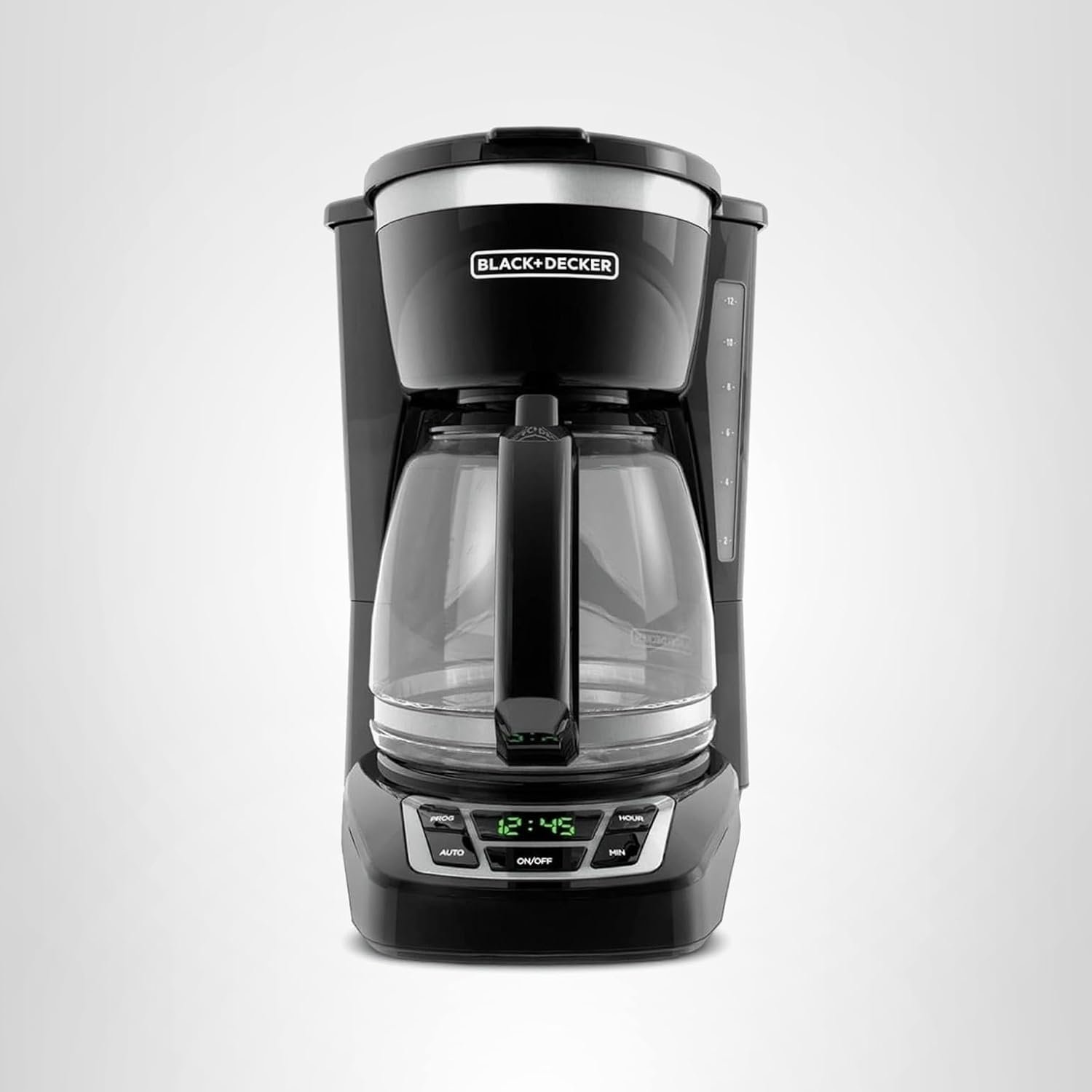
The BLACK+DECKER CM1160B is the other half of the budget duopoly, and plenty of buyers pick it over the Mr. Coffee for two small, practical reasons. Sneak-A-Cup stops the flow cleanly when you pull the carafe out mid brew, so the first impatient cup does not leave a puddle on the hot plate. And the filter basket is washable, so you are not married to paper filters. It is a 12 cup digital machine with an auto brew timer, a water window, and a keep hot plate.
Key facts:
- Capacity: 12 cups.
- Programmable: yes, with auto brew.
- Filter: washable basket, paper filters optional.
- Carafe: glass with a drip resistant pour.
- Extras: Sneak-A-Cup pause and a visible water window.
Who it suits: anyone choosing between the two big budget names who cares about the mid brew pour and skipping paper filters. Between this and the Mr. Coffee you are choosing details, not quality tiers.
Is there a decent coffee maker for around $30?
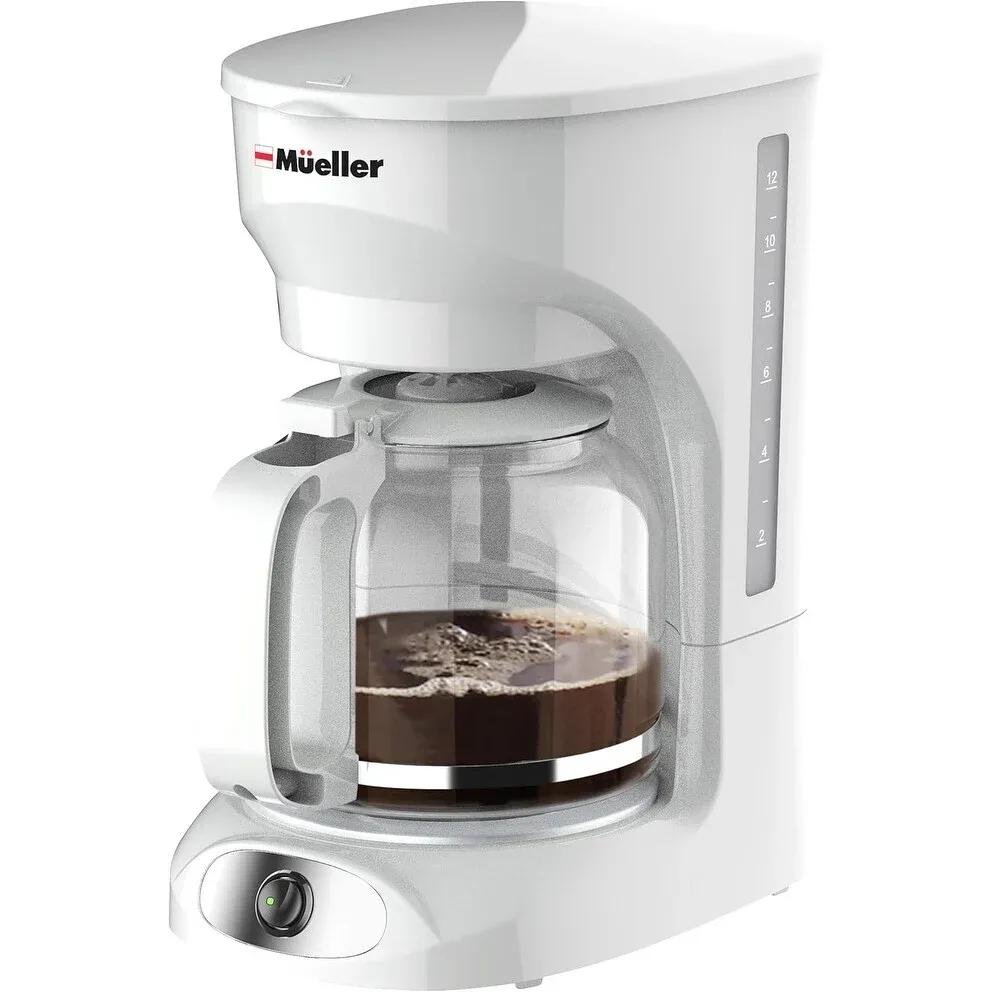
Yes, and it is the pick most roundups skip because the brand is not a household name. The Mueller Home 12-Cup is an Amazon native machine that sells steadily on a simple pitch: a borosilicate glass carafe, a reusable permanent filter in the box, an anti drip system, a keep warm function, and an automatic shut off, at a price that has been seen at $28.79 for the white version linked below. There is no brew timer on this version, and that is the honest cost of the low price. You fill it and press the button in the morning, and it makes the pot.
Key facts:
- Capacity: 12 cups.
- Carafe: borosilicate glass.
- Filter: reusable, included.
- Functions: keep warm and auto off, with a clear water level window.
- Size on the white version: about 10.55 in deep, 7.68 in wide, 12.52 in tall.
- Price seen on Amazon: $28.79 for the white listing.
Who it suits: dorms, first apartments, offices that need a second machine, and anyone whose coffee habit is one pot made after they wake up. If waking up to ready coffee is the whole point for you, spend the extra on the Mr. Coffee or the BLACK+DECKER above and get the timer. Colours other than white are sold under separate listings, so check you are on the colour you want before ordering.
What if your coffee maker lives under a low cabinet?

Then the Hamilton Beach FrontFill solves the one problem nobody mentions until they own the machine: filling it. Most drip machines fill from the top and the back, which means pulling the whole unit out from under the cabinet every morning. The FrontFill 46310 takes water from the front through a FrontFill reservoir, and the brew basket swings open toward you for grounds, so the machine can live in one spot permanently. Beyond that trick it is a complete budget machine: programmable, three brewing options including a bold setting, and an auto pause and pour function.
Key facts:
- Capacity: 12 cups.
- Filling: front access water reservoir, swing open brew basket.
- Programmable: yes, with 3 brewing options.
- Pause: auto pause and pour for a mid brew cup.
- Model: 46310, sold by Hamilton Beach on Amazon since 2017 and still a current seller.
Who it suits: under cabinet kitchens, shorter users who are tired of reaching over a tall machine, and anyone whose current routine involves dragging the coffee maker across the counter twice a day. It costs a little more than the two budget defaults, and what you are paying for is the filling design, which for the right kitchen is worth every cent of the difference.
Which cheap machine makes the best tasting pot?

Of these six, the Ninja CE251 is the one coffee people point to, because Ninja built it around the two things cheap machines usually skip: hotter brewing and a choice of strength. It offers Classic and Rich brew styles, the Rich setting being the one to use if your usual complaint is that drip coffee tastes thin. The 60 ounce reservoir is removable, which makes filling and cleaning easier than the fixed tanks on cheaper machines, and a small batch function keeps a half pot from coming out weak. It sells in serious numbers, with recent listings showing over 10,000 sold in a month, and it has been seen at $69.99 against a list price of $89.99.
Key facts:
- Capacity: 12 cups, 60 oz removable reservoir.
- Brew styles: Classic and Rich, with a small batch setting.
- Timer: 24 hour programmable delay brew.
- Warming plate: adjustable, so coffee can be held without scorching as fast.
- Price seen recently: $70 to $90.
Who it suits: anyone upgrading from a bargain machine because the coffee itself disappointed them, rather than because the machine broke. It is still a glass carafe machine with no grinder, so the ceiling is the same as the rest of this guide, but it gets closer to that ceiling than anything else here under $100.
When is it worth spending around $100 instead?

When you brew for a crowd, or when you want the controls the cheaper machines skip. The Cuisinart DCC-3200 PerfecTemp is the stretch pick here and it earns the place on three features. It brews 14 cups instead of 12, which matters for big households and offices. It has real brew strength control, plus a dedicated 1 to 4 cup setting that adjusts the cycle for small pots. And its PerfecTemp pitch is about holding a proper brewing temperature, the thing that separates a flat pot from a decent one. Cuisinart also comes up in Reddit coffee discussions with owners reporting machines still going after five years, including in cabins where appliances get treated roughly.
Key facts:
- Capacity: 14 cups.
- Power: 1100 watts.
- Controls: brew strength control, 1 to 4 cup setting, brew pause.
- Timer: fully programmable.
- Price: seen at $99.99 recently against a $119.95 list price.
Who it suits: big households, offices, and buyers who plan to keep the machine for years and would rather spend once at $100 than twice at $50. If it is just you and a mug, it is more machine than you need, and the Mr. Coffee at the top of this guide will make you just as happy for less.
How long should a cheap coffee maker last, and how do you help it?
Two to five years is a fair expectation at this price, and the variable is mostly water. Scale builds up inside cheap machines the same way it does inside expensive ones, and it is the main reason a machine that was fine last year starts brewing slowly or tasting off. Run a vinegar or descaler cycle every month or two, rinse the carafe instead of letting coffee sit in it all day, and any machine here should give you its full life. For the wider picture across every budget, go back to our coffee pillar, and for a pure drip shortlist see our drip coffee maker guide.
Frequently asked questions
Is a $30 coffee maker actually safe to use every day?
Yes. The machines in this guide are sold by established brands or high volume Amazon sellers, carry standard electrical certifications for the US market, and include auto shut off features. Cheap here means simple controls and plastic construction, not missing safety basics. The Mueller at around $29 is the proof: it still includes an automatic shut off and a keep warm function.
Why does coffee from a cheap machine sometimes taste weak?
Usually one of three reasons: the brew temperature runs a little low, the shower head wets the grounds unevenly, or the coffee to water ratio is off. Use a touch more coffee first, it is the free fix. If weak coffee is your standing complaint, the Ninja CE251 above is the pick in this guide built to address it, with its Rich brew setting and hotter brewing.
Glass carafe or thermal carafe at this price?
Glass, almost always. Thermal carafes push a machine toward or past $100, and a glass carafe on a warming plate is fine if the pot is drunk within about an hour. If your household brews at 7 and is still pouring at 11, that is the one habit that justifies stretching to a thermal model, and expect to leave the cheap category to get a good one.
Should I buy a machine with a built in grinder instead?
Only if counter space is the binding problem. Budget grind and brew machines tend to do both jobs adequately and neither job well, and the grinder adds a part that needs cleaning and can fail. A basic drip machine plus pre ground coffee is the more reliable cheap setup.
What about pod machines like Keurig?
They solve a different problem: one cup at a time with zero cleanup, at a much higher cost per cup. If you drink one mug a day, a pod machine can make sense. If you drink pots, drip wins on running cost every time, which is why this guide is all drip. One model to skip either way: we exclude the Keurig K-Supreme from all of our guides, because of a widely reported descaling defect that became the subject of a class action.