
Updated October 2026
For most home gyms, the right barbell collars are a pair of 2 inch quick-release clamps for an Olympic bar. The Lock-Jaw PRO 2 is the safest default pick, the Synergee Aluminum is the pick if you want metal, and a cheap spring clip pair like the CAP Olympic clips is fine as a backup. Before you buy anything, measure your bar sleeve. A 2 inch collar on a 1 inch standard bar will slide around and hold nothing, and that one mistake explains most collar returns.
This guide is built from manufacturer specifications and retailer listings. Nothing here is presented as lab testing. Where a holding figure comes from the maker, it is labelled as the maker’s claim, because collar makers all rate their own grip generously.
Do you need 2 inch Olympic collars or 1 inch standard collars?
Measure the thick end of your bar, the sleeve the plates slide onto. If it is about 2 inches across (50 mm), you own an Olympic bar and you need 2 inch Olympic collars. If it is about 1 inch across (25 mm), you own a standard bar and you need 1 inch collars. The two sizes do not interchange.
Olympic is the common case. Almost every bar sold for a power rack or bumper plates has 2 inch sleeves, and every pick in the main list below fits that size. Standard 1 inch bars are the thinner bars sold with vinyl or cast iron plate sets, often with threaded ends that take a spin lock nut instead of a collar. If your bar ends are threaded, a smooth 1 inch clamp collar may not grip the threads well.
Two edge cases catch people out. Axle bars and many specialty bars have sleeves a little under 2 inches, around 1.9 inches, and some regular collars feel loose on them. Lock-Jaw sells separate axle models for that job, and its listings say plainly that the regular 2 inch HEX collar does not fit 1.9 inch bars. Loadable dumbbell handles split the same way. Olympic handles take the same 2 inch collars listed here, which is the fit point covered in our guide to choosing adjustable dumbbells, and standard handles need 1 inch collars.
What is the difference between quick-release clamps, spring clips and screw collars?
Quick-release clamp collars are the modern default. A lever snaps the collar shut around the sleeve, rubber or elastomer pads inside grip the bar, and one press or pull opens it again. They go on and off in a couple of seconds and hold well when the bar is dropped. Every Lock-Jaw, Synergee, Clout Fitness and DMoose pick below is this type.
Spring clips are the squeeze handles you see in older gyms. You pinch the handles, slide the clip on, and let go. They are cheap, light and nearly impossible to break, but the grip is the weakest of the three styles and plates can creep during deadlifts or any lift where the bar tips. Treat them as a light training and backup option, not as the collar for dropped Olympic lifts. The CAP pick below is this type.
Screw and spin lock collars thread onto the bar end or tighten with a screw knob. They hold firmly and cost little, but they only suit threaded standard bars or specific specialty bars, and they are slow when you change plates often. Proloc style screw collars get recommended in lifter forums for specialty bars with odd sleeve sizes, because a screw adjusts to the bar instead of assuming it is 2 inches. For a normal Olympic bar, the quick-release clamp is the practical answer.
How do the best barbell collars compare?
| Product | Fit | Style | Build | Best for |
|---|---|---|---|---|
| Lock-Jaw PRO 2 | 2 inch Olympic | Quick-release clamp with snap latch | Reinforced resin frame, elastomer pads | The default pick for most Olympic bars |
| Lock-Jaw OLY 2 | 2 inch Olympic | Quick-release clamp | Resin frame, elastomer pads | Lifters who want the Lock-Jaw design for less |
| Synergee Aluminum | 2 inch Olympic | Quick-release lever clamp | Aluminum body, rubber lining | Lifters who prefer metal over resin |
| Clout Fitness Olympic Clamps | 2 inch Olympic | Quick-release clamp | Reinforced composite resin | A budget clamp that still locks properly |
| DMoose Fitness Barbell Clips | 2 inch Olympic | Quick-release clamp | Nylon body, TPR rubber lining | A low cost pair, magnetic on some versions |
| Greententljs Barbell Clamps | 2 inch Olympic | Quick-release snap latch clamp | ABS reinforced plastic | The cheapest locking pair that sells in volume |
| CAP Barbell Olympic Spring Clips | 2 inch Olympic | Spring clip | Chrome finished steel | A backup pair and light training |
Which barbell collars should you buy?
Lock-Jaw PRO 2 Barbell Collar
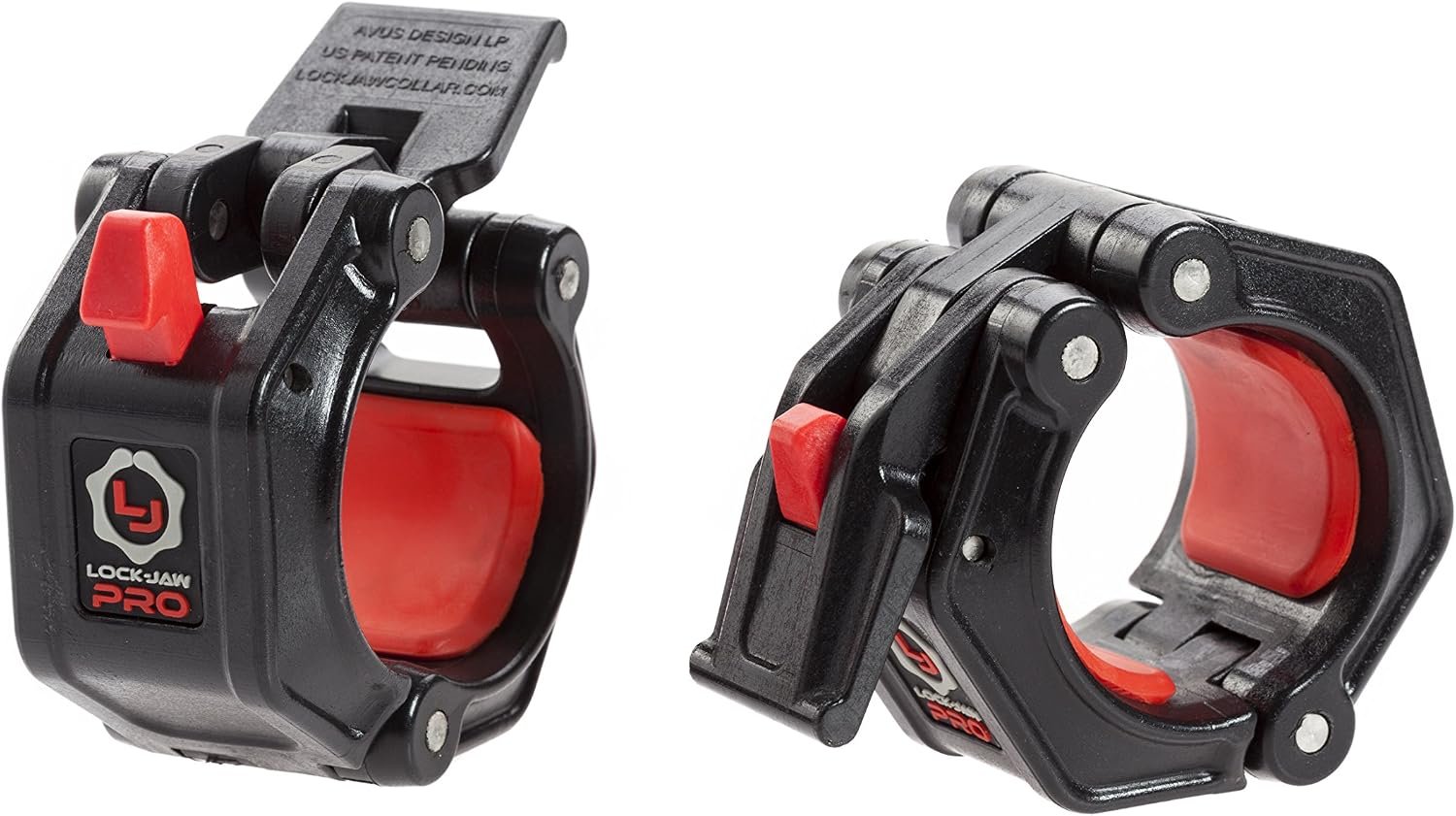
This is the collar design most of the category copies, and the one that keeps surfacing in home gym discussions under two names. Garage Gym Reviews notes that the Rogue HG 2.0 collars are the same basic collar as the Lock-Jaw PRO 2, and forum lifters have described the Rogue version as a Rogue branded Lock Jaw Pro for years.
The specs are clean and published. Fit is 2 inch and 50 mm Olympic sleeves. The frame is an advanced composite resin. The lever is larger than the original version and closes with a spring loaded snap latch. Elastomer pads inside grip the sleeve and protect the bar finish. Weight is 0.88 lb per pair, from the maker’s product sheet, and warranty there is 1 year. Lock-Jaw rates the PRO 2 at over 50 percent more holding power than its classic collar. That figure is the maker’s own rating, not an independent measurement.
It suits the lifter who drops deadlifts, uses bumper plates, or wants to buy the proven design once. It costs more than the budget clamps below, and the wide body uses more sleeve room than the slim Synergee.
Lock-Jaw OLY 2 Olympic Barbell Collar
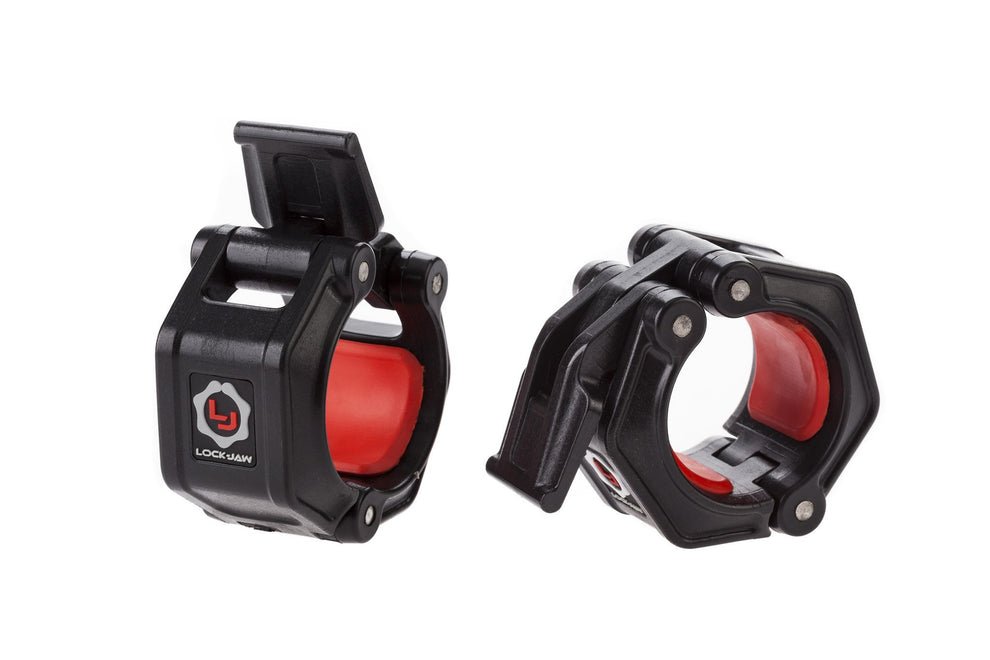
The OLY 2 is the simpler Lock-Jaw. It keeps the patented uni-body frame and the elastomer pads, uses a larger lever than the original Olympic collar, and skips the extra snap latch hardware of the PRO 2. Fit is 2 inch and 50 mm Olympic sleeves, including, the maker says, specialty bars with Olympic size sleeves. Weight is 1.1 lb per pair on the Amazon listing. The frame material is listed as resin. Lock-Jaw again rates holding power at 50 percent above its classic version, and again that is a maker rating.
Warranty wording on this model varies between listings, so check the exact listing before you rely on a term. That inconsistency is the main reason it sits below the PRO 2 here, not the design itself. It suits general strength training on an Olympic bar, squats, bench, rows and deadlifts, where you want the original maker’s pads and lever without paying the PRO 2 price.
Synergee Aluminum Barbell Collars

Synergee is the metal option in this list, and it earns its place in independent roundups that rank it alongside the Rogue and Lock-Jaw names. The body is aluminum. The inside is lined with rubber that runs around the full circumference of the sleeve, per the maker’s own guide. The lock is a quick-release lever that snaps shut and clicks open. Fit is 2 inch Olympic sleeves only.
Published dimensions help if your sleeves are short. Width is 1.5 inches. Weight is 0.84 lb per pair. Warranty listed on the retailer specification is a 1 year limited warranty. The set has commonly sold in the $20 to $30 band.
It suits lifters who do not trust resin collars or who want a narrower collar that leaves more room for plates. Aluminum can show marks over time, which is cosmetic, but worth knowing before you pay extra for the finish.
Clout Fitness Olympic Barbell Clamps

Clout Fitness is the budget pick that review sites keep naming when a Lock-Jaw is out of budget, including a best budget pick label from Garage Gym Reviews. The design follows the same pattern. Fit is 2 inch Olympic bars, and the maker also lists hex bars. The body is reinforced composite resin. The latch is oversized and the lever is a quick-release type, built for one handed changes. The maker rates the resin at 5,000 PSI tensile strength. As with the Lock-Jaw figures above, treat that as a material specification from the seller, not a grip test.
What you give up against the Lock-Jaw pair is track record and documentation. The warranty detail is thinner, and the pads and hinge are built to a price. It suits a first home gym or anyone replacing spring clips on a tight budget who still wants a collar that locks instead of squeezes.
DMoose Fitness Barbell Clips
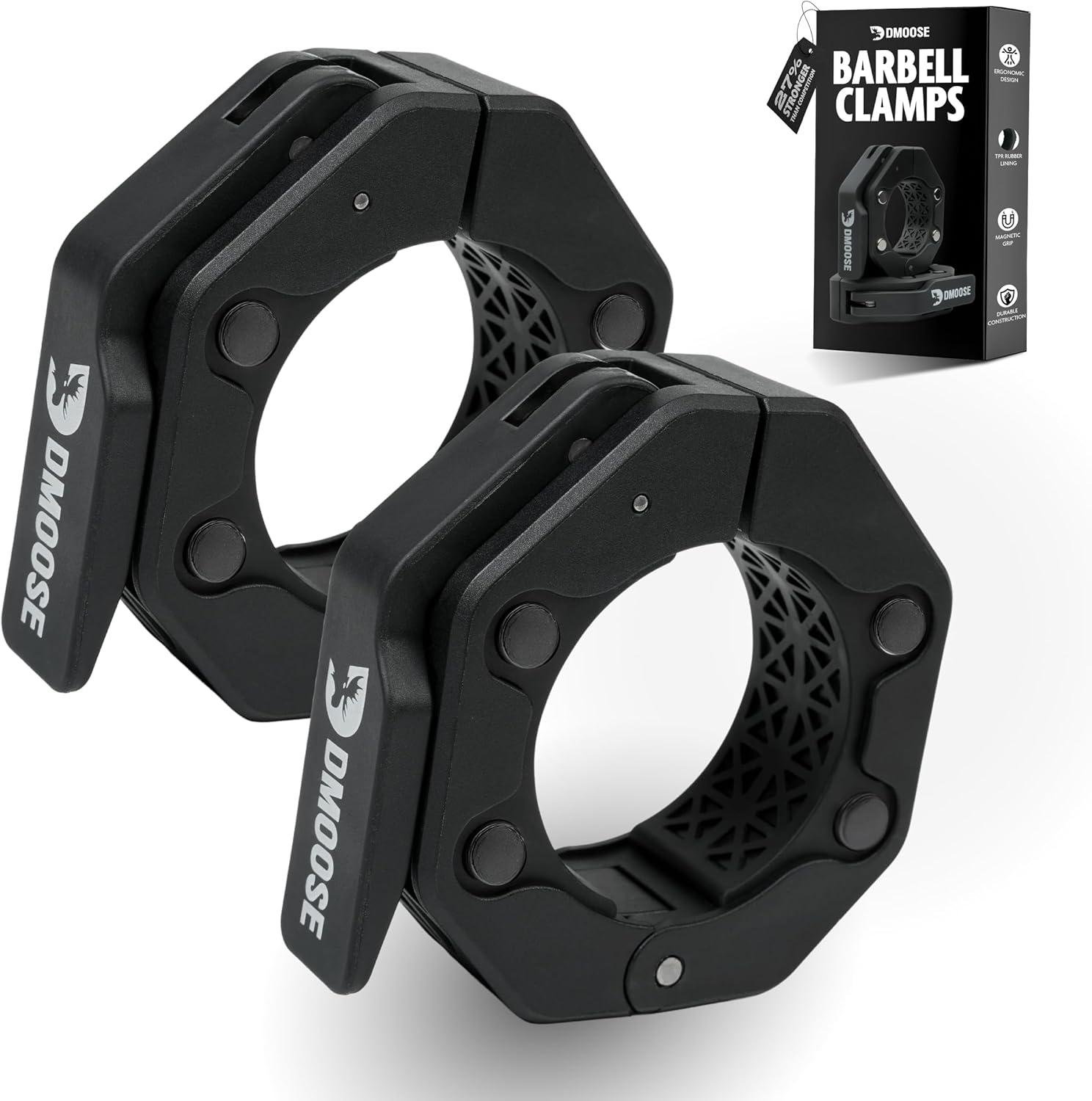
DMoose is the Amazon native pick on this list. Garage Gym Lab named the DMoose Olympic collars its best budget collar on Amazon, and the current 2 inch listing sits near the top of Amazon’s exercise collar rankings, which is a real sales signal rather than a marketing one. Fit is 2 inch Olympic bars. The body is nylon. The lining is TPR rubber, listed as an anti-slip grip. The mechanism is a quick-release locking clamp. Model number is CLAMP-V2. Some versions of this collar are magnetic, so they stick to a steel rack upright for storage, and some are not. Check the version name on the listing before you buy for that feature. It suits home lifters who want a cheap pair in a colour they can spot in a gym bag, and who train controlled lifts rather than dropping heavy cleans all session.
Greententljs Barbell Clamps

This is the unglamorous pair that a lot of home gyms actually own. The black version has sold in the thousands on Amazon, with one deals listing showing 1,000 plus sold in a month, because the price undercuts every name brand while the mechanism stays familiar. Fit is 2 inch Olympic bars. The body is ABS reinforced plastic. The lock is a spring powered snap latch, worked with one hand. The maker is Shenzhen Greenten.
There is no meaningful warranty story here and no premium pad system, so judge it as what it is. It suits a spare pair for a second bar, a landmine setup, or a beginner gym where the collar budget is close to zero and spring clips feel too loose.
CAP Barbell Olympic Spring Clip Collars
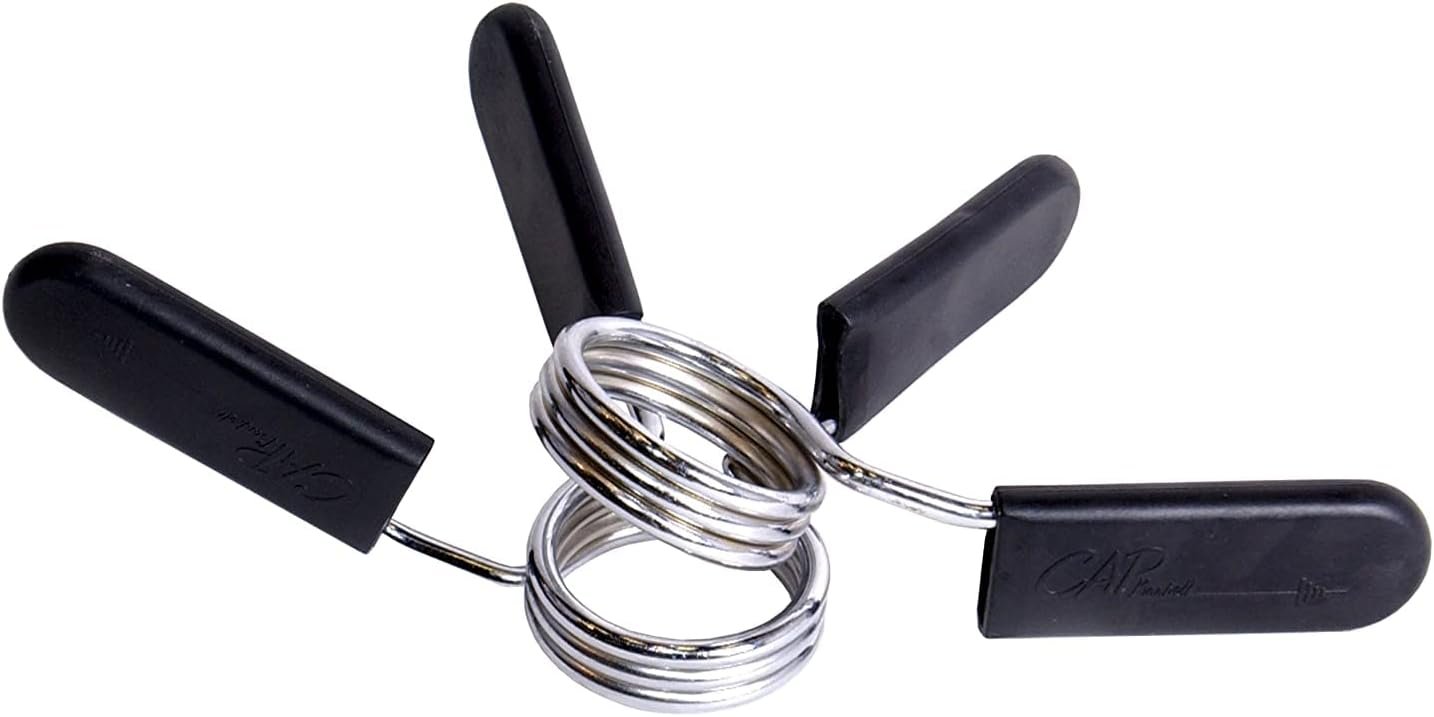
Every gym bag used to hold a pair of these. The CAP clips are the classic spring design, model OC-06A, in chrome finished steel. Fit is 2 inch Olympic bars only. CAP’s own listing answers the common question directly. No, they do not fit a 1 inch threaded bar. You squeeze the handles, slide the clip against the plates, and release. There is no lever, no pad and no latch to break, and the pair has commonly sold for under $15.
The limits are the style’s limits. Spring clips hold least well of anything in this guide, they can walk during deadlifts, and the handles take real hand strength when the spring is new. It suits warmups, light work, a backup pair in the bag, and lifters equipping several bars at once for very little money. If you are building the wider setup around the bar, our guide to budget adjustable dumbbells covers the other half of a small home gym corner.
How do you check a collar before a heavy set?
Slide the collar tight against the plates, close it fully, then pull it outward by hand. A closed clamp collar should not slide. If it moves on a clean, dry sleeve, the pads are worn, the sleeve is undersized for that collar, or the collar was never fully closed. Wipe chalk dust off the sleeve too. Dust under the pads is a quiet cause of creep that looks like collar failure. Then give the loaded bar a controlled first rep and look at the gap. Plates that start tight and finish an inch out are telling you the collar slips under real load, whatever it does in a hand pull.
When should you replace barbell collars?
Replace a clamp collar when the lever closes without resistance, when a pad is torn or missing, when the frame cracks around the hinge, or when it slides in the hand pull test above. Replace spring clips when the handles stay partly open on their own, because that bend is the spring giving up. Collars are safety parts and they are cheap.
FAQs
Are barbell collars necessary if you lift alone at home?
Yes, more so alone, not less. A plate that slides on a squat or bench changes the load mid rep, and alone there is no spotter to catch the bar while you deal with it. Collars plus safety arms are the basic pair.
Will 2 inch collars fit a 1 inch standard bar?
No. A 2 inch collar on a 1 inch sleeve has a full inch of slack and will not grip, no matter how hard the lever closes. Standard bars need 1 inch collars, and threaded standard bars usually use the spin lock nuts they came with. Measure the sleeve first.
Do collars damage barbell sleeves?
Clamp collars with rubber or elastomer pads, like the Lock-Jaw and Synergee picks above, are designed to grip without chewing the sleeve, and their makers sell them on exactly that point. Bare metal spring clips can scratch chrome and light coatings over time. If your bar has a coated sleeve you care about, a padded clamp is the safer habit.
How much weight do barbell collars add?
Very little. The pairs in this guide run from about 0.84 lb per pair for the Synergee Aluminum to 1.1 lb per pair for the Lock-Jaw OLY 2, with the PRO 2 at 0.88 lb. Competition collars are the exception. A calibrated 2.5 kg competition collar is part of the lifted weight by design. None of these home gym picks is that.
Can you use barbell collars on dumbbell handles?
Yes, if the sizes match. Olympic loadable dumbbell handles have 2 inch sleeves and take the same collars as an Olympic bar, which is covered in our guide to the best adjustable dumbbells. Standard 1 inch handles need 1 inch collars. Short handles are where slim collars like the 1.5 inch wide Synergee help, because handle sleeves run out of room fast.