
Updated November 2026
The short version: if you want one answer, buy the Whynter ARC-14SH for proven dual-hose cooling with heat included, or the Midea Duo if you want the strongest mix of efficiency, smart features and low noise. The other five picks below each win a specific job, from tight budgets to small rooms, and one of them is a dual-hose inverter model most roundups skip entirely because it is sold through home stores rather than Amazon.
First, read the BTU numbers the right way
Every portable AC carries two cooling ratings, and comparing the wrong one is how people end up with a room that never gets cold.
- The big number, usually 14,000 BTU, is the old ASHRAE rating. It describes the machine on a test bench.
- The smaller number, labelled SACC or DOE, is the rating that accounts for the heat the unit and its exhaust hose add back into your room. This is the number that predicts real cooling.
A 14,000 BTU (ASHRAE) portable with a 9,200 BTU SACC rating will cool about like a 9,200 BTU window unit. Shop by SACC and the disappointments mostly disappear. Coverage claims in this guide are the brands’ own figures unless noted, and brands are generous with them.
All 7 picks compared
| Pick | Best for | ASHRAE / SACC | Hoses | Noise | Approx. price | Buy |
|---|---|---|---|---|---|---|
| Whynter ARC-14SH | Best overall | 14,000 / 9,200 BTU | Dual | About 51 dB (low) | $500 to $590 | See below |
| Midea Duo MAP14HS1TBL | Efficiency and quiet | 14,000 / 12,000 BTU | Dual | As low as 42 dB | $550 to $680 | See below |
| BLACK+DECKER BPACT14WT | Budget | 14,000 / 10,200 BTU | Single | About 54 dB | $470 to $600 | See below |
| Whynter ARC-1230WN | Big rooms | 14,000 / 12,000 BTU | Dual | 42.5 to 56.5 dBA | $610 to $700 | See below |
| Frigidaire FHPC102AC1 | Small rooms | 10,000 / 6,500 BTU | Single | Not published | $330 to $460 | See below |
| Hisense AP1022TW1GD | Dual-hose value | 14,000 / 10,000 BTU | Dual | 42 to 51 dB | $450 to $550 | See below |
| Dreo AC516S | No-drain convenience | 14,000 / 10,000 BTU | Single | 46 dB | $400 to $500 | See below |
Prices are approximate and shift with the season.
1. Whynter ARC-14SH: best overall

Start with the machine that has anchored recommendation threads for years. The ARC-14SH uses two hoses, one drawing air in and one pushing hot air out, so it never starves itself the way single-hose units do. It also heats, pulling 13,000 BTU of heat pump warmth, which makes it a four-season purchase rather than a three-month one. Its auto-drain system exhausts condensate by itself in most conditions, and the dehumidifier pulls a rated 71 pints a day, which matters in humid summers.
The trade-offs are weight and tech. At about 80 lb it is a commitment to move, and there is no Wi-Fi, just a remote.
Key specs:
- Cooling: 14,000 BTU (ASHRAE) / 9,200 BTU (SACC)
- Heating: 13,000 BTU
- Coverage: up to 500 sq ft
- Noise: about 51 dB on low fan, rated under 56 dBA
- Hoses: dual
- Modes: cool, heat, dehumidify, fan
- Approx. price: $500 to $590
Pros:
- Dual-hose cooling plus a real heater in one unit
- Auto-drain, so condensate rarely needs attention
- Deep owner community, so hoses, parts and fixes are easy to find
Cons:
- No app or voice control
- Fixed-speed compressor cycles on and off rather than ramping smoothly
- Heavy
2. Midea Duo MAP14HS1TBL: best efficiency and quiet running

The Duo is the most modern machine in this guide. Midea routes intake and exhaust through a single hose-in-hose duct, which gives dual-hose pressure balance with a neater window install, and pairs it with an inverter compressor. The result shows up in the numbers: a 12,000 BTU SACC rating, the joint highest here, and a published noise floor as low as 42 dB. This version (the HS model) also heats with a heat pump. Smart control through the app, Alexa or Google Assistant is standard.
Key specs:
- Cooling: 14,000 BTU (ASHRAE) / 12,000 BTU (SACC)
- Coverage: up to 550 sq ft
- Noise: as low as 42 dB
- Hoses: dual, hose-in-hose
- Compressor: inverter
- Heat: yes, heat pump
- Approx. price: $550 to $680
Pros:
- Top-tier SACC rating and the quietest published figure here
- Inverter holds temperature smoothly and uses less power doing it
- Hose-in-hose kit looks cleaner in the window than two separate hoses
Cons:
- About 75 lb, still a two-person lift
- Premium pricing when summer demand peaks
3. BLACK+DECKER BPACT14WT: best budget pick
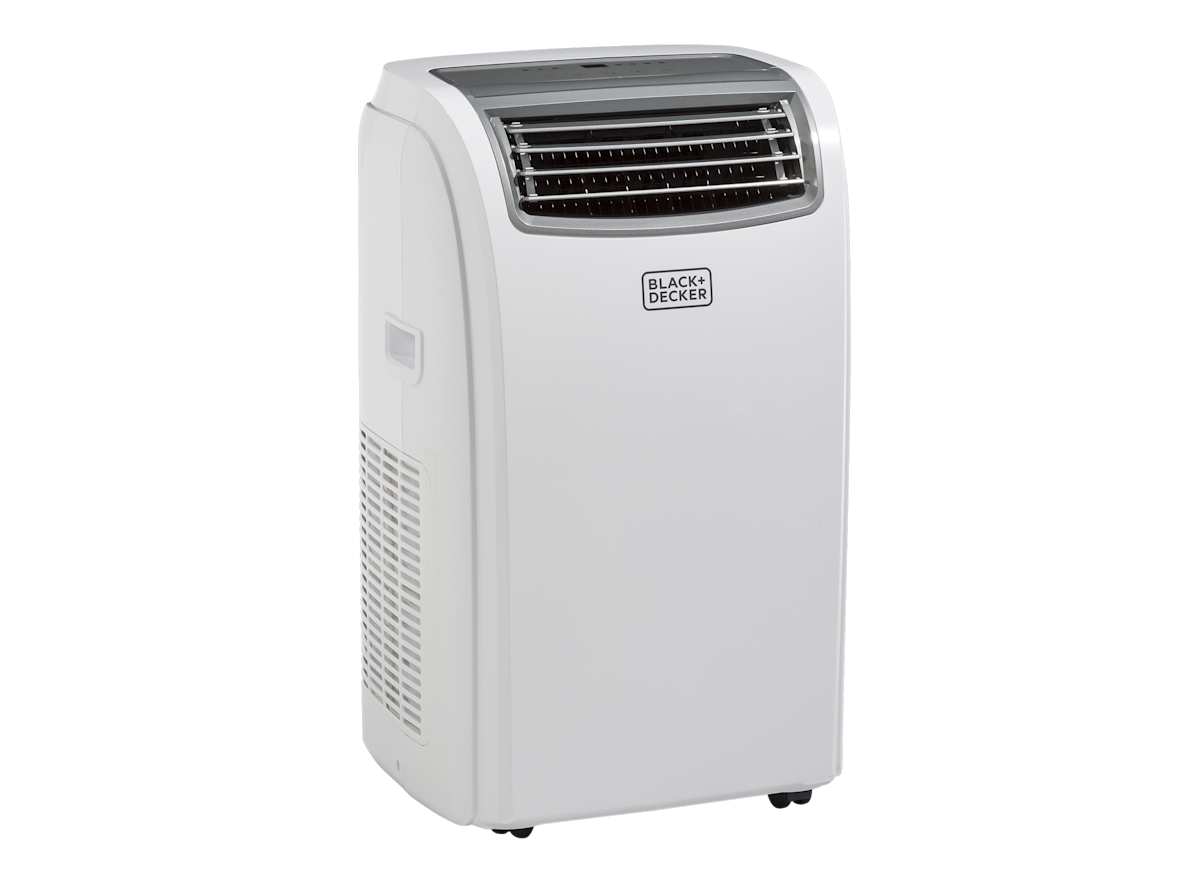
The BPACT14WT is the volume seller of the category, and the reason is simple: big-box cooling numbers at the lowest street price in this guide. It is a single-hose, fixed-speed unit, so it gives back some efficiency and it is the loudest pick here at about 54 dB on full fan. In return you get Wi-Fi control, Alexa and Google Assistant support, and a Follow Me remote with its own temperature sensor, a feature plenty of pricier units skip. One caution on sizing: the brand advertises rooms up to 700 sq ft, but with a 10,200 BTU SACC rating this is honestly a 350 to 450 sq ft machine.
Key specs:
- Cooling: 14,000 BTU (ASHRAE) / 10,200 BTU (SACC)
- Coverage: 350 to 450 sq ft realistically
- Noise: about 54 dB at full fan
- Hoses: single
- Controls: app, voice, Follow Me remote
- Approx. price: $470 to $600
Pros:
- Lowest price here for this cooling class
- Follow Me remote senses the temperature where you sit
- Widely stocked, so sales and replacements are easy to find
Cons:
- Loudest pick in the guide
- Coverage claim on the box is optimistic, size it by SACC instead
- Basic build quality next to the Whynter and Midea picks
4. Whynter ARC-1230WN: most cooling power

If your room is large, sunny or both, this is the ceiling of what a portable can do. The ARC-1230WN matches the Midea’s 12,000 BTU SACC rating, adds an inverter compressor and a hose-in-hose dual setup, and Whynter rates it for rooms up to 600 sq ft. It is also refreshingly honest about noise, publishing the full range: under 42.5 dBA on low, 49.5 on medium, 56.5 on high. The dehumidifier is rated at 87 pints a day. Note that this WN model is cooling only. If you want the same machine with heat, look for the ARC-1230WNH.
Key specs:
- Cooling: 14,000 BTU (ASHRAE) / 12,000 BTU (SACC)
- Coverage: up to 600 sq ft
- Noise: under 42.5 dBA low / 49.5 dBA medium / 56.5 dBA high
- Hoses: dual, hose-in-hose
- Compressor: inverter
- Controls: NetHome Plus app, Alexa, Google Assistant, remote
- Approx. price: $610 to $700
Pros:
- Joint highest real cooling capacity in this guide
- Inverter efficiency and app control
- Published noise figures at every speed, not just the flattering one
Cons:
- Highest prices in the guide
- No heat mode on this version
- Big and heavy, like every true dual-hose unit
5. Frigidaire FHPC102AC1: best for small rooms

Not every room needs 14,000 BTU of anything. For a home office, a nursery or a small bedroom, the FHPC102AC1 is the right-sized tool: 10,000 BTU ASHRAE and 6,500 BTU DOE, in a 62 lb cabinet that is the easiest in this guide to roll between rooms. It runs cool, dry and fan modes, has a sleep mode and a remote, and uses R-32 refrigerant. Sizing honesty matters here too. Frigidaire’s own DOE-based guidance puts it in rooms of roughly 150 to 250 sq ft, whatever the bigger marketing number says, so treat it as a small-room specialist and it will not disappoint.
Key specs:
- Cooling: 10,000 BTU (ASHRAE) / 6,500 BTU (DOE)
- Coverage: best for rooms up to about 250 sq ft
- Noise: no headline figure published by Frigidaire
- Hoses: single
- Weight: 62 lb
- Refrigerant: R-32
- Approx. price: $330 to $460
Pros:
- Cheapest pick in the guide
- Lightest and easiest to move
- Right-sized output for small rooms, so it is not constantly short-cycling
Cons:
- Will not rescue a large or very hot room
- Single hose, with the usual efficiency penalty
- No published noise rating to compare against rivals
6. Hisense AP1022TW1GD: the dual-hose value pick most lists miss
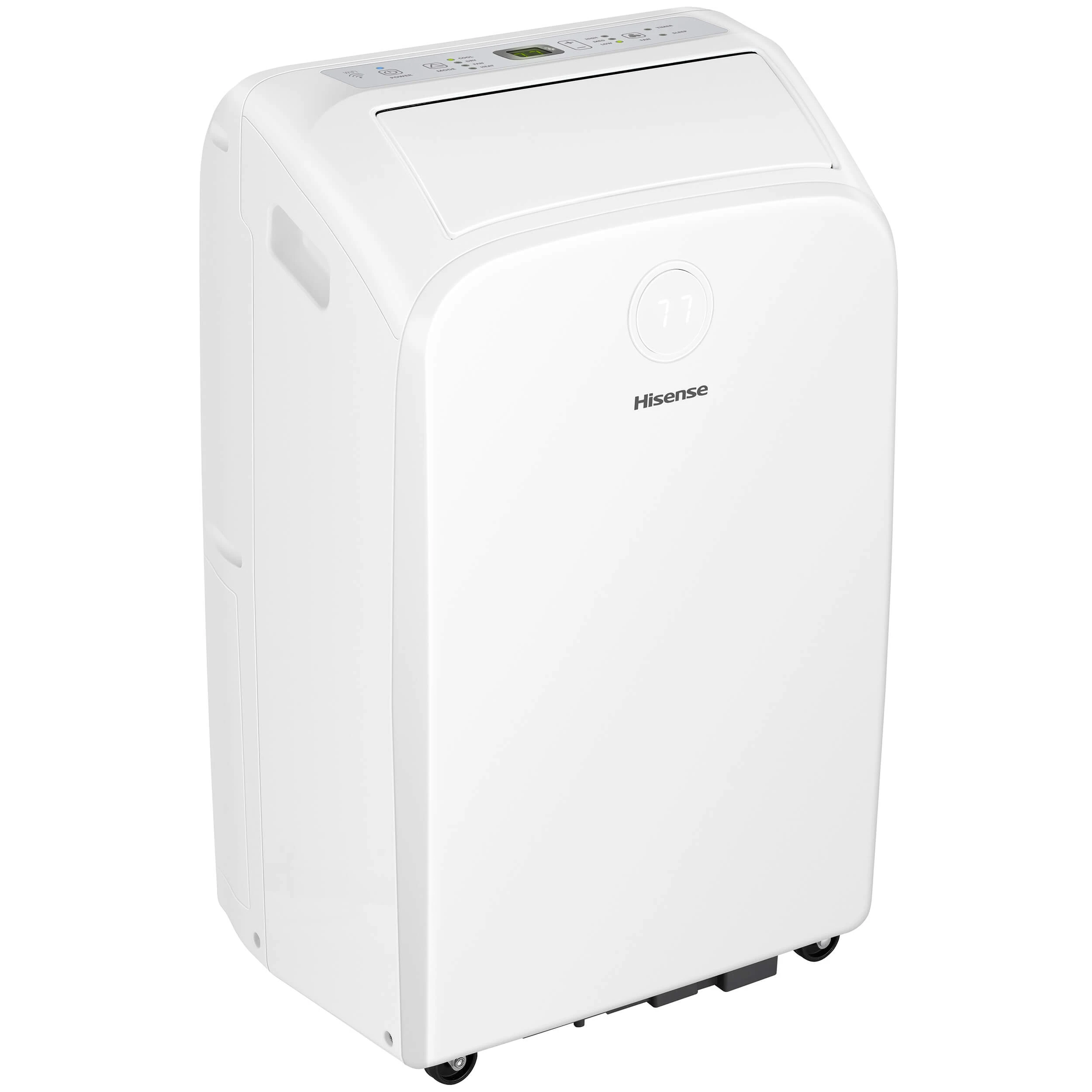
Here is the pick that rarely shows up in roundups, because Hisense sells this line mainly through Lowe’s and home stores instead of Amazon. On paper it is a lot of machine for the money: a true dual-hose design (two separate ducts, listed as a double-duct vent system in Hisense’s spec sheet), an inverter compressor, a 10,000 BTU SACC rating for rooms up to 550 sq ft, and a noise range of 42 to 51 dB with the 42 dB figure in its Quiet mode. It is drain-free in normal use and works with Hisense’s ConnectLife app.
Honest note on buying: we could not verify a current Amazon listing for this exact model when this guide was updated, so there is no Amazon button for it. Check Lowe’s and other home stores under the model number AP1022TW1GD.
Key specs:
- Cooling: 14,000 BTU (ASHRAE) / 10,000 BTU (SACC)
- Coverage: up to 550 sq ft
- Noise: 42 to 51 dB, 42 dB in Quiet mode
- Hoses: dual
- Compressor: inverter
- Drainage: drain-free design
- Approx. price: $450 to $550 at home stores
Pros:
- Dual hose plus inverter at a mid-range price
- Quiet mode figure matches machines costing much more
- Drain-free running and app control
Cons:
- Sold mostly through home stores, so price and stock vary by region
- Fewer long-term owner reports than the Whynter models
- Two-duct window setup takes a little longer to install
7. Dreo AC516S: best drainage-free design

The Dreo closes the list with a practical party trick: it deals with its own water. A self-evaporating system with pump assist cuts drainage needs by about 90 percent compared with a conventional portable, and in humidity under 85 percent you can run it for weeks without touching a drain. Output is 14,000 BTU ASHRAE and 10,000 BTU DOE for rooms up to 400 sq ft, noise is rated at 46 dB thanks to an isolated compressor mount, and control options cover the Dreo app, Alexa, Google Assistant and a remote. A drain hose is in the box for the nights when the weather turns swampy.
Key specs:
- Cooling: 14,000 BTU (ASHRAE) / 10,000 BTU (DOE)
- Coverage: up to 400 sq ft
- Noise: 46 dB
- Hoses: single
- Drainage: self-evaporating with pump, hose included
- Modes: cool, fan, dehumidify
- Approx. price: $400 to $500
Pros:
- Practically no drainage chores in most climates
- Quiet rating for a single-hose machine
- Clean design and a good app
Cons:
- 400 sq ft ceiling rules out open-plan spaces
- Single hose efficiency
- Sustained humidity above 85 percent still needs the drain hose
How these picks were compared
Every model here was compared on published specifications: SACC cooling capacity, hose configuration, compressor type, manufacturer noise figures, coverage claims and street price across several retailers. Noise figures are manufacturer ratings taken at low settings, and brands do not all measure the same way, so treat small differences of a decibel or two as a tie. Two models from the original candidate list, the older Frigidaire Gallery cylinder units, were dropped because Frigidaire has discontinued them.
FAQ
What does SACC mean, and why is it lower than the BTU number on the box?
SACC stands for Seasonally Adjusted Cooling Capacity. It is the Department of Energy rating that subtracts the heat a portable AC adds back into the room through its cabinet and exhaust hose. It is lower than the ASHRAE figure because it describes what the room actually receives. When you compare two portables, compare SACC to SACC.
Is a dual-hose portable air conditioner worth the extra money?
For a bedroom or a hot room, usually yes. A dual-hose unit draws its cooling air from outside instead of from the room, so it does not create negative pressure that pulls warm air in through door gaps and window frames. It cools faster and holds temperature with less runtime. For a small, mild-climate room, a cheaper single-hose unit is often enough.
How big a portable AC do I need for a 400 sq ft room?
Look for about 10,000 BTU SACC. In this guide that means the Dreo AC516S at its ceiling, the Hisense AP1022TW1GD comfortably, or either 12,000 SACC model (Midea Duo, Whynter ARC-1230WN) if the room also has big sunny windows or a high ceiling.
Can one portable air conditioner cool a whole apartment?
Not really, and any brand that implies otherwise is stretching. A portable cools the room it sits in, with some spillover through an open door. For a small studio under about 500 sq ft, a 12,000 SACC dual-hose model is a reasonable one-room answer. Anything bigger needs either a second unit or a different kind of system.
Do portable air conditioners use a lot of electricity?
A large portable draws roughly 1,100 to 1,300 watts while the compressor runs, similar to a small microwave. Inverter models use less over a full night because they throttle down instead of cycling at full draw. As a rough guide, eight hours of overnight use on a hot night costs somewhere around one to two dollars at typical US electricity rates, less once the room is at temperature.
As an Amazon Associate, this site earns from qualifying purchases. Prices are approximate and were checked against retailer listings when this guide was updated in November 2026.