
Updated October 2026
If you want one mattress and no regrets, the DreamCloud Premier Hybrid is the support pick owners with aching backs return to most: a 13-inch hybrid with a quilted Euro top and gel memory foam over individually wrapped coils, a 365-night trial and a lifetime warranty. Side sleepers should start with the Helix Midnight Luxe, a medium hybrid built for side sleeping, and the Plank Firm covers the firm end. On a budget, the Tuft & Needle Original is the lowest-priced pick, and one of the few budget beds whose maker states it contains no fiberglass.
We did not sleep-test these mattresses, and nothing here is presented as a treatment for anything. We compared manufacturer specs, trial and warranty terms from the brands’ own policy pages, and owner reports. Four picks are the models r/Mattress and the specialist reviewers keep landing on; two are strong sellers most back-pain lists skip. Every pick also had to pass a materials check: unverifiable as fiberglass-free from the manufacturer’s own statements meant excluded. Prices are queen bands, October 2026.
Quick picks
| Mattress | Best for | Price band (queen) | Why it made the list |
|---|---|---|---|
| DreamCloud Premier Hybrid | Best overall support | List $1,832, street well under | Wrapped-coil hybrid support, 365-night trial, lifetime warranty |
| Helix Midnight Luxe | Side sleepers | $1,700–2,000 | Medium hybrid, zoned coils, built for side sleeping |
| Plank Firm | Firmest feel | $900–1,350 | Flippable Firm / Extra Firm, the firm end of the market |
| Leesa Original Hybrid | Best hotel-style hybrid | List $1,299–1,699 by channel | 1,000+ wrapped springs under premium foam, reinforced perimeter |
| Tuft & Needle Original | Tight budgets | $650–950 | Brand-stated fiberglass-free, 100-night trial |
| Sleep On Latex Pure Green | The pick most lists skip | $800–1,100 | Organic latex and wool, no foam at all |
Why your mattress shows up in back pain conversations
A mattress does not have to be broken to leave you stiff in the morning. The usual suspects: sagging, wrong firmness for your position, and heat. A softened support core lets your hips, the heaviest part of you, sink deeper than your shoulders and legs, so you sleep in a shallow hammock shape. Too firm does the opposite damage: the shoulder and hip cannot sink at all, so pressure builds at those points. None of that is a diagnosis; what a purchase can change is the match between support, firmness and how you sleep.
1. DreamCloud Premier Hybrid: best overall support

The Premier Hybrid is the mattress that comes up when back sleepers ask for a luxury hybrid that still feels supportive. The build explains it: six layers in 13 inches, a CloudQuilt+ Euro top in a cashmere-blend cover with cooling fibers, then gel memory foam and a dynamic transition foam over 792 individually wrapped coils in a queen. DreamCloud rates it medium-firm, 6.5 out of 10, and owners describe the same balance the spec sheet promises: cushion at the surface, coils doing the holding underneath. The foams are CertiPUR-US certified.
Key facts
- Price band: brand list $1,832 (queen); the Amazon street price runs well under list
- Construction: hybrid, 13 in; 6 layers, Euro top, gel memory foam over 792 wrapped coils (queen)
- Firmness: medium-firm, rated 6.5/10 (brand)
- Trial/warranty: 365 nights; Forever warranty (lifetime)
- Fiberglass: verified fiberglass-free per DreamCloud’s own product pages; rayon blend barrier
Pros
- Coil-backed support under a cushioned Euro top, the combination back sleepers ask for
- Year-long trial and lifetime warranty de-risk the price
Cons
- History worth knowing: DreamCloud units sold from October 2017 to June 2024 were named in a class-action settlement over fiberglass inner socks. The current redesigned model is the one on sale now, and it is the fiberglass-free build verified above
- One firmness only: if 6.5/10 is wrong for you, there is no softer or firmer version of this model to swap to
2. Helix Midnight Luxe: best for side sleepers
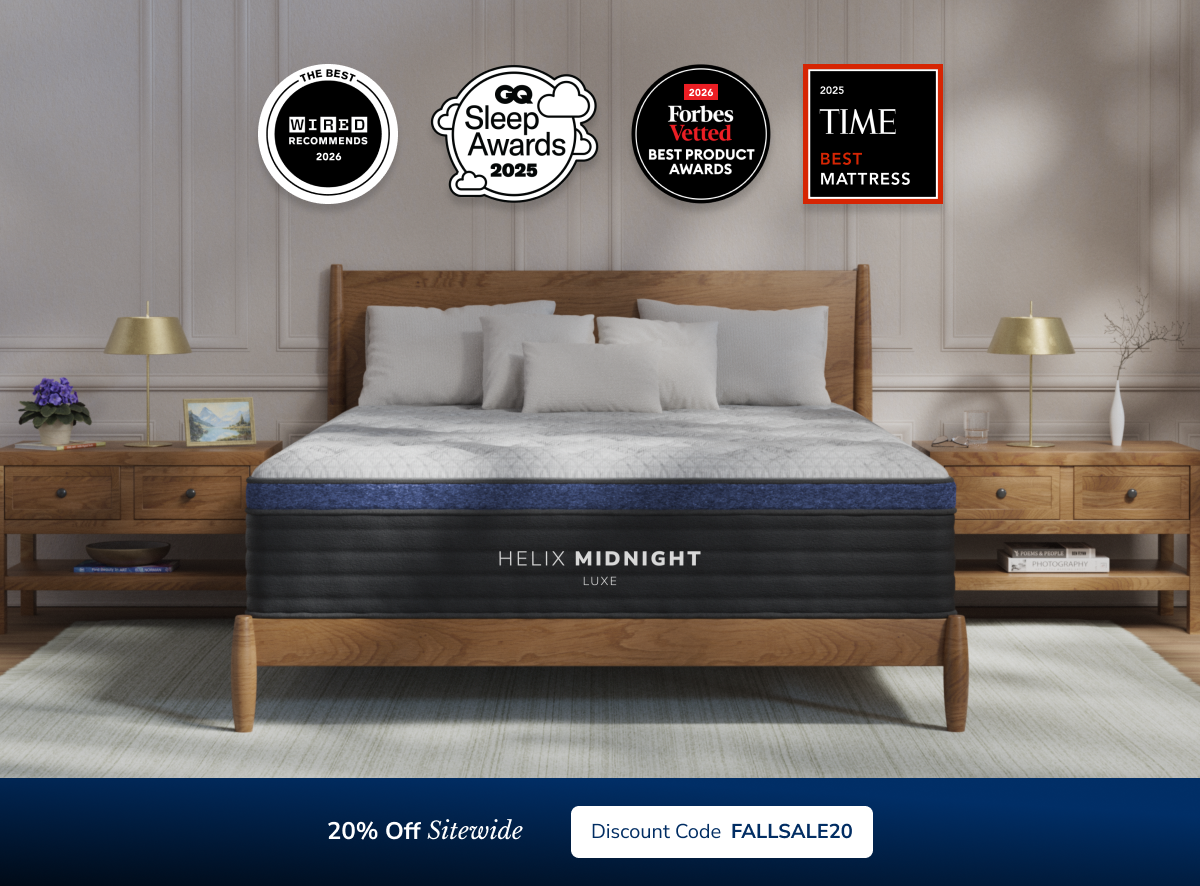
Side sleepers with sore backs have the hardest brief: the shoulder and hip need to sink, the waist must not. Helix builds its Midnight line for side sleepers, and the Luxe upgrades it with a quilted pillow top, memory foam layers, and a five-zone pocketed coil unit that runs softer at the shoulders and firmer under the lumbar area, as Helix describes it. The brand rates it a medium, around 6/10; owners agree. One caveat: the medium is the only firmness offered.
Key facts
- Price band: $1,700–2,000 (queen)
- Construction: hybrid, 13.5 in; pillow top, memory foam, five-zone pocketed coils
- Firmness: medium, about 6/10 (brand); owners agree
- Trial/warranty: 365 nights direct (30-night break-in); limited lifetime warranty
- Fiberglass: verified free per Helix, which states no model uses fiberglass; rayon barrier
Pros
- Built for the side-sleeper brief: cushion at the shoulder, support at the waist
- Year-long trial and lifetime warranty match the DreamCloud’s terms
Cons
- One firmness only; firm-leaning back sleepers should look at picks 1, 3 or 4
- Advertised trial terms apply to direct purchases, not retail ones
3. Plank Firm: best firm
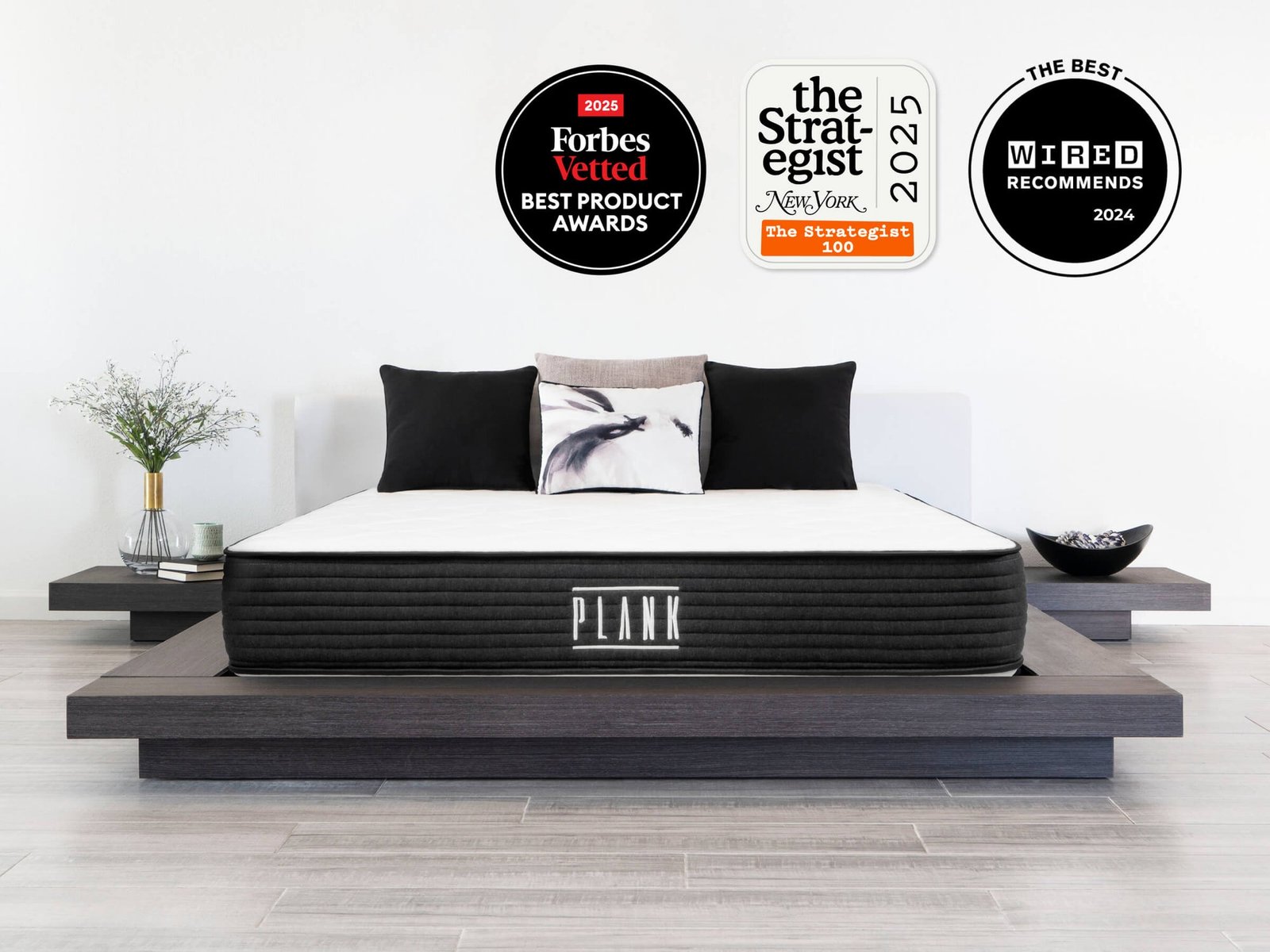
The Plank exists for one complaint: every mattress is too soft. Made by Brooklyn Bedding, it is an all-foam mattress you flip to choose, a Firm side up or an Extra Firm side up, and independent labs put those sides at roughly 8 and 9 out of 10, as firm as this market gets. Stomach and back sleepers who kept sinking into medium-firms recommend it: 2 inches of firm transitional foam over a 6-inch base leaves your hips nowhere to drop. Side sleepers should not buy it, and it is the pick most likely to feel like a mistake in week one, which is why the long direct-purchase trial matters.
Key facts
- Price band: $900–1,350 (queen)
- Construction: all-foam, flippable, 10 in; firm foam over a 6 in base
- Firmness: Firm / Extra Firm, one per side; labs measure about 8/10 and 9/10
- Trial/warranty: 365 nights direct; Limited Lifetime warranty
- Fiberglass: verified free per Brooklyn Bedding; hydrated silica fiber barrier
Pros
- The firmest mainstream option, and the only flippable one here
- Cheapest premium pick, made in the brand’s own US factory
Cons
- Wrong for side sleepers, full stop
- The Extra Firm side is close to a padded floor
4. Leesa Original Hybrid: best hotel-style hybrid
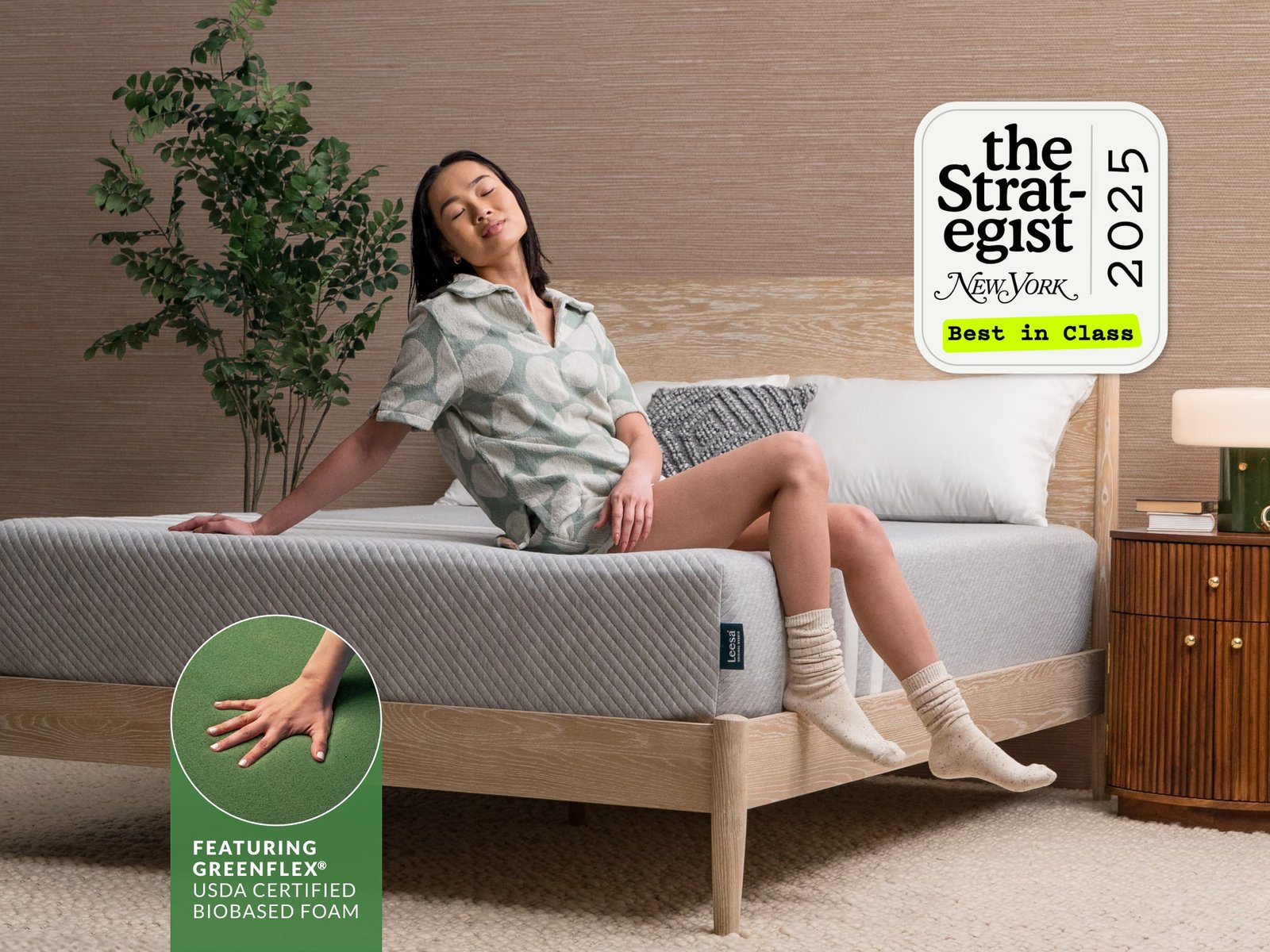
The Leesa Original Hybrid, the mattress long sold as the Leesa Sapira Hybrid, is the hotel-style entry here: premium foam comfort layers over more than 1,000 individually wrapped springs, with a reinforced perimeter so the edge holds like the middle, which is the detail hotel beds get right. At 11 inches it is the slimmest hybrid on this list. Leesa positions the feel as a balanced medium; testers put it a touch firmer, around 6/10, a medium-firm surface you sleep on rather than in. The foams are CertiPUR-US certified.
Key facts
- Price band: list $1,299 direct and $1,699 on Amazon (queen); the two channels price it differently
- Construction: hybrid, 11 in; premium foam layers over 1,000+ individually wrapped springs, reinforced perimeter
- Firmness: medium-firm; brand calls it a balanced medium, testers rate about 6/10
- Trial/warranty: 100 nights; 10-year limited warranty
- Fiberglass: verified fiberglass-free per Leesa, which states every current mattress is fiberglass-free; barrier is rayon from 100% regenerated cellulose
Pros
- Reinforced perimeter gives full edge-to-edge support, handy if you sit or sleep near the side
- Balanced medium-firm feel suits back and combination sleepers alike
Cons
- 100-night trial is short next to the year-long trials at picks 1 and 2
- Amazon’s list price is the higher of the two channels, so the channel is worth checking before buying
5. Tuft & Needle Original: best budget
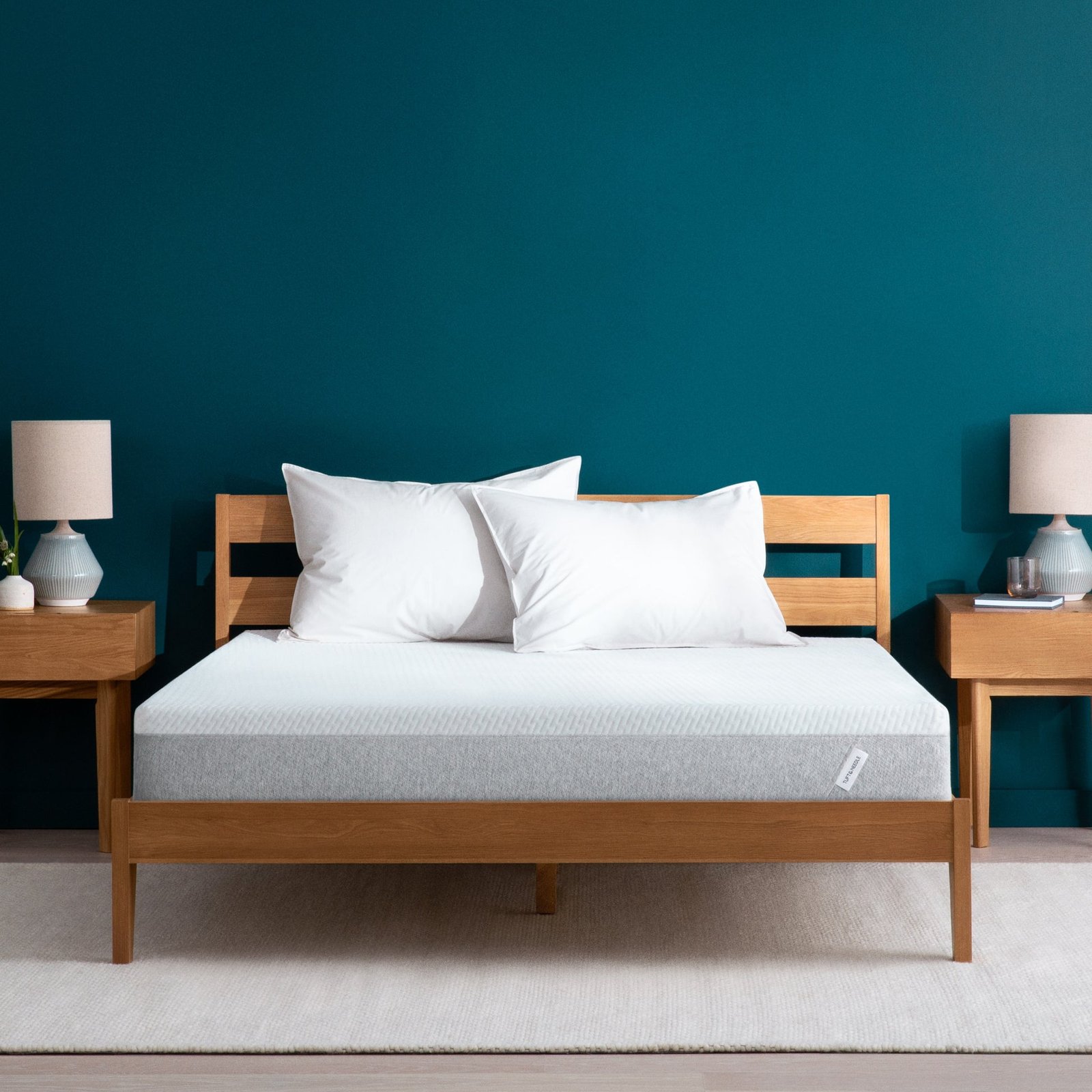
What is the cheapest mattress that is still a sensible buy for a sore back? The budget end of this market is where fiberglass fire barriers concentrate, and several of Amazon’s best-selling cheap mattresses could not be verified fiberglass-free from their makers’ own statements, so they are not here. The Original could be: Tuft & Needle states on its own site that it contains no fiberglass, and names its barrier, a polyester and cotton knit treated with a food-grade salt. The mattress is a 10-inch all-foam build, about 3 inches of responsive Adaptive foam over a firm base. Most owners call the brand’s medium a medium-firm, around 6.5/10. It suits back and lighter stomach sleepers better than side sleepers; the limits are weak edges, and 10 inches is thin for heavier sleepers.
Key facts
- Price band: $650–950 (queen; list $945)
- Construction: all-foam, 10 in; Adaptive foam over a high-density base
- Firmness: medium (brand); owner consensus medium-firm, about 6.5/10
- Trial/warranty: 100 nights; 10-year limited warranty
- Fiberglass: verified free from Tuft & Needle’s own FAQ, barrier named
Pros
- Lowest band here from a brand that answers the fiberglass question in writing
- Responsive foam is easier to move on than memory foam at this price
Cons
- Thin for heavier sleepers; edges are soft
- No coils, so support tops out below the hybrids
6. Sleep On Latex Pure Green: the pick most lists skip
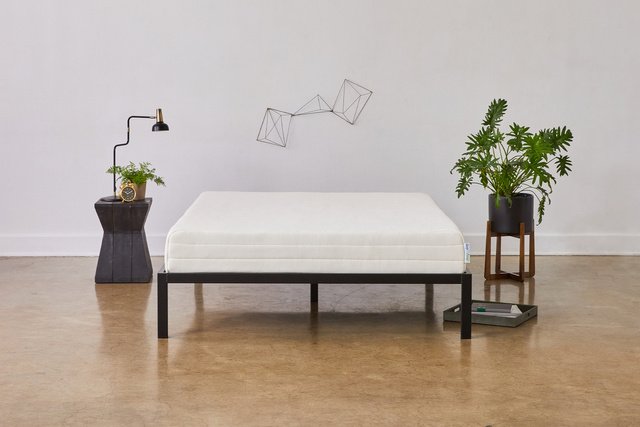
The big back-pain roundups skip this mattress, which is odd: it answers this article’s two questions better than most foam beds. The Pure Green is a 9-inch mattress of three things: organic Dunlop latex, an organic wool layer that serves as the fire barrier, and an organic cotton cover. Latex pushes back instead of letting you settle, so your hips rest on the surface, and it does not soften with body heat the way memory foam does. Medium is the default for back sleepers, Firm for stomach sleepers and heavier bodies, and owners warn both run firmer than the same words on foam. Sleep On Latex is a small Chicago brand selling direct and on Amazon, where its own 100-night trial is honored through its Amazon store, rare among Amazon mattresses.
Key facts
- Price band: $800–1,100 (queen)
- Construction: all-latex, 9 in; organic Dunlop latex, wool barrier, cotton cover
- Firmness: Medium / Firm (brand); testers rate about 5 to 6 and 7/10, firmer than foam
- Trial/warranty: 100 nights, free returns; 10-year warranty
- Fiberglass: verified free; the barrier is organic wool, materials published in full
Pros
- No polyurethane foam and no fiberglass, every material named
- Latex support does not soften overnight or over summers like memory foam can
Cons
- Heavy, and the wool smell at unboxing bothers some owners
- Buoyant feel is the opposite of a memory foam hug
All 6 mattresses compared
| Mattress | Construction | Firmness (as stated) | Thickness | Trial | Warranty | Price band (queen) |
|---|---|---|---|---|---|---|
| DreamCloud Premier Hybrid | Hybrid, Euro top | Medium-firm, 6.5/10 (brand) | 13 in | 365 nights | Lifetime (Forever) | List $1,832, street well under |
| Helix Midnight Luxe | Hybrid, 5-zone coils | Medium, about 6/10 (brand) | 13.5 in | 365 nights (direct) | Limited lifetime | $1,700–2,000 |
| Plank Firm | All-foam, flippable | Firm / Extra Firm (labs: about 8 and 9/10) | 10 in | 365 nights direct | Limited Lifetime | $900–1,350 |
| Leesa Original Hybrid | Hybrid, 1,000+ wrapped springs | Medium-firm; testers about 6/10 | 11 in | 100 nights | 10 years | List $1,299 direct / $1,699 Amazon |
| Tuft & Needle Original | All-foam | Medium (brand); owners say medium-firm | 10 in | 100 nights | 10 years | $650–950 |
| Sleep On Latex Pure Green | All-latex | Medium / Firm (brand) | 9 in | 100 nights | 10 years | $800–1,100 |
Firmness mixes brand scales and owner consensus, labelled where they disagree. Trials are direct-purchase terms, October 2026.
Firmness by sleep position
This is comfort guidance, the framework mattress communities use, not medical advice. Back sleepers generally do best on a medium-firm surface, firm enough that the hips stay level with the shoulders, with enough give to fill the small of the back: the DreamCloud Premier Hybrid and the Leesa Original Hybrid are the templates on this list. Side sleepers need the opposite trade, a medium surface that lets the shoulder and hip sink so the spine runs straight sideways: the Helix Midnight Luxe’s design brief. Stomach sleepers need the firmest support, because the pelvis dropping is what arches the lower back in that position: the Plank, or the Firm Pure Green. Build matters too: heavier sleepers sink further and feel a mattress as softer, so over about 230 lbs read every rating here as a step softer than printed, and under about 130 lbs a step firmer.
The fiberglass question
Federal law requires every mattress sold in the US to pass an open-flame test, and the cheapest way to pass it is a sock of fiberglass woven around the foam core. Sealed inside an intact cover, that sock is inert; the problem arrives when the cover is unzipped or torn, releasing fine glass fibers into the room, onto bedding and into the HVAC, and cleanup is genuinely miserable. That is why every pick here had to be verifiable as fiberglass-free from the manufacturer’s own materials statements, and why several high-volume budget mattresses are absent: their makers either publish no fiberglass-free statement, or it covers only some models and runs, which is not verification. One large Amazon brand states it is fiberglass-free but does not name its barrier material, and had a run recalled in 2025 for failing the flammability standard itself; it is not here either. Unverifiable meant excluded, every time.
You can run the same check in two minutes. Read the white law label, or the listing’s materials section, and search the fill percentages for “glass fiber,” “glass wool” and “fiberglass.” Treat the cover as evidence: a zippered cover printed with “do not remove” warnings, from a brand that will not name its barrier, is the classic fiberglass profile. Never unzip a cover the maker does not rate as removable, even on an old mattress you are replacing; if you suspect one, keep its cover on and bag it before moving it. Passing brands name the alternative: wool, rayon, silica fiber, or a treated cotton blend.
What a new mattress will not fix
A mattress is one variable. It will not fix back pain that comes from an injury, a medical condition, a deconditioned back, a job spent sitting, or a pillow that holds your head at an angle all night. Persistent, worsening or radiating pain is a reason to see a clinician, not to buy a firmer mattress. What a support-appropriate mattress can do, and what owners report, is remove a sagging or mismatched surface from the list of suspects. That is why the trials above matter: bodies adapt over two to four weeks, and a returnable mattress beats any recommendation, including ours.
How we picked these mattresses
First, we read the owner communities and specialist reviewers: the DreamCloud, Helix and Leesa recur in support-focused discussions, and the Plank is its firm answer. Second, we filled the remaining slots with strong sellers the big back-pain lists skip: Tuft & Needle at budget, Sleep On Latex on materials. Third, every candidate passed the fiberglass gate above, and trial and warranty terms were read from the brands’ policy pages, not their ads.
Complete the bedroom
A mattress is the biggest lever in the room, but not the only one: the air around it shapes how the room feels. Our guide to the best air purifiers for pet owners applies the same method to the other machine in the bedroom.
FAQs
What firmness is best if my back aches in the morning?
For most back sleepers, medium-firm, around 6 to 7 out of 10, is the starting point owners converge on: firm enough to keep the hips level, soft enough to fill the curve of the lower back. Side sleepers should start a step softer, stomach sleepers a step firmer.
Is a firm mattress always better for back pain?
No. Owners who insist it is are usually describing relief from a mattress that had gone too soft. Too firm cannot let the shoulder and hip sink, so pressure concentrates there and the spine is not level either. The goal is level and supported.
How do I know whether a mattress contains fiberglass?
Read the law label for “glass fiber,” “glass wool” or “fiberglass” in the fill list. Then check whether the manufacturer states, in its own materials or FAQ pages, that the mattress is fiberglass-free and what the barrier is instead. If a brand will not answer in writing, treat that as the answer, and never unzip a cover the maker does not rate as removable.
How long should I give a new mattress before deciding?
At least 30 nights, unless it is obviously wrong. Most brands require a break-in: foams soften slightly and your body adapts over two to four weeks. It is the practical case for a long trial.
Should I buy a mattress topper instead of a new mattress?
A firm topper on a sound mattress is a legitimate cheap experiment. It cannot restore a sagged support core: a topper on a dipped mattress dips with it. If yours is level and under about seven years old, try the topper first. If it is visibly dipped, the mattress is the purchase.
3 thoughts on “Best Mattress for Back Pain in 2026: Support Picks by Sleep Position”