

Updated October 2026
Side sleeping puts your whole weight on two narrow points, the shoulder and the hip, so the short answer is a medium or softer mattress that lets both sink while the support underneath stops your waist from dropping. Start with the Helix Midnight Luxe, a medium hybrid built for side sleeping with zoned coils. The Brooklyn Bedding Signature Hybrid in Soft is the value pick with a genuine soft option. The Layla Hybrid is flippable, plush on one side, firmer on the other. Heavier side sleepers should look at the DreamCloud Premier Hybrid, combination sleepers at the Leesa Original Hybrid, and hot sleepers at the Purple Plus, which cushions with a grid instead of foam.
We did not sleep-test these mattresses. We compared manufacturer specs, trial and warranty terms from the brands’ own policy pages, and owner reports. Every pick also had to pass the materials check from our guide to the best mattress for back pain: unverifiable as fiberglass-free from the manufacturer’s own statements meant excluded, which is why several famous budget names are missing. Prices are queen bands, October 2026.
Quick picks
| Mattress | Best for | Price band (queen) | Why it made the list |
|---|---|---|---|
| Helix Midnight Luxe | Best overall for side sleepers | $1,700-2,000 | Built for side sleeping, zoned coils, pillow top |
| Brooklyn Bedding Signature Hybrid (Soft) | Best value soft hybrid | $850-1,250 | Real Soft option, zoned coils, US-made |
| Layla Hybrid | Best flippable | $1,500-1,700 | Plush side and firm side in one mattress |
| DreamCloud Premier Hybrid | Heavier side sleepers | List $1,832, street well under | Deep cushion over strong coils, 365-night trial |
| Leesa Original Hybrid | Side and back combination sleepers | List $1,299 direct / $1,699 Amazon | Balanced medium feel, reinforced perimeter |
| Purple Plus | Hot sleepers who dislike foam | $1,600-1,900 | GelFlex Grid cushions without a foam hug |
What side sleepers actually need
Lie on your side and your body contacts the bed at the shoulder, the hip and not much else. If the surface cannot give at those two points, pressure concentrates there, and owners describe the result plainly: a numb arm, an aching shoulder, a sore hip by morning. If the surface gives everywhere, the waist sinks deepest, the spine bends sideways, and the complaint moves to the lower back. The brief is both at once: soft where you land, supported where you span.
That is why most picks here sit at medium or softer, and why construction matters as much as the label. Pillow tops add cushion exactly where the shoulder lands, and zoned coils run softer at the shoulder and firmer under the waist. Weight shifts the math: under about 130 lbs you barely dent a medium mattress, so read every rating here as a step firmer; over about 230 lbs you sink further, so a medium-firm hybrid can feel like a medium, which is why the DreamCloud earns its slot.
1. Helix Midnight Luxe: best overall for side sleepers
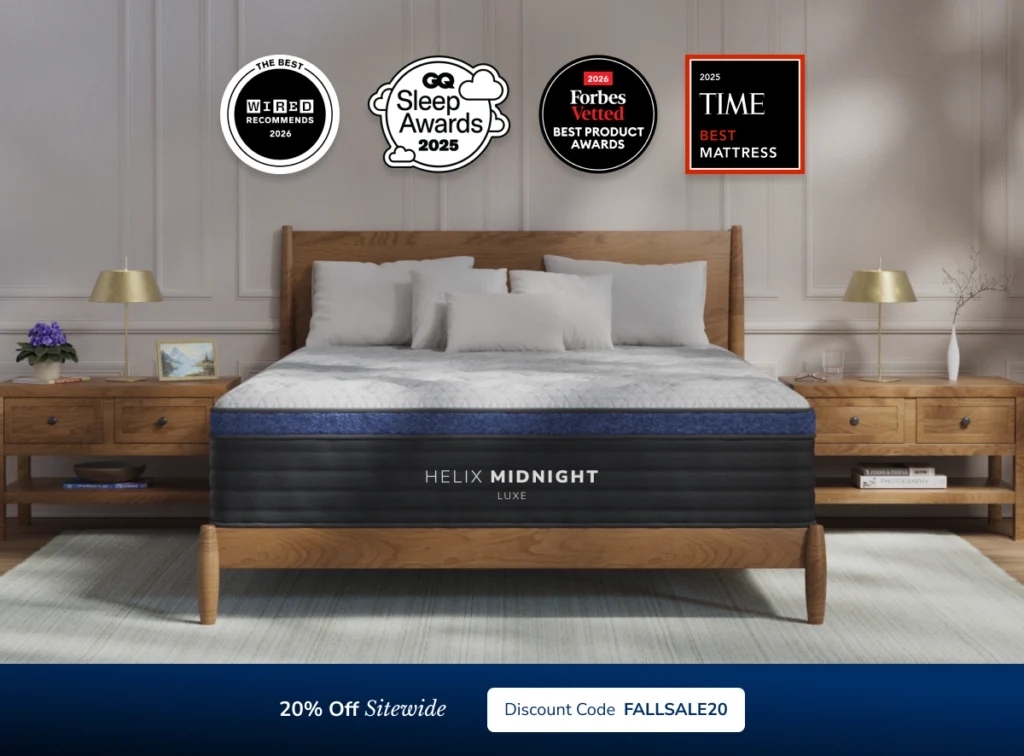
Helix builds its Midnight line specifically for side sleepers, and the Luxe is the upgraded version: a quilted pillow top over memory foam layers, above a five-zone pocketed coil unit that runs softer at the shoulders and firmer under the lumbar area, as Helix describes it. That zoning is the whole argument. The shoulder gets somewhere to go, the waist gets held, and owners describe the medium feel, around 6/10 on the brand’s scale, as softer in practice than the number suggests. It is also the side-sleeper pick in our back pain pillar, for the same reason.
Key facts
- Price band: $1,700–2,000 (queen)
- Construction: hybrid, 13.5 in; pillow top, memory foam, five-zone pocketed coils
- Firmness: medium, about 6/10 (brand); owners agree
- Trial/warranty: 365 nights direct (30-night break-in); limited lifetime warranty
- Fiberglass: verified free per Helix, which states no model uses fiberglass; rayon barrier
Pros
- Purpose-built for the position: cushion at the shoulder, support at the waist
- Year-long trial and lifetime warranty match the best terms on this list
Cons
- One firmness only; no softer Luxe exists if the medium feels firm
- Trial terms quoted are for direct purchases, not retail ones
2. Brooklyn Bedding Signature Hybrid (Soft): best value soft hybrid

Most hybrids offer side sleepers a medium and call it done. The Signature Hybrid comes in Soft, Medium and Firm from the brand’s own Phoenix factory, and the Soft is a genuine plush build: responsive TitanFlex comfort foam over zoned, individually encased coils, up to 1,024 in a queen. Brooklyn Bedding publishes no number for the Soft; testers put it around 5/10, where lighter side sleepers who find mediums unyielding should start. The foams are CertiPUR-US certified.
Key facts
- Price band: $850–1,250 (queen, Amazon street)
- Construction: hybrid, about 11.5 in; TitanFlex foam over zoned encased coils
- Firmness: Soft (brand’s softest of three); testers rate about 5/10
- Trial/warranty: 120 nights; 10-year warranty
- Fiberglass: verified free per Brooklyn Bedding, which states its mattresses contain no fiberglass; hydrated silica fiber sock barrier
Pros
- A true soft option at a mid-market price, not a medium in disguise
- Three firmnesses mean a miss on feel need not mean changing brands
Cons
- Soft builds show body impressions sooner; rotate it on schedule
- 120-night trial is a third of the year-long trials at picks 1 and 4
3. Layla Hybrid: best flippable
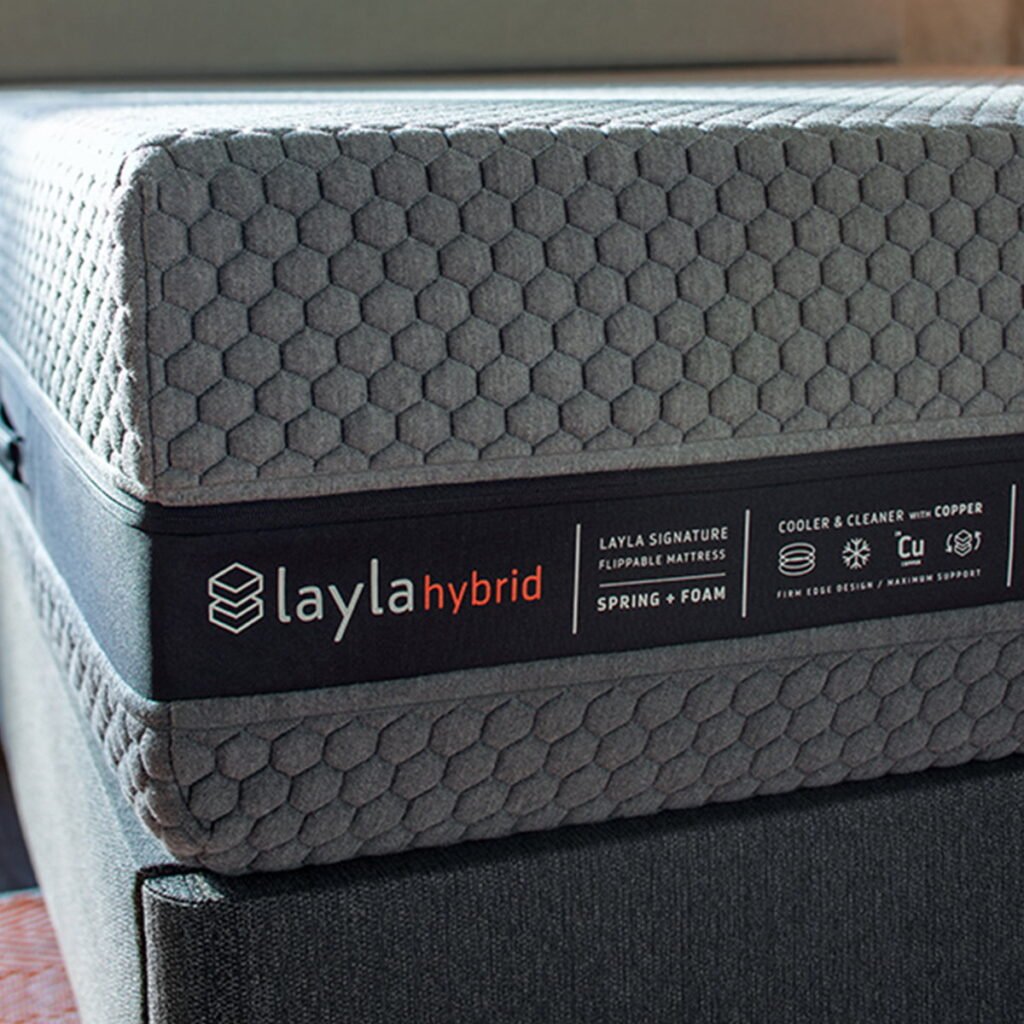
The Layla Hybrid is two mattresses in one cover. One side is plush, around 4/10 by tester consensus, built for the shoulder-and-hip brief; flip it and the other side is firmer, around 7/10, for spells of back sleeping or a partner who hates soft beds. Copper-infused memory foam sits on both faces of a pocketed coil core, so the cushion is there whichever way up you run it. For side sleepers who have bought the wrong firmness before, the flip is insurance no trial can match.
Key facts
- Price band: $1,500–1,700 (queen)
- Construction: hybrid, 13 in; copper-infused memory foam both sides, pocketed coil core
- Firmness: plush side about 4/10, firm side about 7/10 (tester consensus)
- Trial/warranty: 120 nights; 10-year warranty
- Fiberglass: verified free in current production per Layla, which states it has eliminated fiberglass from all models; fire sock is a rayon and polyester fiber blend
Pros
- Two feels in one purchase; the soft side is among the plushest here
- Copper foam and coils keep it cooler than an all-foam bed at this softness
Cons
- History worth knowing: Layla’s earlier production used a gel-encapsulated fiberglass fire sock; the brand transitioned every model and size to the fiberglass-free sock across 2024 and 2025
- At 13 inches and over 100 lbs in a queen, flipping it is a two-person job
4. DreamCloud Premier Hybrid: best for heavier side sleepers
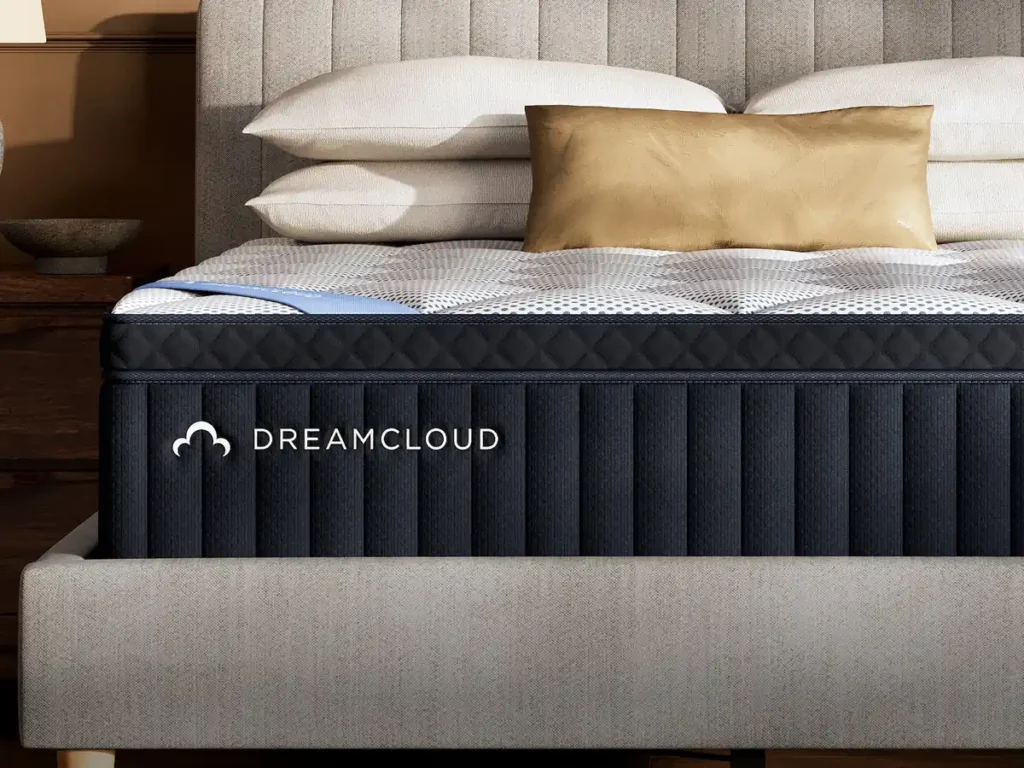
A soft mattress under a heavier body stops being soft in the right places: the comfort layers compress to their limit and the hip lands on the support core. The Premier Hybrid answers with depth, 13 inches of build, a quilted Euro top and gel memory foam over 792 individually wrapped coils in a queen. DreamCloud rates it medium-firm, 6.5/10, which reads wrong for this list until you apply the weight rule: over about 230 lbs, that surface gives at the shoulder and hip like a medium under a lighter sleeper, while coils keep the waist up. Lighter side sleepers should pick 1, 2 or 3 instead.
Key facts
- Price band: brand list $1,832 (queen); the Amazon street price runs well under list
- Construction: hybrid, 13 in; 6 layers, Euro top, gel memory foam over 792 wrapped coils (queen)
- Firmness: medium-firm, rated 6.5/10 (brand)
- Trial/warranty: 365 nights; Forever warranty (lifetime)
- Fiberglass: verified fiberglass-free per DreamCloud’s own product pages; rayon blend barrier
Pros
- Deep build suits heavier side sleepers who bottom out thinner plush beds
- Year-long trial and lifetime warranty de-risk the experiment
Cons
- History worth knowing: DreamCloud units sold from October 2017 to June 2024 were named in a class-action settlement over fiberglass inner socks. The current redesigned model is the fiberglass-free build verified above
- Too firm for lighter side sleepers; this is a weight-specific pick
5. Leesa Original Hybrid: best for combination sleepers
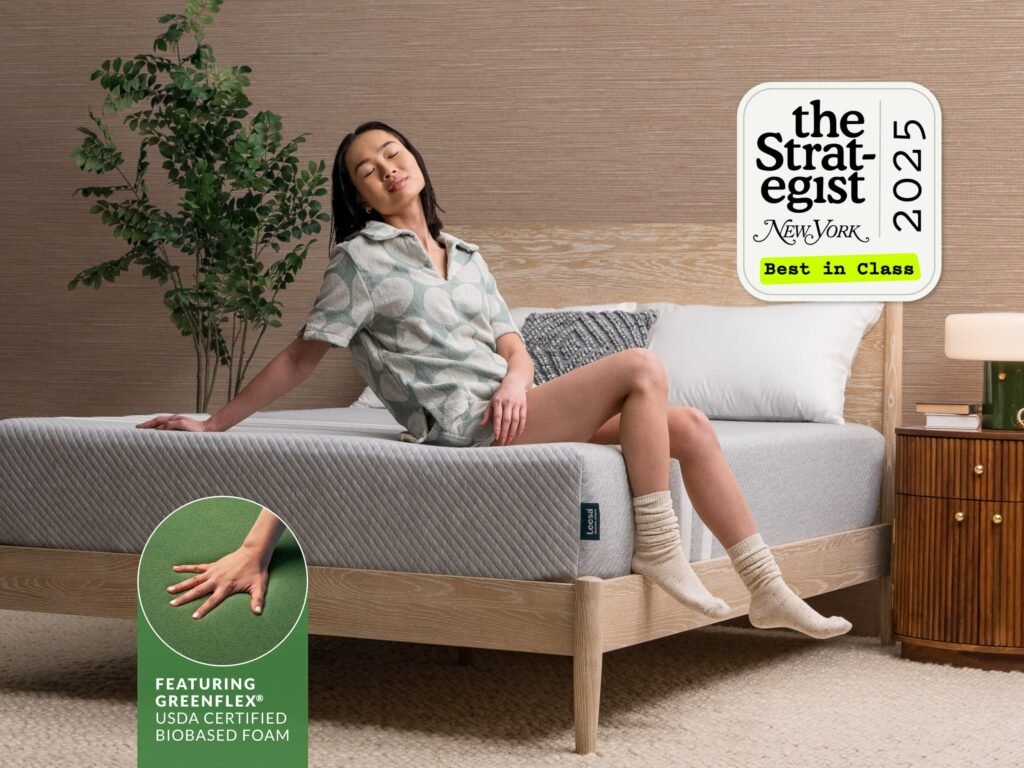
Plenty of side sleepers do not stay there. If you roll between side and back through the night, a deep plush surface can leave your back under-supported in the back-sleeping hours. The Original Hybrid, long sold as the Leesa Sapira Hybrid, splits the difference: premium foam over more than 1,000 individually wrapped springs, in a balanced medium testers put around 6/10, a surface you sleep on rather than in. The shoulder still sinks enough for side spells, and the reinforced perimeter holds the edge like the middle.
Key facts
- Price band: list $1,299 direct and $1,699 on Amazon (queen); the two channels price it differently
- Construction: hybrid, 11 in; premium foam layers over 1,000+ individually wrapped springs, reinforced perimeter
- Firmness: medium-firm; brand calls it a balanced medium, testers rate about 6/10
- Trial/warranty: 100 nights; 10-year limited warranty
- Fiberglass: verified fiberglass-free per Leesa, which states every current mattress is fiberglass-free; barrier is rayon from 100% regenerated cellulose
Pros
- The compromise pick: enough give for side sleeping, enough support for back spells
- Reinforced perimeter gives full edge-to-edge support
Cons
- 100-night trial is the shortest here
- Pure side sleepers under 130 lbs will find it a step firm; start at picks 1 to 3
6. Purple Plus: best for hot sleepers who dislike foam
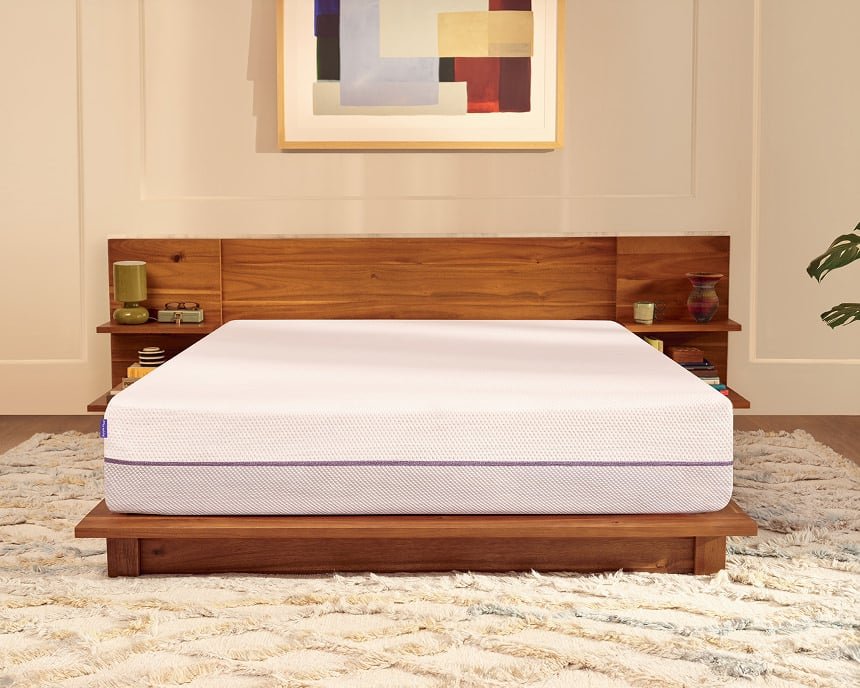
Every other pick here cushions with foam. The Purple Plus cushions with the GelFlex Grid, a lattice of hyper-elastic polymer columns that buckle under concentrated weight and stay firm everywhere else. For a side sleeper the grid gives way exactly under the shoulder and hip and pushes back along the ribs and legs, with open air channels at the contact points, which is why hot sleepers who feel trapped in foam land here. The feel is buoyant rather than a hug, and owners either convert or do not; the trial exists for the second group.
Key facts
- Price band: $1,600–1,900 (queen)
- Construction: grid hybrid feel without coils, 11 in; 2 in GelFlex Grid over premium comfort foam layers
- Firmness: medium (brand); testers rate about 6/10
- Trial/warranty: 100 nights; 10-year warranty
- Fiberglass: verified free per Purple, which states no mattress in its range contains fiberglass; knit fire sock barrier
Pros
- Pressure relief by geometry, not softness: gives at points, holds on flats
- The grid does not trap heat the way a foam comfort layer can
Cons
- The buoyant grid feel is the most divisive here; it is not a softer foam
- Lighter side sleepers may not weigh enough to buckle the grid deeply
All 6 mattresses compared
| Mattress | Construction | Firmness (as stated) | Thickness | Trial | Warranty | Price band (queen) |
|---|---|---|---|---|---|---|
| Helix Midnight Luxe | Hybrid, 5-zone coils, pillow top | Medium, about 6/10 (brand) | 13.5 in | 365 nights (direct) | Limited lifetime | $1,700–2,000 |
| Brooklyn Bedding Signature Hybrid | Hybrid, zoned coils | Soft (brand); testers about 5/10 | about 11.5 in | 120 nights | 10 years | $850–1,250 |
| Layla Hybrid | Hybrid, flippable | Plush about 4/10 / firm about 7/10 (testers) | 13 in | 120 nights | 10 years | $1,500–1,700 |
| DreamCloud Premier Hybrid | Hybrid, Euro top | Medium-firm, 6.5/10 (brand) | 13 in | 365 nights | Lifetime (Forever) | List $1,832, street well under |
| Leesa Original Hybrid | Hybrid, 1,000+ wrapped springs | Medium-firm; testers about 6/10 | 11 in | 100 nights | 10 years | List $1,299 direct / $1,699 Amazon |
| Purple Plus | GelFlex Grid over foam | Medium (brand); testers about 6/10 | 11 in | 100 nights | 10 years | $1,600–1,900 |
Firmness mixes brand scales and tester consensus, labelled where they disagree. Trials are direct-purchase terms unless noted, October 2026.
Pillow height and the gap at the neck
The mattress is only half the side-sleep setup. On your side, the gap between your head and the mattress is the width of your shoulder, and the pillow has to fill it: too thin and your head tips down, too thick and it tips up, and either way owners wake with a stiff neck and blame the mattress. Side sleepers generally need a higher, firmer pillow than back sleepers, and the softer the mattress, the less pillow you need, because a sunken shoulder has already closed part of the gap. If a new mattress leaves your neck complaining while your shoulder and hip feel right, adjust the pillow before you return the bed.
How we picked these mattresses
First, we read the owner communities and specialist reviewers for the models side sleepers keep returning to: the Helix Midnight line, the flippable Layla and the grid-based Purple all recur in shoulder-pressure discussions. Second, we filled the remaining slots by sleeper type rather than brand fame: a true soft build at a mid price (Brooklyn Bedding), a deep hybrid for heavier bodies (DreamCloud) and a balanced hybrid for people who split the night between positions (Leesa). Third, every candidate passed the fiberglass gate set out in the best mattress for back pain pillar: the manufacturer had to state, in its own materials, that the mattress is fiberglass-free and what the barrier is instead. Trial and warranty terms came from the brands’ policy pages, not their ads. If aches are the bigger half of your brief, start with that pillar; if pressure at the shoulder and hip is, stay here.
FAQs
What firmness is best for side sleepers?
Medium to medium-soft is the range owners converge on, roughly 4 to 6.5 out of 10 depending on weight. Lighter sleepers should start at the soft end, because they barely dent a mattress; heavier sleepers sink further, so a medium-firm hybrid can land in the same zone for them.
Is a softer mattress always better on your side?
No. Too soft lets the waist and hips drop below the shoulders, which bends the spine sideways and trades shoulder pressure for a lower-back complaint. The goal is a surface that gives at the shoulder and hip while the core holds the middle of you level.
Do side sleepers need a pillow top?
Not necessarily, but it helps many. A pillow top or Euro top adds cushion exactly where the shoulder lands without softening the whole mattress, which is why three picks here carry one. A zoned coil unit does similar work from below.
How do I know whether a mattress contains fiberglass?
Read the law label for “glass fiber,” “glass wool” or “fiberglass” in the fill list, then check whether the manufacturer states in its own materials that the mattress is fiberglass-free and names the barrier instead: wool, rayon, silica fiber or a treated blend. If a brand will not answer in writing, treat that as the answer, and never unzip a cover the maker does not rate as removable.
How long should I give a new mattress before deciding?
At least 30 nights, unless it is obviously wrong. Foams soften slightly in the first weeks and your body adapts over two to four weeks, which is why most brands set a break-in before a trial return opens. Shoulder pressure still there at night 30 is a real signal; night three is not.
1 thought on “Best Mattress for Side Sleepers in 2026: Cushion for Shoulders and Hips”