
Updated November 2026
The short answer: buy the Kalita Wave 185 if you want the best pour over coffee maker for everyday brewing. Its flat bottom and three small drain holes meter the flow for you, so an average morning pour still lands a balanced cup. Buy the Hario V60 if you enjoy dialing in a recipe and want the highest ceiling for light roasts. Buy the Chemex if you want the cleanest cup and a brewer that serves a full table. Three more picks cover a premium insulated set, a budget carafe with no paper filter cost, and Reddit’s favorite immersion brewer.
This guide is the manual brewing companion to our wider roundup of the best coffee maker machines. If you would rather press a button and walk away, our guide to the best drip coffee makers is the honest alternative. Every pick here is a current, well selling model with specs checked against the manufacturer or a major retailer. Prices are bands, because manual brewers move around during sale season. Every pick with a listed price comes in well under $300 — the priciest is the Fellow Stagg [XF] Set at $99.95 list, while the top pick, the Kalita Wave 185, is $40 to $45.
We also rounded up the pour over coffee makers Reddit recommends most, if you want the community’s shortlist.
How do the six pour over picks compare?
| Brewer | Type | Capacity | Material | Filter | Typical price band |
|---|---|---|---|---|---|
| Kalita Wave 185 | Flat bed dripper | 16 to 26 oz brewed | Stainless steel | Kalita Wave 185 paper | $40 to $45 |
| Hario V60 02 Ceramic | Cone dripper | 1 to 4 cups | Arita ceramic | V60 02 paper | Check listing |
| Chemex Classic 6-Cup | Cone brewer and carafe | 30 oz | Borosilicate glass | Chemex Bonded paper | Around $50 |
| Fellow Stagg [XF] Set | Flat bed dripper and carafe | 20 oz | Insulated stainless, glass carafe | Stagg [XF] paper | $99.95 list |
| Bodum Pour Over 34 oz | Carafe brewer | 34 oz | Borosilicate glass | Permanent stainless mesh | Check listing |
| Clever Dripper Large | Immersion dripper | 18 oz | BPA free Tritan plastic | Standard #4 paper | Check listing |
What is the best pour over coffee maker for most people?
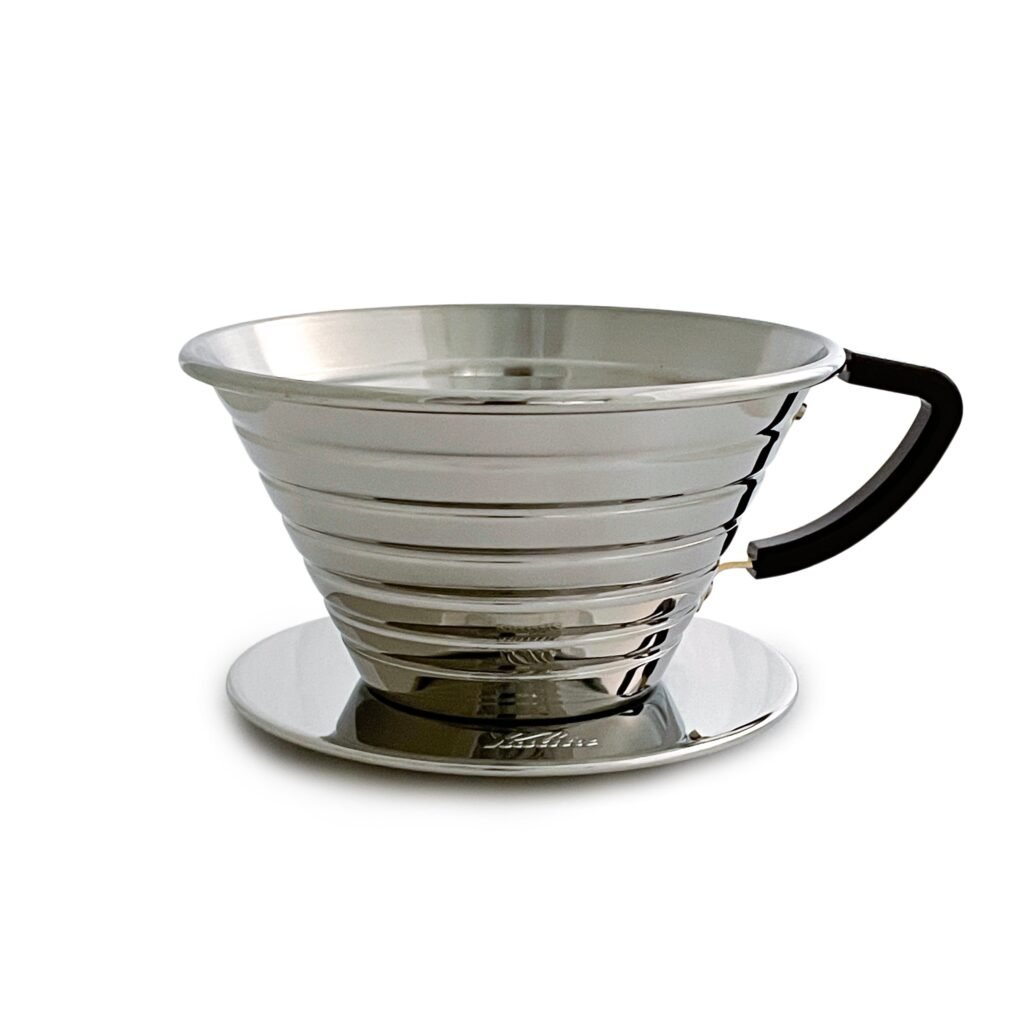
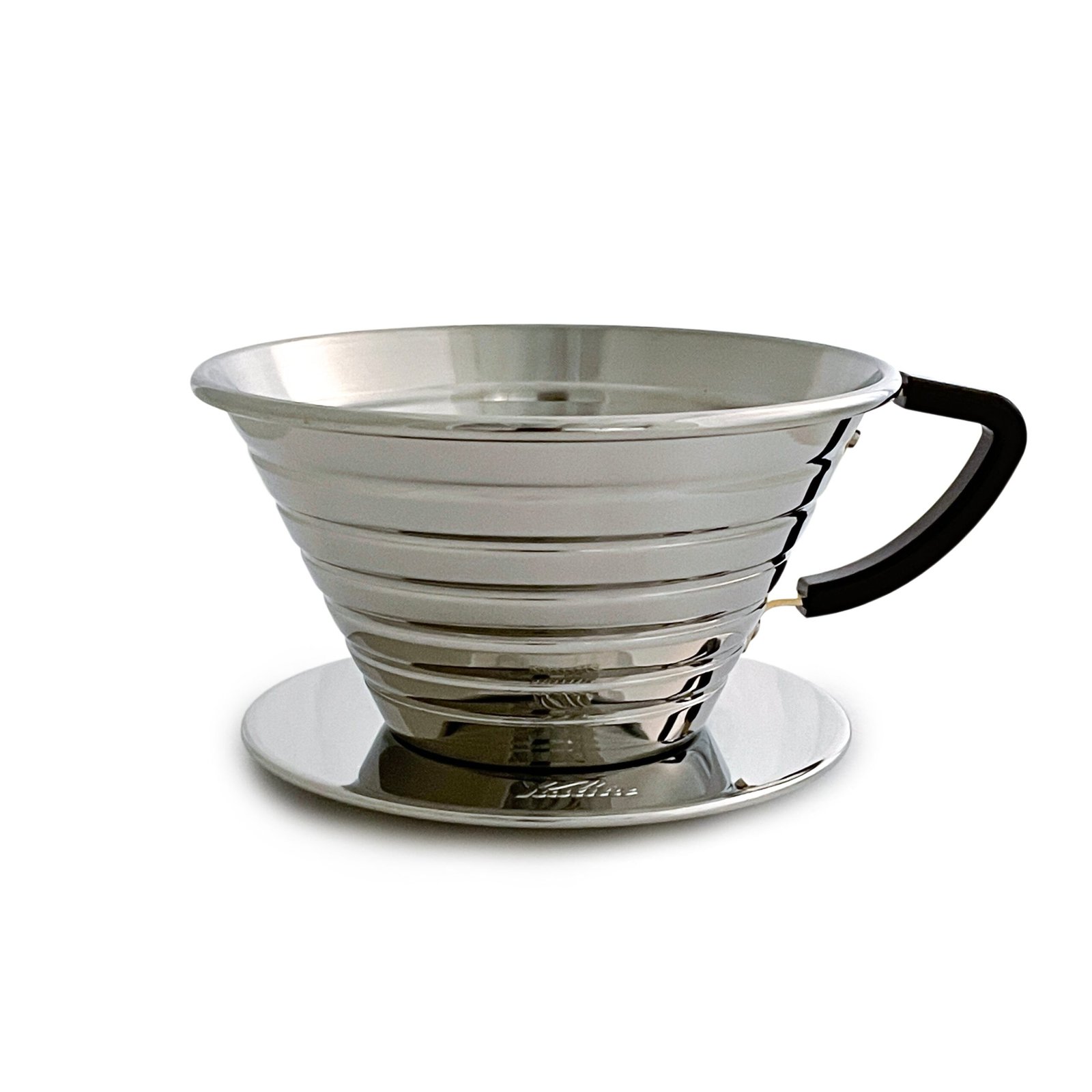
The Kalita Wave 185, and it is not close. Most drippers ask you to control the flow of water with your kettle. The Wave controls it for you. The bed is flat, the three drain holes are small, and the crimped wave filter holds the coffee bed away from the walls, so water spreads evenly instead of channeling down one side. That is why the Wave is the standard recommendation on r/Coffee and r/pourover when a beginner asks which dripper to buy first, and why so many cafes brew with it: it forgives a slightly fast pour, a slightly uneven kettle, and a Monday morning level of attention. The stainless version linked here is the one to get for daily use because it cannot chip or crack.
Key facts:
- Capacity: Kalita rates the 185 for 26 to 45 g of coffee, yielding about 16 to 26 oz of brewed coffee.
- Material: stainless steel, model 5033, made in Japan. Glass and ceramic versions brew the same way.
- Filter: Kalita Wave 185 paper filters only. The wave shape is proprietary.
- Bed design: flat bottom with three small drain holes for a metered, even drawdown.
- Price band: $40 to $45 at most US coffee retailers.
Who it suits: anyone who wants one dripper that makes a sweet, balanced cup without a learning curve, and households brewing one large mug or two smaller cups at a time.
The honest drawback: the filters are the running cost. Wave filters cost noticeably more per brew than V60 filters, and the stainless 185 is known to drain slower than the glass and ceramic versions, so a very fine grind can stall the drawdown. Grind a touch coarser than you would for a V60 and it behaves.
Which pour over dripper rewards good technique the most?
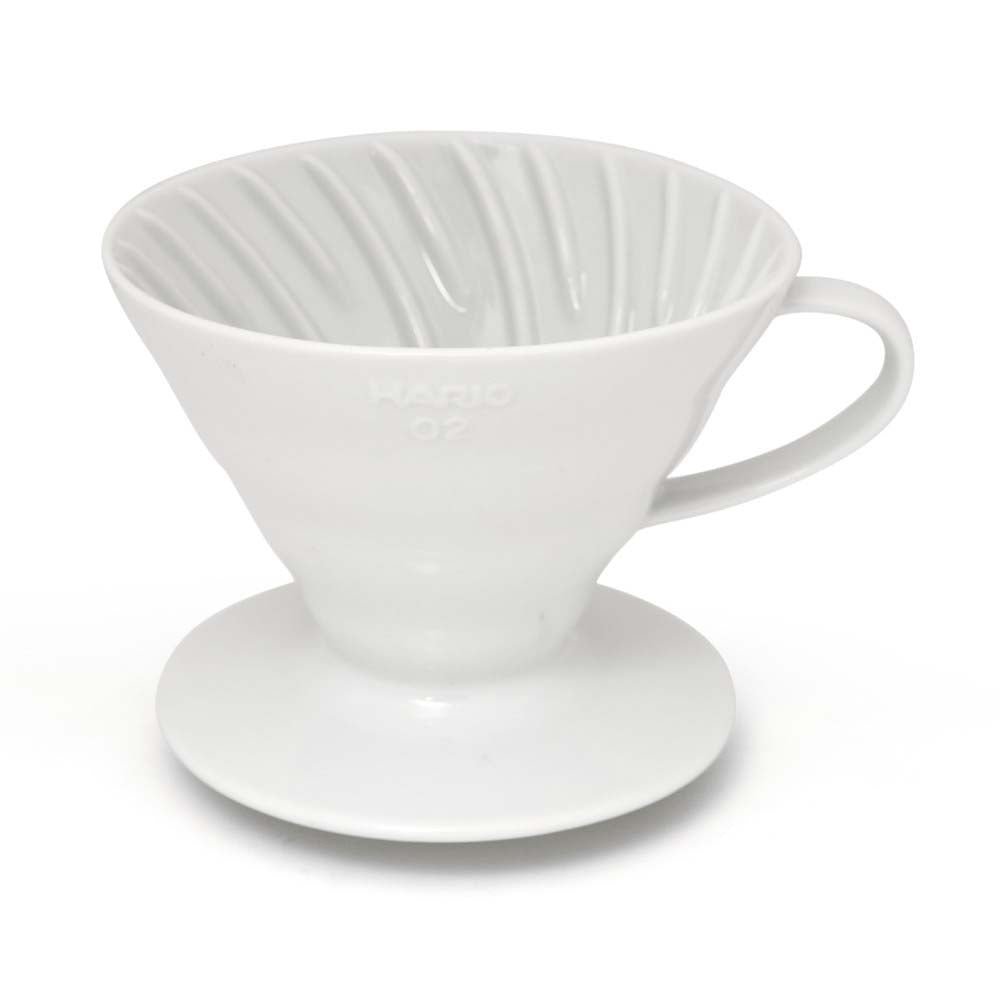
The Hario V60. Where the Kalita meters the water for you, the V60 hands you full control and full responsibility. It is a 60 degree cone with one large drain hole and spiral ribs that keep the paper off the wall, so your grind size and pour rate decide everything. Brewed well, it produces the brightest, most defined cups of any brewer on this page, which is why competition baristas and light roast fans keep coming back to it. America’s Test Kitchen has named the V60 its best cone dripper, and in Reddit’s pour over communities it is the default answer for anyone who says they want to learn the craft properly rather than buy forgiveness.
The ceramic 02 is the version to own: it holds heat far better than the plastic V60 and will outlast several kettles.
Key facts:
- Size: 02, rated for 1 to 4 cups.
- Material: Arita ceramic. Plastic, glass and metal versions exist at other prices.
- Filter: Hario V60 02 paper filters, among the cheapest and easiest to find anywhere.
- Design: 60 degree cone, single large drain hole, spiral ribs.
- Model: V60-02W in white.
Who it suits: home baristas who weigh their coffee, time their pours, and drink a lot of light roast single origins where clarity is the whole point.
The honest drawback: the learning curve is real. Your first week of cups will swing between sour and bitter while you learn grind size and pour pacing, because the big single hole amplifies every mistake. If that sounds like a chore rather than a hobby, buy the Kalita above.
What is the best pour over brewer for a clean cup and a full table?
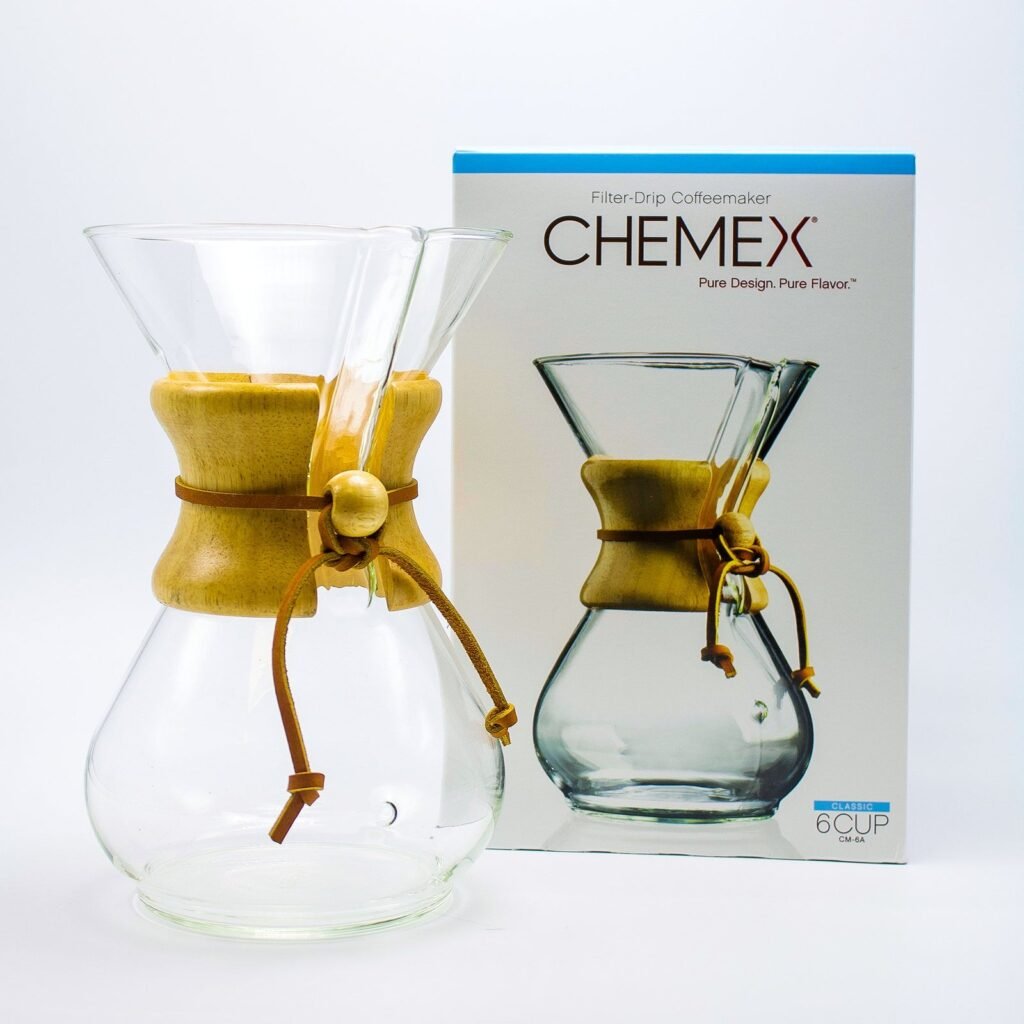
The Chemex Classic 6-Cup. The Chemex is both dripper and serving carafe in one piece of borosilicate glass, and its bonded paper filters are far thicker than standard filters. That thick paper strips out most of the oils and all of the sediment, so the cup tastes almost tea like: clean, sweet, and clear enough that floral and fruit notes in good beans stand out. It is also the only brewer here that looks at home in the middle of a dinner table. The design dates to 1941 and sits in the Museum of Modern Art’s permanent collection.
Key facts:
- Capacity: 30 oz, sold as the 6 cup model CM-6A. Smaller 3 cup and larger 8 and 10 cup versions exist.
- Material: borosilicate glass with a wood collar and leather tie.
- Filter: Chemex Bonded filters only, in pre folded squares, circles, or half moon styles.
- Design: one piece brewer and carafe with a pouring spout and air channel.
Who it suits: people who drink lighter, brighter coffees, anyone brewing for three or four people at once, and anyone who wants one beautiful object instead of a counter full of parts.
The honest drawback: it is all glass, with no insulation and no protection. Coffee cools quickly once brewed, the vessel is one drop away from being a memory, and the proprietary bonded filters cost more than standard paper. Brew what you will drink within the half hour.
Is the Fellow Stagg [XF] worth the premium?
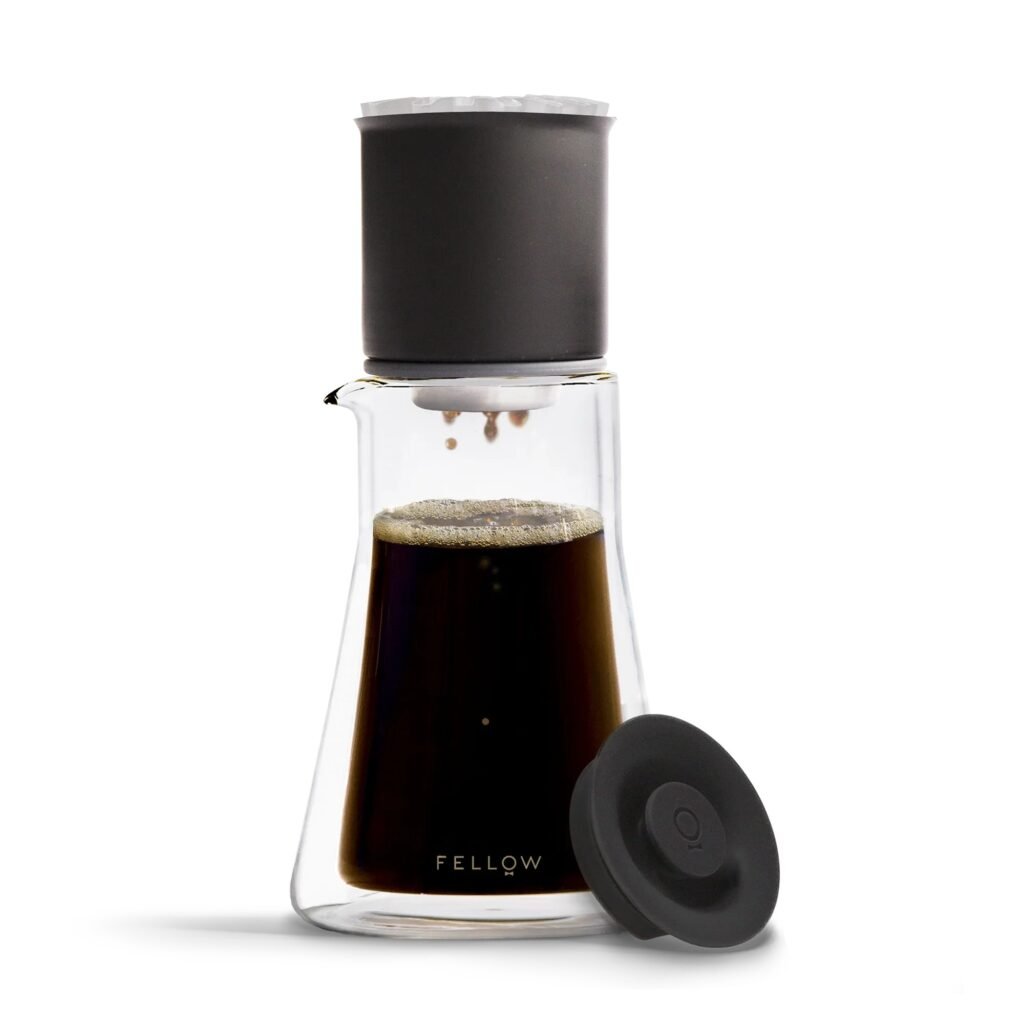
For the right buyer, yes. The Stagg [XF] is a flat bottom dripper built like a thermos: a double wall, vacuum insulated stainless column that holds brew temperature far steadier than an open ceramic or glass dripper. Coffee scientist Jonathan Gagné’s thermal testing is often cited in its favor, because the slurry temperature barely drops during the brew. The base has a hole and bump pattern designed to keep the filter from sealing against the floor and clogging, and the inside wall carries ratio aid markings so you can dose without a scale.
Key facts:
- Set contents: Stagg [XF] dripper, 20 oz double wall borosilicate carafe, silicone lid, 30 paper filters.
- Capacity: brews up to 20 oz at a time. A smaller Stagg [X] version brews about 10 oz.
- Material: stainless steel dripper body with silicone gasket, hand blown glass carafe.
- Filter: Stagg [XF] paper filters, proprietary flat bottom shape.
- Price: $99.95 list for the set. The dripper alone lists at $69.95.
Who it suits: the brewer who already owns a good kettle and grinder, drinks one or two cups at a time, and wants temperature stability and a tidy, designed object rather than the cheapest route to a good cup.
The honest drawback: the price is two to three times a Kalita or V60, and the proprietary filters lock you into Fellow’s pricing. You are paying for insulation and design, not for a categorically better tasting cup than a well brewed Wave.
What is the best budget pour over coffee maker?
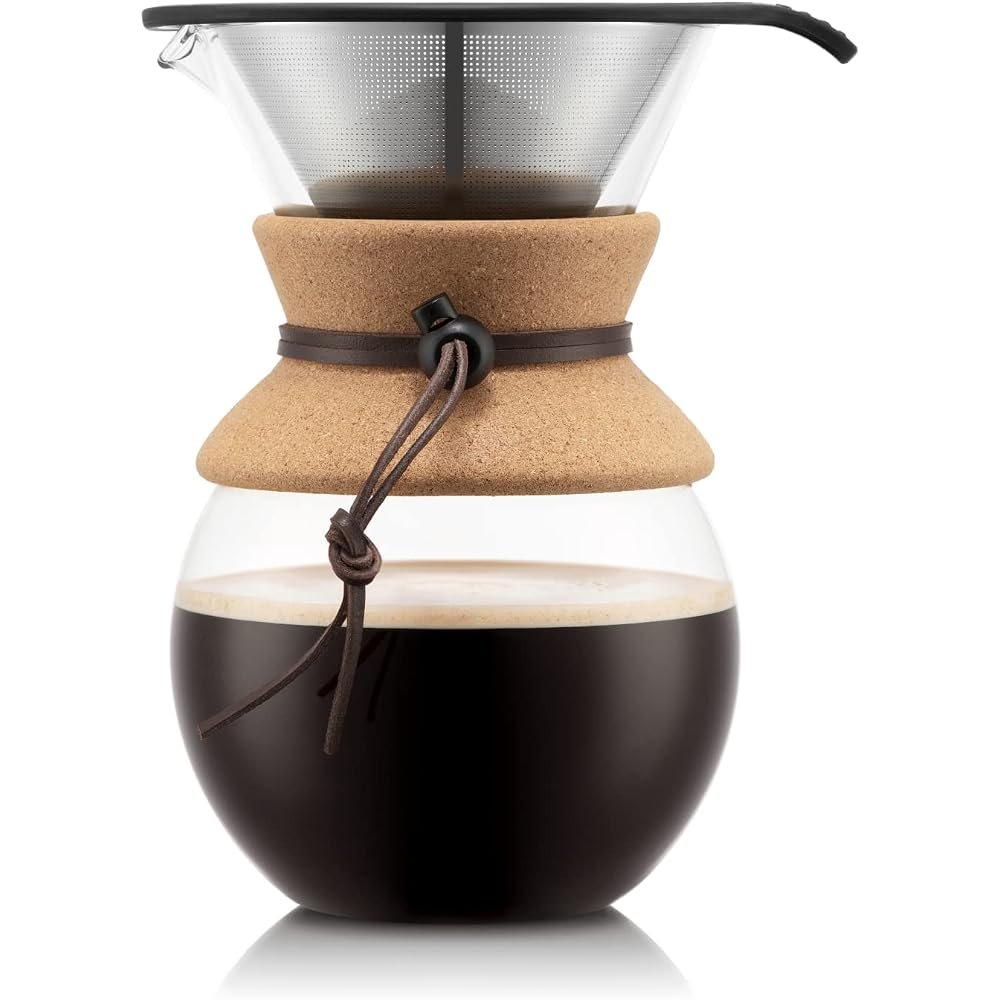
The Bodum Pour Over with the cork band, because its filter is permanent. The 34 oz borosilicate carafe carries a stainless steel mesh filter that never needs replacing, so the running cost after purchase is zero: no paper to buy, no filter subscription, nothing to run out of on a Sunday morning. It brews a full pot in one go, pours from the carafe it brewed in, and the cork band gives you something cool to hold.
Key facts:
- Capacity: 34 oz carafe.
- Material: borosilicate glass carafe, stainless steel permanent mesh filter, cork band with tie.
- Filter: permanent stainless mesh, no paper filters required.
- Model: 11571-109US, made in Portugal.
- Cleanup: carafe and filter rinse clean and are dishwasher safe on the top rack per Bodum.
Who it suits: budget buyers, low waste households, and anyone who prefers a fuller, heavier cup and does not want a shelf of paper filters.
The honest drawback: a mesh filter is not paper. Fine sediment and coffee oils pass through, so the cup is richer but less clean than anything above, and the single wall glass gives up heat quickly. If clarity is why you are buying pour over gear at all, spend on the Kalita instead.
What if you want pour over flavor without the pouring skill?
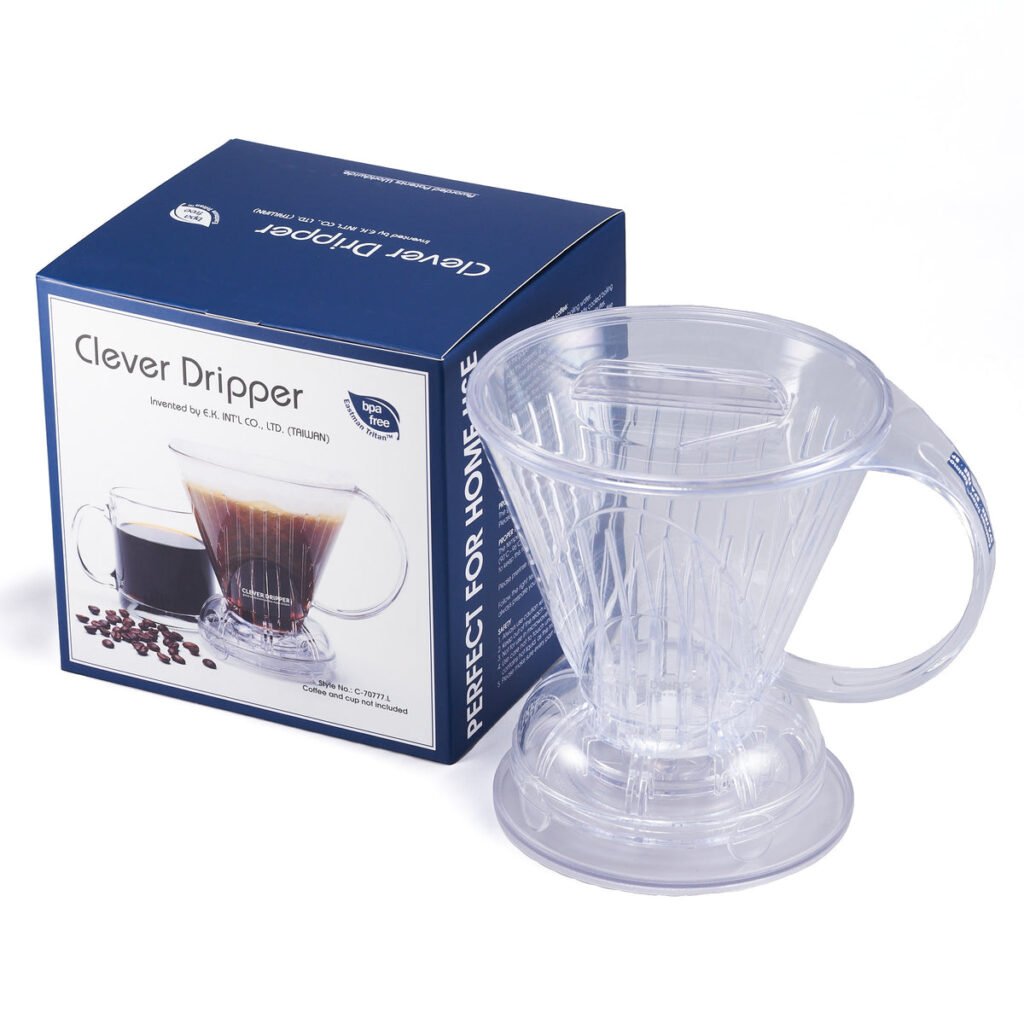
Get the Clever Dripper. It is the brewer Reddit’s coffee communities recommend most often to people who love the idea of pour over and hate the reality of standing over a kettle in spirals. The Clever is an immersion brewer: you add grounds and water, let everything steep together like a French press, then set the dripper on your mug. A valve in the base opens, the coffee draws down through a paper filter, and you get a cup with press style body and filter style clarity.
Key facts:
- Capacity: 18 oz large size, about 510 ml.
- Material: BPA free Eastman Tritan plastic.
- Filter: standard #4 cone filters, sold in every grocery store. 100 filters are included in the box.
- Design: shut off valve in the base opens only when the dripper sits on a cup or server.
- Fit: sits on cups and thermoses roughly 3.8 to 9.5 cm across the rim.
Who it suits: beginners, office desks, and anyone who wants a forgiving, repeatable single mug with almost no cleanup. It is also the easiest brewer here to gift to a non enthusiast.
The honest drawback: it is plastic, and it feels like it. It brews one mug at a time, the valve is one more part to rinse, and purists will tell you immersion is not true pour over. They are right, and the cup is still very good.
How do you choose between a cone, a flat bed and an immersion brewer?
Start with how much control you want to hand over. A cone dripper like the V60 gives you the most control and the widest range of possible cups, from brilliant to undrinkable. A flat bed brewer like the Kalita Wave or the Stagg narrows that range on purpose: fewer disasters, fewer transcendent cups, and a much better average morning. An immersion brewer like the Clever removes pouring from the equation entirely and trades a little clarity for total consistency.
If you try these and find you miss the heavy, oily body of immersion coffee, read our guide to the best French press coffee makers before you buy anything else.
Frequently asked questions
Do I need a gooseneck kettle for pour over?
For a V60, practically yes, because pour rate is your main extraction control and a regular kettle dumps water too fast. For the Kalita Wave, the Stagg and especially the Clever, a standard kettle with a careful pour works fine, because the brewer meters the flow for you.
What grind size works best for pour over?
Medium fine, roughly the texture of table salt, is the starting point for the V60 and Kalita. Go a little coarser for the Chemex, whose thick filter slows the drawdown, and for the Bodum mesh filter. Change one step at a time: a sour cup usually means grind finer or pour slower, and a bitter cup means the opposite.
How much coffee should I use per cup?
A ratio of 1:15 to 1:17, coffee to water by weight, covers nearly every brewer here. In kitchen terms, that is about 22 g of coffee, roughly 4 level tablespoons of beans ground fresh, for a 12 oz mug.
Are paper filters a big ongoing cost?
It depends on the brewer. V60 and #4 Clever filters are among the cheapest consumables in coffee, often a few cents each. Kalita Wave, Chemex and Stagg filters are proprietary shapes and cost more per brew, which is a real ownership cost if you brew twice a day. The Bodum’s permanent mesh filter costs nothing after purchase, at the price of a less clean cup.
Which pour over coffee maker is easiest to clean?
The Clever and the Bodum. The Clever’s grounds leave with the paper filter and the body rinses in seconds. The Bodum has no paper at all and goes in the dishwasher.
What is the best pour over coffee maker under $300?
The Kalita Wave 185 at $40 to $45. It is the top pick in this guide, and it is well under $300, as is every other pick here with a listed price. The most expensive is the Fellow Stagg [XF] Set at $99.95 list.
The bottom line
Most people should start with the Kalita Wave 185 and stop shopping. Move to the V60 when you want a hobby, the Chemex when you brew for a table, the Stagg [XF] when temperature stability and design matter more than price, the Bodum when the budget is the whole story, and the Clever when you want the result without the ritual.
2 thoughts on “Best Pour Over Coffee Makers”