
Updated November 2026
The short answer: buy the ESPRO P7 if you want the best French press coffee maker overall. Its patented double micro filter produces the cleanest, least gritty cup any press can make, and its sealed plunger stops extraction the moment you press, so the last cup tastes like the first. Buy the Frieling if you want a press you will hand down rather than replace. Buy the Bodum Chambord if you want the classic glass press at a fair price. The Stanley and the MuellerLiving below cover the big insulated batch and the budget all steel route.
A French press is the simplest brewer in our wider roundup of the best coffee maker machines: no paper filters, no pods, no machine to descale, just grounds, hot water, four minutes and a plunger. If that still sounds like too much morning effort, the programmable machines in our guide to the best drip coffee makers will have coffee waiting when you wake up. Every pick here was checked against the manufacturer or a major retailer for capacity, materials and filter type, and prices are bands, because press prices swing hard during sale weeks.
How do the five French press picks compare?
| Press | Capacity | Body | Filter | Standout feature | Typical price band |
|---|---|---|---|---|---|
| ESPRO P7 32 oz | 32 oz | Double wall stainless steel | Patented double micro filter | Cleanest cup, stops extraction | $119.95 to $149.95 |
| Frieling 36 oz | 36 oz | 18/10 stainless steel | Two stage steel filter | Built to last decades | Around $100 to $125 |
| Bodum Chambord 34 oz | 34 oz | Borosilicate glass, steel frame | Stainless mesh | The classic design, fair price | Around $40 to $55 |
| Stanley Classic Stay-Hot 48 oz | 48 oz | Vacuum insulated stainless | Stainless mesh | Biggest batch, stays hot 4 hours | Around $60 to $70 |
| MuellerLiving 34 oz | 34 oz | Double wall stainless steel | 4 layer filtration | All steel at a budget price | Check listing |
What is the best French press coffee maker overall?
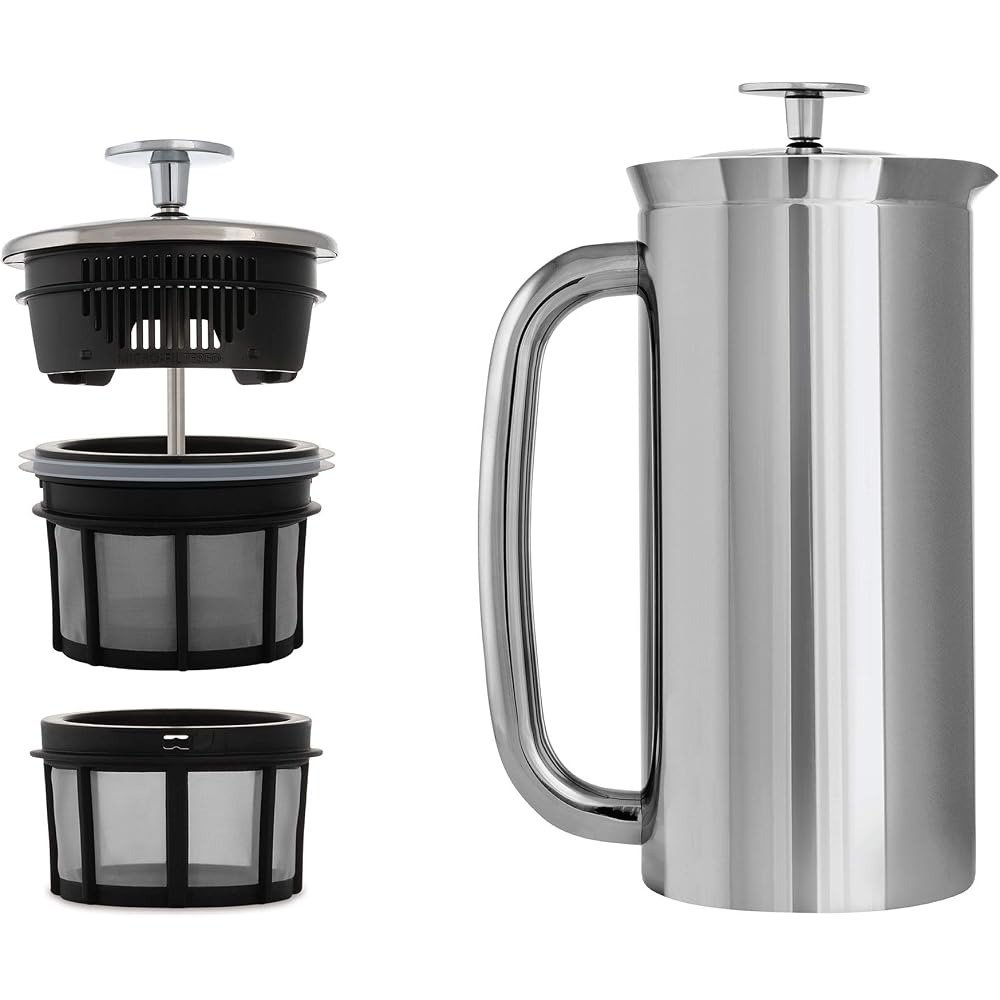
The ESPRO P7, because it fixes the two things people actually dislike about French press coffee: the grit in the last sip and the bitterness that builds while the pot sits. ESPRO’s patented filter is two micro filters working together, one 9 times finer and the second 12 times finer than a standard press screen, wrapped in a silicone seal. When you press, the seal locks the grounds away from the brewed coffee, so extraction genuinely stops instead of continuing in the pot. Williams Sonoma, Tom’s Guide and a long line of Reddit r/Coffee regulars land in the same place: it is expensive for a press, and it is the one that pours like a different category of brewer. You can even slip ESPRO’s optional paper filters between the micro filters for a cup that leans toward pour over clarity.
Key facts:
- Capacity: 32 oz. A smaller 18 oz version is sold under a separate listing.
- Material: double wall 304 stainless steel, polished finish, model 1032C2.
- Filter: patented double micro filter, 9 times and 12 times finer than a standard press filter.
- Heat: the double wall body keeps coffee hot far longer than any glass press.
- Price band: $119.95 to $149.95 depending on finish and retailer.
Who it suits: daily press drinkers who hate sediment, households where the pot sits on the table through a long breakfast, and anyone upgrading from a cheap glass press for good.
The honest drawback: it costs as much as three ordinary presses, and the two part filter needs a proper rinse after every use and a deep clean on a regular schedule to keep flowing freely. Reviewers also note a little fine chaff can still slip through, so the cup is very clean for a press, not literally sediment free.
Which French press will last the longest?
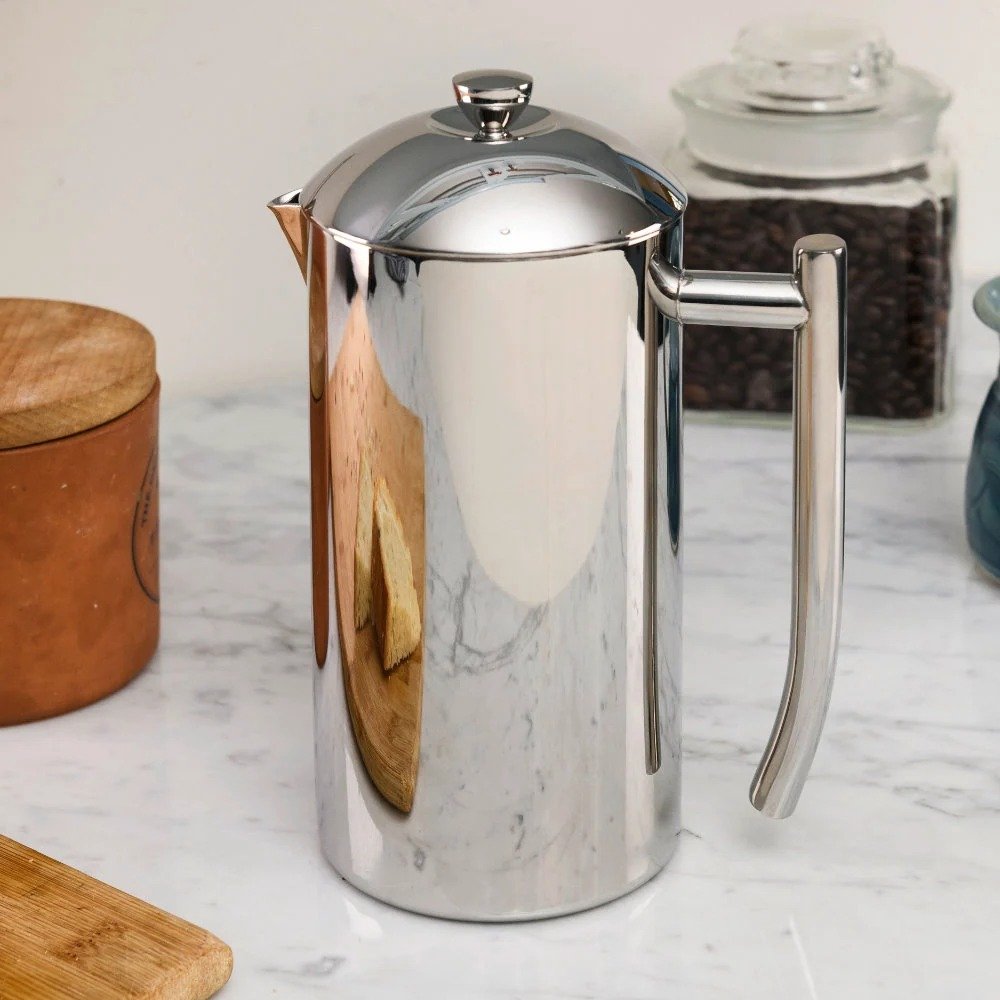
The Frieling. Every part of it that can be steel is steel: 18/10 stainless inside and out, including the plunger and the two stage filter, with no glass to crack, no plastic touching the coffee, and replacement parts available from Frieling if anything ever wears. The double wall insulation is rated by Frieling to keep coffee hot about four times longer than a glass press. It is the durability answer in every serious French press thread, the press people buy after their second or third broken glass beaker, and it is designed to be the last one of those purchases.
Key facts:
- Capacity: 36 oz. Frieling also sells 17, 23 and 44 oz sizes under separate listings.
- Material: 18/10 stainless steel body, plunger and filter screens. Nothing to rust, nothing to shatter.
- Filter: two stage stainless filter system for lower sediment than a single screen.
- Insulation: double wall construction, dishwasher safe.
- Price band: around $100 to $125 at US retailers.
Who it suits: anyone tired of replacement beakers, busy kitchens where gear gets knocked around, and buyers who would rather pay once for a heavy, polished pot that still looks right on a table.
The honest drawback: steel walls hide the coffee. You cannot watch the brew, judge the level, or see the strength by color, and the mirror finish shows fingerprints the moment you touch it. It is also priced like the premium tool it is.
What is the best classic glass French press?

The Bodum Chambord, the press most people picture when they hear the words French press. Bodum’s design goes back to the 1950s: a borosilicate glass beaker in a polished steel frame, a steel plunger with a fine mesh screen, and a handle that stays cool. It has survived seventy years of trends because it does the simple job well and because Bodum sells replacement beakers, screens and plungers individually, so one accident does not mean a whole new press. In community recommendations it is the default first press: cheap enough to learn on, good enough to keep.
Key facts:
- Capacity: 34 oz, sold as the 8 cup size, model 1928-16US4. That is about four real mugs.
- Material: borosilicate glass beaker, stainless steel frame and plunger, chrome finish.
- Filter: stainless steel mesh screen with a spiral spring edge seal.
- Parts: replacement glass beakers and filter parts are widely sold.
- Price band: around $40 to $55. List price is $54.99.
Who it suits: first time press buyers, traditionalists who like watching the coffee brew, and anyone who wants a proven design with cheap spare parts everywhere.
The honest drawback: it is glass, and glass breaks, usually in a sink full of soapy water. It also gives up heat fast, so coffee left sitting in the beaker goes lukewarm and over extracted. Pour the whole batch into mugs or a thermal carafe as soon as the four minutes are up.
What is the best French press for camping and big batches?

The Stanley Classic Stay-Hot. Stanley took its vacuum bottle formula and built a press around it: double wall vacuum insulated 18/8 stainless steel that Stanley rates at 4 hours hot, 9 hours cold and 24 hours iced, in a 48 oz body that shrugs off tailgates, campsite tables and job site benches. America’s Test Kitchen put nine French presses through its testing and the Stanley came out the winner, which is a rare thing for the most rugged option in a category to also be the recommended one. Press coffee at a cabin for six people is exactly its home turf.
Key facts:
- Capacity: 48 oz, the largest press in this guide.
- Material: 18/8 stainless steel, double wall vacuum insulated, BPA free.
- Heat retention: rated 4 hours hot by Stanley.
- Filter: stainless steel mesh plunger.
- Color: the Hammertone Green linked here, model 10-02888-007. Other colors are separate listings.
- Price band: around $60 to $70.
Who it suits: campers, big households, offices that brew one large batch, and anyone who wants the second cup still hot an hour later without a warmer plate.
The honest drawback: it uses a standard mesh filter, so the cup carries the usual press sediment that the ESPRO above was built to eliminate. It is also big and heavy. For one person brewing a single mug, it is the wrong tool.
What is the best budget French press?

The MuellerLiving 34 oz, because it answers the glass problem at a budget price. Most cheap presses are glass, and most broken presses were glass too. This one is double wall 304 stainless steel with a four layer filtration system, a rust resistant body that can go in the dishwasher, and a price that undercuts the premium steel presses above by a wide margin. MuellerLiving is an Amazon native brand rather than a heritage coffee name, and this press is its steady seller for a simple reason: it gives small households the unbreakable steel format without the Frieling or ESPRO bill.
Key facts:
- Capacity: 34 oz, model MU-SSHYDPRESS.
- Material: double wall 304 stainless steel inside and out.
- Filter: 4 layer filtration system for reduced sediment.
- Care: dishwasher safe.
- Extras: the steel body doubles as its own serving pot, with no separate carafe needed.
Who it suits: budget buyers who specifically want steel, dorms and rental kitchens, and anyone buying a second press for the office.
The honest drawback: fit, finish and steel weight are a step below the Frieling and ESPRO, and a smaller brand means a thinner long term parts and support story. And like every press sold by cup count, 34 oz means about four mugs, not eight.
How do you choose the right French press?
Decide on glass or steel first, because that decision drives everything else. Glass shows you the brew and costs less, and it breaks and loses heat. Steel survives drops and holds heat, and it hides the coffee and costs more. Then decide how much sediment you can live with. Every standard mesh press leaves some fine grit in the cup; if that grit is the reason you are upgrading, the ESPRO P7’s double micro filter is the only design here built specifically to remove it.
Size last. Press sizes are quoted in small coffee cups, not mugs: a 34 oz press makes about four mugs, a 48 oz press makes about six. If you mostly brew for one or two people, a 32 to 36 oz press is the sweet spot, and if you find you prefer a cleaner, lighter cup altogether, our guide to the best pour over coffee makers covers the paper filtered side of manual brewing.
Frequently asked questions
What grind size is best for a French press?
Coarse and even, like raw sugar or breadcrumbs. Fine grounds slip through the mesh and turn the cup muddy, and they make the plunger hard to press. If your grinder produces a lot of fine dust, a slightly shorter steep and a gentle pour off the top will still save the cup.
How long should French press coffee steep?
Four minutes is the standard starting point with water just off the boil. Press slowly, then pour everything out. Leaving coffee sitting on the grounds in the press keeps extracting it, which is where the harsh, bitter second cup comes from. The ESPRO P7 is the exception, since its sealed filter stops extraction in the pot.
What is the right coffee to water ratio for a press?
Start at 1:12 to 1:15 by weight. For a full 34 oz press, that is roughly 65 to 75 g of coffee, about 12 to 14 level tablespoons of grounds, to a liter of water. Stronger is better than weaker here, because you can always add hot water to the mug.
How do I get less sediment in French press coffee?
Use a coarse, consistent grind, skim the floating crust and foam off the top before pressing, press only until the filter meets the coffee surface rather than forcing it to the bottom, and let the pot rest a minute before pouring. Or skip the technique entirely and buy a fine filtration press like the ESPRO P7.
Is a stainless steel French press better than glass?
Better at surviving and at holding heat, worse at showing you the brew. Steel presses like the Frieling and Stanley keep coffee hot several times longer than the glass Chambord and cannot shatter in the sink. Glass costs less, looks classic, and makes it easy to judge level and strength. Neither tastes inherently better; the filter matters more than the wall.
The bottom line
Buy the ESPRO P7 for the cleanest cup a press can pour. Buy the Frieling to stop replacing presses. Buy the Chambord for the classic at a fair price, the Stanley for big insulated batches anywhere, and the MuellerLiving when the budget is firm but glass is not an option. Whichever you choose, coarse grounds, four minutes, and pouring the whole batch out at once will do more for your coffee than any upgrade on this page.
1 thought on “Best French Press Coffee Makers”