
Updated November 2026
Short answer first: if you want one mat that lasts a decade, get the Manduka PRO. If your hands slide in downward dog, get the JadeYoga Harmony. If you carry your mat to a studio, get the Manduka PROlite. If the budget is under $40, get the IUGA TPE 6mm for home practice or the Gaiam Premium 6mm for gentle floor work. Everything below is at least 4.7 mm thick, because thinner mats are the main reason beginners’ knees give up before their practice does.
The pattern behind those picks is simple. Yoga mats fail in three ways: they get slippery, they flatten out, or they start peeling. The two premium picks here are built to avoid all three, which is why owners in r/yoga keep recommending the same two names year after year. The budget picks accept a shorter life in exchange for a third of the price, and this guide says plainly which trade each one makes. Three of the five picks on this page come in under $150: the JadeYoga Harmony ($65 to $85), the Manduka PROlite ($95 to $115) and the Gaiam Premium (about $30).
We did not unroll or practice on these mats. Specs come from manufacturer and retailer listing pages checked in November 2026, and the owner sentiment comes from public discussion threads and published owner reviews. Anything we could not verify that way was left out.
Quick picks
| Yoga mat | Size | Thickness | Weight | Material | Price band |
|---|---|---|---|---|---|
| Manduka PRO | 71 x 26 in | 6 mm | 7.5 lb | PVC, closed cell | $130 to $150 |
| JadeYoga Harmony | 68 x 24 in | 3/16 in (about 4.7 mm) | About 5 lb | Natural rubber | $65 to $85 |
| Manduka PROlite | 71 x 24 in | 4.7 mm | About 4 lb | PVC, closed cell | $95 to $115 |
| IUGA Pro Non Slip TPE | 72 x 24 in | 6 mm | 2 lb | TPE | Check listing |
| Gaiam Premium Print 6mm | 68 x 24 in | 6 mm | About 3.3 lb | PVC, latex free | About $30 |
How thick should a yoga mat be?
For most people, 4.5 to 6 mm is the working range. At 6 mm you get real protection for knees, elbows and hip bones on hard floors, and the mat still feels stable in standing poses. Around 4.7 mm you trade a little cushion for a firmer connection to the floor, which balance focused practitioners often prefer. Below 4 mm, travel mats and cheap mats live, and sore knees are the usual review complaint.
Thicker is not automatically better. Very thick foam mats, the 10 mm and up kind sold for general exercise, wobble under your feet in tree pose and roll at the edges. If you want one mat for yoga first and floor exercises second, stay at 6 mm and dense rather than 10 mm and spongy.
Which mat material grips best when you sweat?
Natural rubber, and it is not close. Rubber mats like the Jade below grip harder as your hands warm up, which is why hot yoga and strong vinyasa practitioners end up on rubber. The cost is weight, a rubber smell at first, and a mat you cannot leave in the sun.
PVC is the durability material. A dense PVC mat like the Manduka PRO shrugs off years of daily use and wipes clean because the surface is closed cell, so sweat and bacteria sit on top instead of soaking in. Its weakness is early grip: new PVC mats can feel slick until the factory finish wears off, a complaint r/yoga regulars raise about the PRO constantly, usually followed by the fix, which is a salt scrub and a few weeks of practice.
TPE sits between the two on price and feel. It is light, soft and grippy enough for home practice, and it is the budget material in the IUGA below. It will not outlast PVC or rubber, and pretending otherwise is how budget mats get oversold.
1. Manduka PRO: who should buy the last mat they plan to buy?
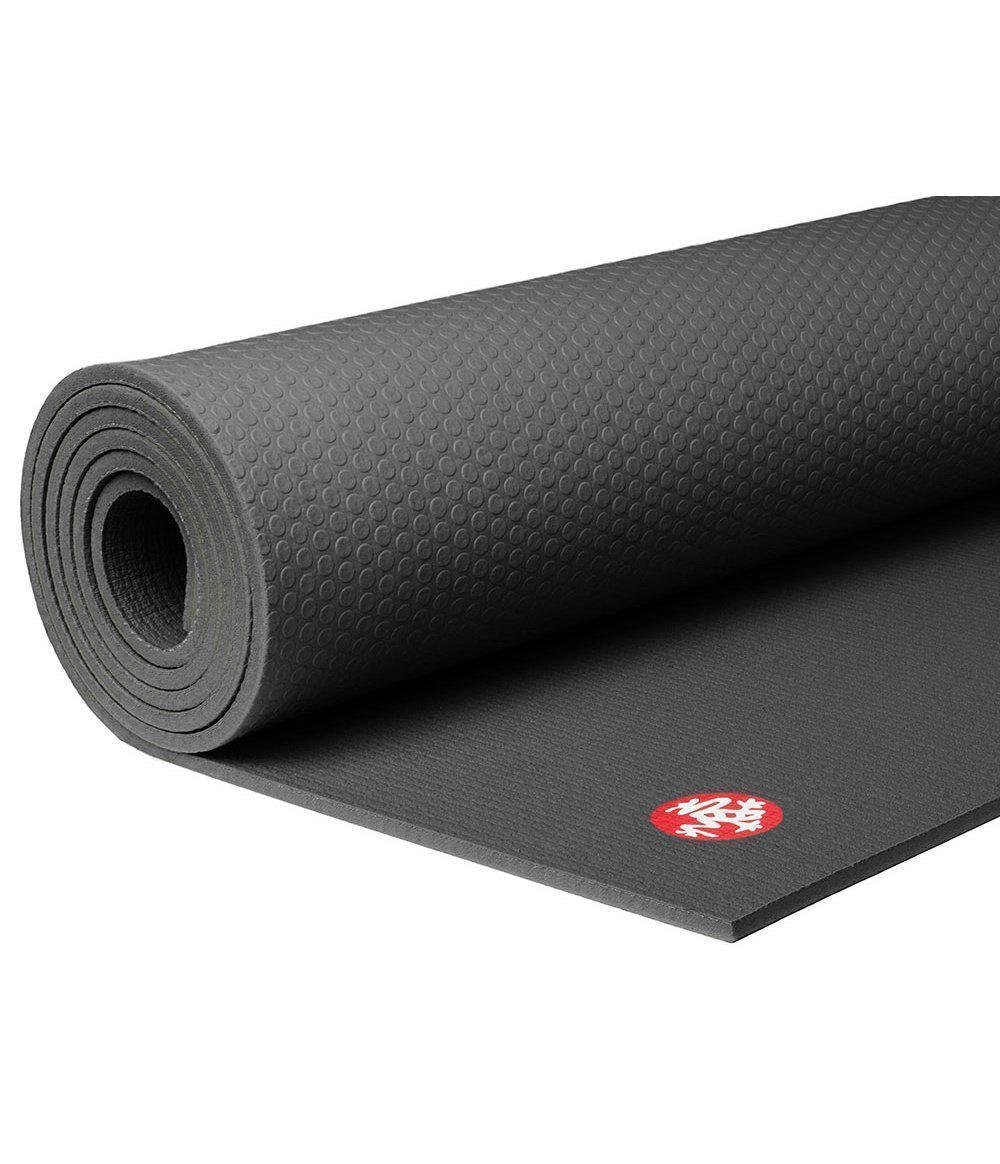
The daily practitioner. In r/yoga, the Manduka PRO is the default answer to “which mat lasts,” and owners routinely report a decade of use on one mat. Manduka backs that talk with a lifetime guarantee, which no other pick here matches.

Key facts
- Size: 71 x 26 inches, wider and longer than a standard studio mat.
- Thickness: 6 mm of dense PVC.
- Weight: 7.5 lb. You will feel every one of them on a long walk to the studio.
- Surface: closed cell, so sweat stays on top and the mat wipes clean. Manduka itself warns it may feel slick if you sweat heavily, especially before break in.
The drawback is the break in itself. New PRO mats are famously slippery for the first weeks, and the fix is patience or the salt scrub Manduka recommends. It is also the heaviest and most expensive mat here. Buy it as a home base mat you keep for years, not as a travel mat.
Suits: daily home practitioners, heavier yogis who flatten lesser mats, and anyone tired of replacing a $30 mat every year.
2. JadeYoga Harmony: whose hands stop sliding?
The sweaty handed practitioner’s. The Harmony is the grip pick in r/yoga threads, where owners describe holding poses on it that cheaper mats would not allow, and several report seven or eight years of use from natural rubber, a material people assume wears out faster than it does here. It is also made in the USA, which almost nothing else in this category can say.

Key facts
- Size: 68 x 24 inches, with a 74 inch version sold for taller practitioners.
- Thickness: 3/16 inch, about 4.7 mm.
- Material: natural rubber, with no PVC, EVA or synthetic rubber in the mat, per JadeYoga.
- Weight: about 5 lb.
- Company policy worth knowing: JadeYoga plants a tree for every mat sold.
The drawbacks are rubber being rubber. It smells like a tire shop for the first days, it picks up lint and dust because the grippy surface is open cell, and it should stay out of sunlight and never be used outdoors. JadeYoga also notes trace latex proteins in natural rubber, so anyone with a serious latex allergy should choose a different pick on this page.
Suits: vinyasa and hot yoga practitioners, anyone whose current mat turns into a slip hazard by the third sun salutation, and buyers who prefer natural materials.
3. Manduka PROlite: who carries their mat across town?
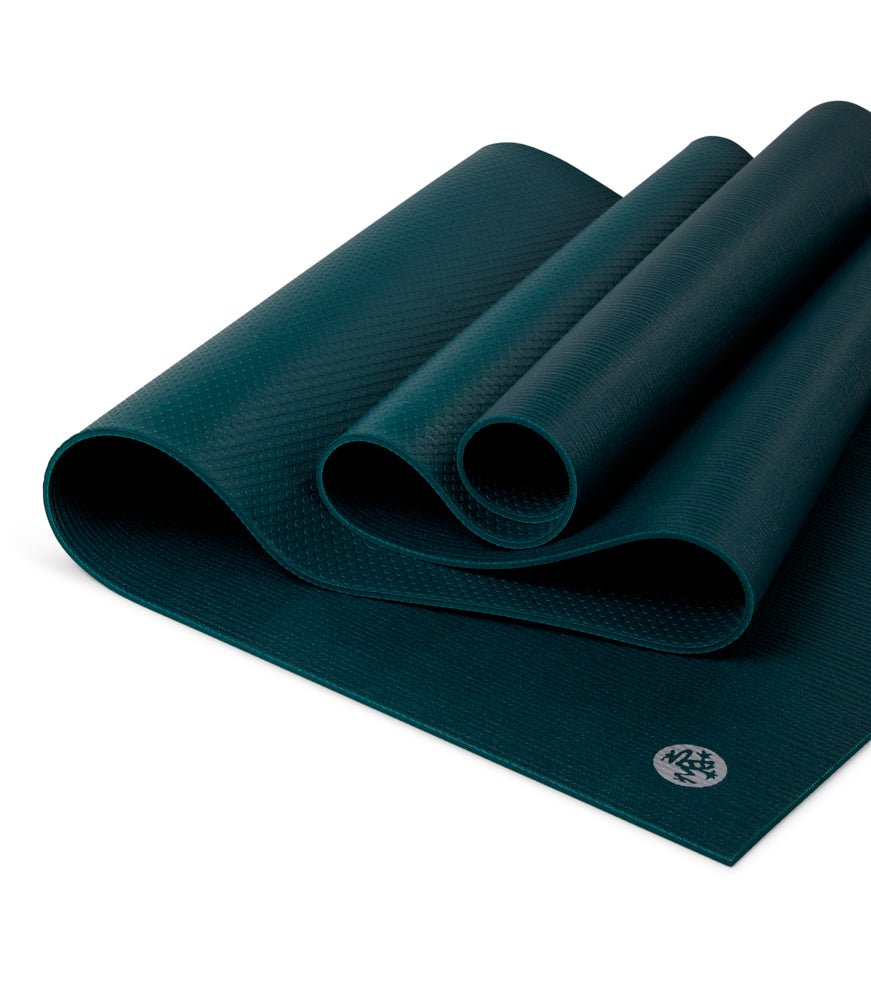
The studio commuter who wants the PRO’s build without the PRO’s weight. The PROlite keeps the same dense PVC construction and the same lifetime guarantee, and cuts the mat down to a size and weight that make sense on a bus, a bike or a shoulder.
Key facts
- Size: 71 x 24 inches.
- Thickness: 4.7 mm.
- Weight: about 4 lb, a little over half the PRO.
- List price: $108 for the 71 inch version, and it sells in the $95 to $115 band.
- Surface: closed cell PVC, wipes clean like the PRO.
The trade is cushion. At 4.7 mm your knees get less help on hardwood or tile, and sensitive joints will notice the difference between this and the 6 mm PRO during long floor sequences. It also shares the family trait of modest grip while new. If your practice is mostly standing flows at a studio with padded floors, neither point matters much. If it is knee heavy work at home, buy the PRO instead.
Suits: studio regulars, travelers who practice in hotel rooms, and smaller framed practitioners who found the PRO more mat than they wanted to carry.
4. IUGA Pro Non Slip TPE: what is the smart budget buy for home practice?
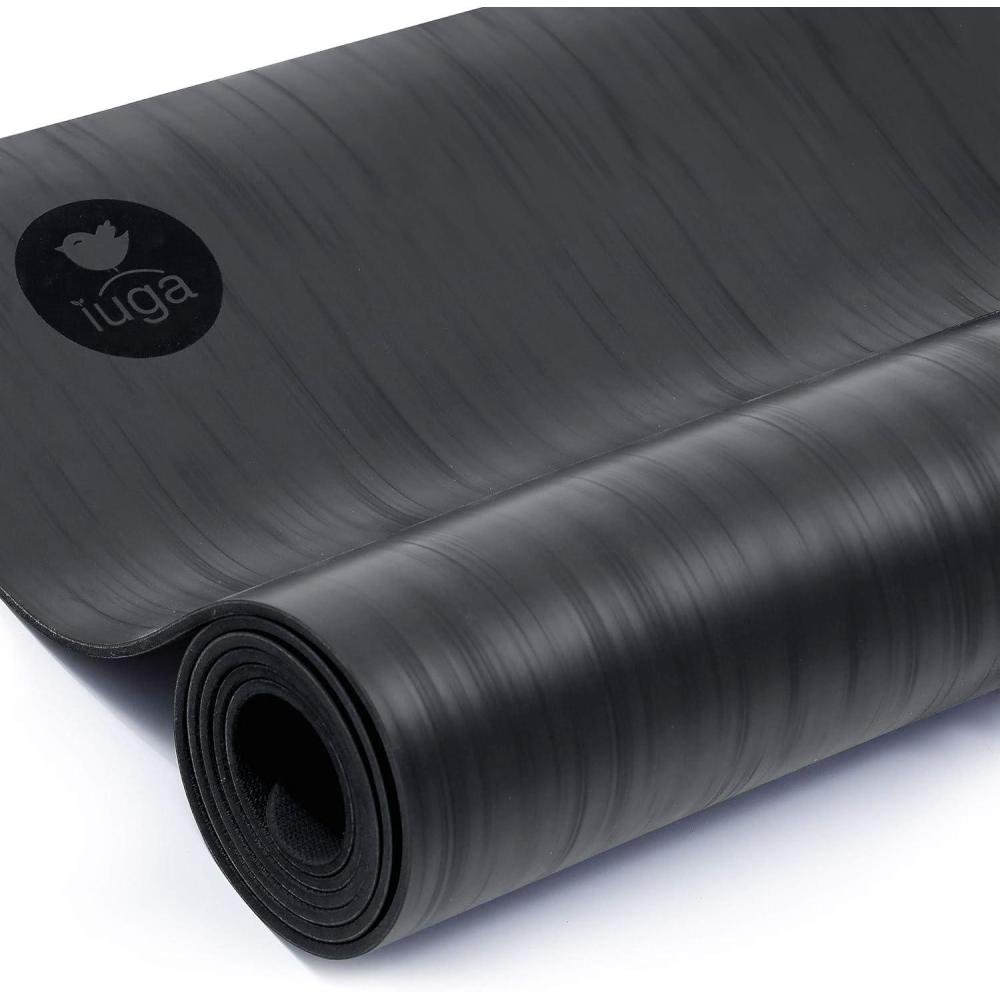
IUGA is the pick most big roundups walk straight past, which is a shame, because its TPE mat solves the budget buyer’s actual problems: enough thickness for knees, almost no weight, and a texture on both sides so the mat grips you and the floor at the same time.
Key facts
- Size: 72 x 24 inches, two inches longer than a standard mat.
- Thickness: 6 mm.
- Weight: 2 lb, the lightest mat on this page by a wide margin.
- Material: TPE, SGS certified, with no latex and no PVC, per the listing. A carrying strap is included in the box.
The honest limits: TPE is a softer material than PVC or rubber, so expect surface wear and edge scuffs sooner, and expect to replace it in a few years rather than a decade. One check of the listing also showed no featured offer on some colors, so availability moves around. At this price and weight, none of that is a deal breaker for a home practice mat. It is a deal breaker for a daily hot yoga habit, where the Jade earns its premium.
Suits: beginners building a home practice, gentle and restorative yoga, apartment workouts where the mat gets rolled away after every session, and anyone who wants a second mat that lives in a car or office.
5. Gaiam Premium 6mm: who is this $30 staple actually for?
The beginner who wants a known brand, real cushion and a printed design for the price of two studio drop in classes. Gaiam’s Premium line has been the default starter mat in US big box stores for years, and the 6 mm version fixes the one thing the thinner originals got wrong.

Key facts
- Size: 68 x 24 inches.
- Thickness: 6 mm.
- Material: PVC, made without latex and without the six most harmful phthalates, per Gaiam.
- Weight: about 3.3 lb.
- The linked listing is the Alignment print in Ink, which adds printed position guides that new practitioners genuinely use.
The drawback is grip under sweat. A smooth PVC print surface is fine for hatha, yin and stretching, and gets genuinely slippery in a heated or fast flow. Treat it as a first mat that teaches you what you want, not the mat you keep. Plenty of practitioners start here and graduate to the Jade or Manduka above within a year, and that is a reasonable path, not a failure.
Suits: new practitioners, yin and restorative practice, stretching and mobility routines, and gift buyers who cannot justify a $140 mat for someone else’s new hobby.
What if your mat shares a room with your home gym?
A mat that lives under other equipment needs to be dense, not just thick. Soft foam mats dent permanently under a dumbbell rack or a bench leg. The Manduka PRO is the pick here that tolerates gym duty best, because density is the whole point of its build. If the mat is mainly for floor work between lifting sessions, pair it with a set that stores compactly. Our adjustable dumbbells guide covers the space saving options, and how to choose adjustable dumbbells explains the locking and handle checks that matter before any set shares floor space with your practice.
How long should a yoga mat last?
A dense PVC mat with a lifetime guarantee should last a decade of regular practice. A natural rubber mat typically gives five to eight years before the surface starts to crumble at the hand and foot positions. TPE and budget PVC mats usually last one to three years of weekly use. When a mat starts shedding flakes, stays slippery after cleaning, or has a permanent thin spot under your hands, it is done, whatever the calendar says.
Frequently asked questions
Is a 6 mm yoga mat too thick for balance poses?
For most people, no, as long as the mat is dense. Balance problems come from soft, spongy thickness, not from millimeters alone. A dense 6 mm PVC mat like the Manduka PRO feels planted. A squishy 10 mm exercise mat does not. If you practice a lot of one legged standing work on a budget mat, step off the mat for those poses. The floor is the most stable surface in the room.
Why is my new yoga mat slippery?
Because most new mats ship with a factory finish on the surface. PVC mats are the worst offenders, and r/yoga’s standard advice for the Manduka PRO is a coarse salt scrub, a rinse, and a few weeks of regular practice. Rubber mats grip from day one but smell like it. If a mat is still slippery after a month of use and one proper cleaning, the material is the problem, not the break in.
Can I use a yoga mat for other workouts?
Yes, with one caution. A yoga mat handles stretching, core work, Pilates and bodyweight exercise well. It is not padding for dropped weights, and shoe based training tears up soft surfaces fast. Keep one mat for practice and let it stay clean, especially a rubber mat, since the open cell surface holds onto whatever the floor gives it.
How do I clean a yoga mat?
PVC mats wipe down with a damp cloth and a drop of mild soap, because nothing soaks in. Rubber mats need a gentler routine: a light wipe, no harsh cleaners, and drying flat away from sunlight, which breaks rubber down. Every mat lasts longer rolled loosely and stored out of a hot car.
What size yoga mat do I need if I am tall?
Look for 71 or 72 inches at minimum, and 74 if you are over about 6 foot 2. The Manduka PRO and PROlite are 71 inches, the IUGA is 72, and the Jade Harmony has a 74 inch version. Length matters more than width for most tall practitioners, unless your practice travels sideways off a 24 inch mat, in which case the 26 inch wide PRO is the pick here.
What is the best yoga mat under $150?
The Manduka PROlite. It keeps the top pick’s dense closed-cell PVC build and lifetime guarantee, lists at $108, and sells in the $95 to $115 band, so it is under $150 and light enough to carry to a studio.